



Decorative Wood Caddy
A decorative wood caddy brings tactile warmth and period craftsmanship into a room, serving as an elegant receptacle for precious leaves or keepsakes.
Decorative Wood Caddy
A decorative wood caddy comprises containers designed for storing tea, personal treasures, or stationery, spanning from the Georgian and Regency eras into the Victorian period. Buyers searching for a decorative wood caddy encounter forms ranging from tea caddies and keepsake boxes to novelty biscuit tins and sewing baskets.
The selection on this page centres primarily on tea caddies and decorative boxes shaped as octagons, barrels, semi-circles, and rectangular chests. These items originate from English, French, and Anglo-Indian workshops utilising timbers selected for their rich grain and colour.
How they were made
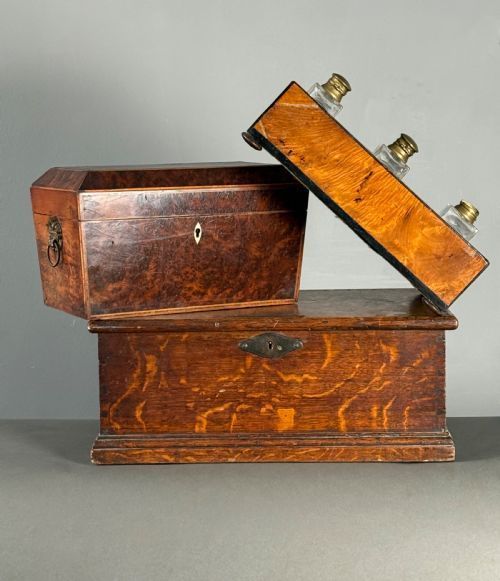
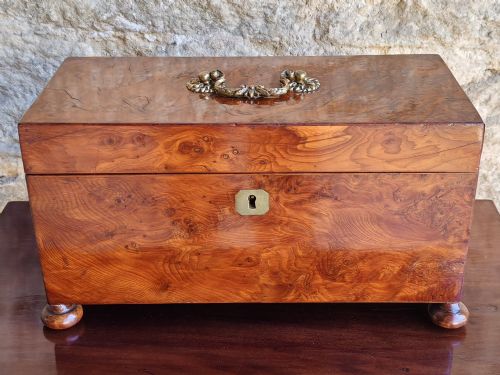
Cabinetmakers constructed these vessels using dense hardwoods such as mahogany, rosewood, walnut, and padouk, often applied as veneers over firmer carcases. Yew wood, burr maple, partridge wood, and coromandel provided striking natural patterns that defined the exterior appearance.
Detailing relied on precision joinery, brass mounts, and contrasting inlays of boxwood, bone, mother-of-pearl, and shell. Specialised techniques such as Tunbridge Ware micro-mosaic work and surface carving added intricate geometric or organic motifs.
Decorative Wood Caddy Retail Price Guide 2026
Typical asking prices for decorative wood caddy among the pieces listed under this phrase on Sellingantiques today, from the lower quarter to the upper quarter. They describe what is for sale here now, not the wider market.
A novelty tin produced by Hunter and Palmer mimics an intricately carved Indian hardwood box to surprise admirers.
What varies in quality
Quality rests in the selection of the timber grain and the precision of the contrasting veneers, where highly figured burrs or exotic woods elevate a piece. The refinement of the brass inlays, shell motifs, and bone details demonstrates the maker's hand.
Structural integrity and the retention of original interior elements, such as mixing bowls or foil linings, separate standard examples from finer specimens. The sophistication of form, whether a barrel, hexagonal chest, or marquetry box, dictates distinction.
The Decorative Wood Caddy Glossary
- Veneer
- A thin slice of figured wood applied to a secondary timber base to create a decorative exterior surface. This technique allowed cabinetmakers to utilise expensive exotic woods efficiently.
- Marquetry
- The art of forming decorative patterns using fitted pieces of wood veneer, shell, or bone. These designs frequently adorned the lids and panels of formal boxes.
- Tunbridge Ware
- A type of decorative woodwork characterised by tiny wooden mosaic tiles forming pictorial or geometric designs. It originated in Kent during the nineteenth century.
- Padouk
- A heavy tropical hardwood valued for its deep reddish-brown colour and durability. It appeared frequently in eighteenth-century cabinet work.
- Treen
- Small handmade wooden household objects and utility items. The term encompasses turned vessels and early boxes collected for their craftsmanship.
Decorative Wood Caddy: Frequently Asked Questions
How do I date a wood caddy?
Dating relies on identifying the prevailing stylistic traits, timber choices, and construction methods associated with periods such as Georgian, Regency, or Victorian. For example, brass inlay and rosewood veneers often point to the early nineteenth century, while elaborate mother-of-pearl detailing frequently suggests the Victorian era.
Examining the interior layout, hinges, and lock mechanisms provides further clues regarding age. Comparing specific wood types and decorative motifs against documented examples helps narrow down the decade of manufacture.
Were all caddies used for tea?
While the primary function of most early examples was tea storage, many pieces served alternative domestic purposes. Surviving items include sewing baskets, perfume boxes, stationery cases, and novelty biscuit tins designed to resemble carved wooden chests.
Interior compartments, such as removable canisters or glass mixing bowls, indicate the original intended use. Collectors often appreciate the versatility of these compartments when repurposing the boxes today.
How should I care for antique wood?
Maintaining antique wood boxes requires protecting them from direct sunlight and dramatic fluctuations in temperature or humidity. These environmental controls prevent the delicate veneers and inlays from drying out and lifting.
Applying a minimal amount of appropriate wax preserves the sheen of timbers like rosewood, mahogany, and coromandel. Gentle dusting with a soft cloth is sufficient for routine upkeep.