



Decorative Wall Pediment
These decorative wall pediment pieces bring architectural presence and classical proportion to an interior, drawing the eye upwards with carved detail and gilt surfaces.
Decorative Wall Pediment
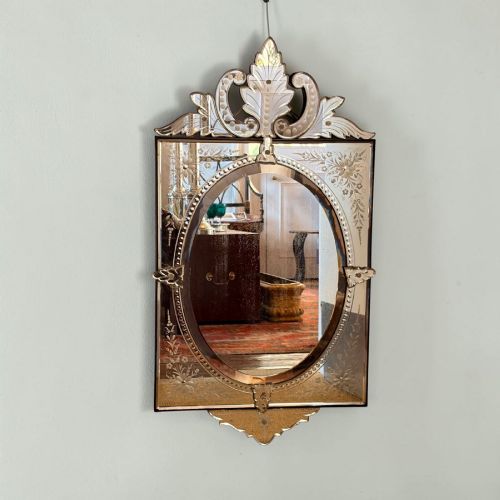
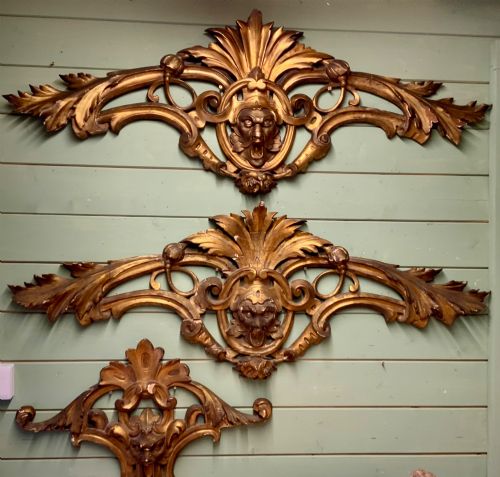
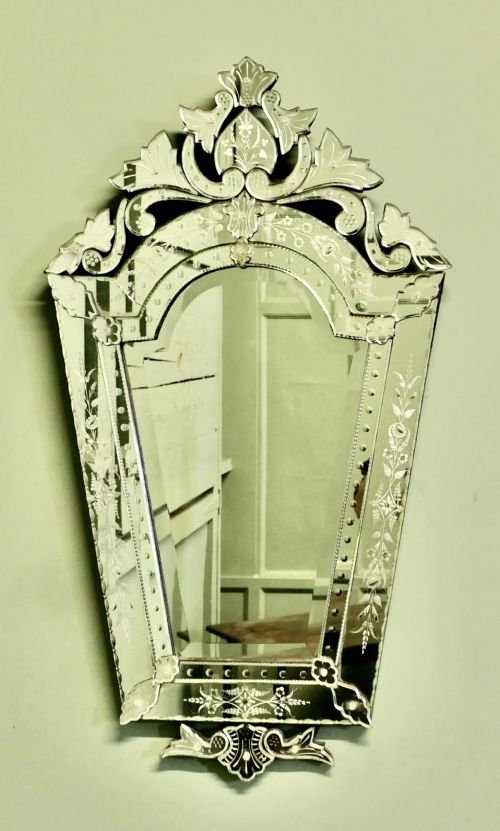
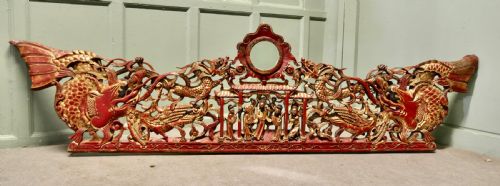
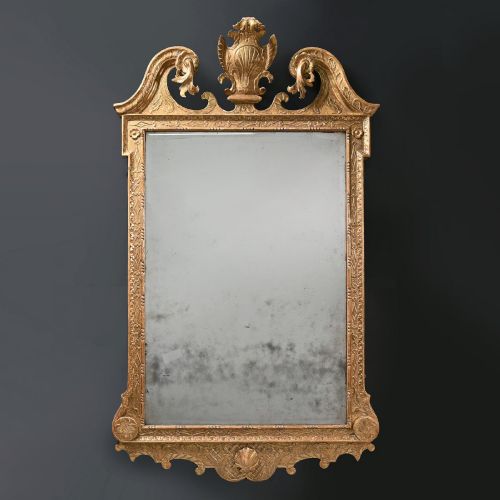
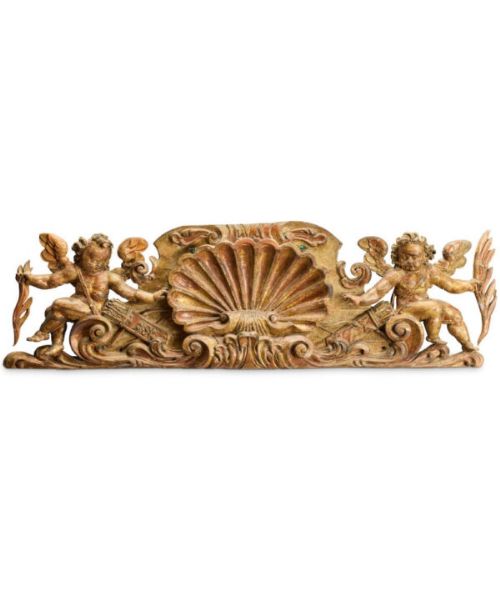
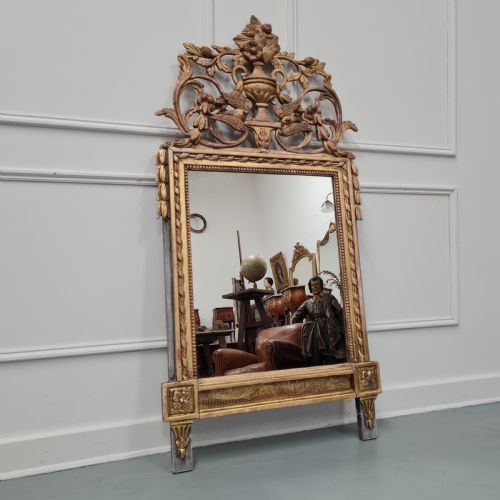
A decorative wall pediment encompasses architectural salvage, architectural fragments, carved wood panels, and mirrors furnished with elaborate upper crests. These items originate from diverse historic contexts, ranging from eighteenth-century George II interiors to nineteenth-century French chateaux and Venetian workshops.
The versions most frequently encountered on this page combine carved wooden frames with gilded surfaces, mirror glass, or painted finishes. Buyers select these items to anchor a room, serving either as focal overmantel mirrors or as standalone wall carvings and architectural fragments.
Materials and construction methods
Makers shaped these pieces primarily from solid wood, applying layers of gesso to build up intricate relief details before adding gold leaf, parcel gilt, or paint. The reliance on carved wood and gesso allowed artisans to achieve deep undercut foliage, scrolls, and classical motifs.
Mirrors integrated into these frames utilise glass plates, sometimes paired with cut glass pediments or ebonised surrounds. Architectural salvage fragments often retain their original hand-painted decoration or bare wood patination acquired over centuries.
Decorative Wall Pediment Retail Price Guide 2026
Typical asking prices for decorative wall pediment among the pieces listed under this phrase on Sellingantiques today, from the lower quarter to the upper quarter. They describe what is for sale here now, not the wider market.
Some items started life as fairground fragments before finding a second act as eccentric wall decoration.
Distinctions in quality and execution
The distinction between standard examples and superior pieces lies in the depth and sharpness of the hand carving within the gesso and wood. Master carvers achieved fluid lines and balanced proportions, particularly visible in eighteenth-century George II items and Venetian tabernacle frames.
Surface finish also determines the tier of the piece, with original gold leaf and untouched painted patination holding greater visual depth than later restorations. The integrity of the underlying architectural structure and the crispness of the moulding define the upper echelon of these works.
Grinling Gibbons
The Decorative Wall Pediment Glossary
- Pediment
- An architectural crowning feature placed above doors, windows, or mirrors, often triangular or segmental in shape. In these listings, the pediment forms the decorative apex of the piece.
- Gesso
- A plaster mixture applied to wood surfaces to create a smooth base for gilding or painting. Artisans carved intricate relief details directly into this layered substance.
- Giltwood
- Timber coated with gold leaf or metallic powder to simulate solid gold. This finish catches candlelight and natural illumination in historic interiors.
- Parcel Gilt
- A decorative technique where only specific portions of a carved wooden object receive gilding, contrasting with painted or natural wood areas.
- Tabernacle Mirror
- A formal mirror style featuring architectural framing reminiscent of a church tabernacle, complete with columns and an elaborate pediment.
Decorative Wall Pediment: Frequently Asked Questions
What is a decorative wall pediment?
A decorative wall pediment is an architectural element or framed mirror crest designed to mount above an opening or flat wall surface.
These pieces originate from historic buildings, chateaux, and workshops, serving as prominent focal points in period interiors.
How were these pediments used originally?
Historic pediments crowned doorways, overmantels, tabernacle frames, and large wall mirrors to project status and classical design.
Today, buyers mount them directly onto walls as standalone artworks or architectural statements above furniture.
How do I identify an eighteenth-century piece?
Eighteenth-century examples display hand-carved gesso and timber work reflecting specific classical revivals like George II or French Rococo styles.
Closer inspection of the wood backing, joinery, and patination under the gilding helps confirm the age and origin.
Can heavy wooden pediments be hung safely?
These substantial carved wooden and gilt items require secure wall fixings suited to their considerable weight and solid construction.
Professional installation into wall studs or masonry ensures the architectural salvage or mirror remains stable.