



Decorative Wall Corbels
These decorative wall corbels bring architectural weight and sculptural presence to an interior, offering sturdy support for display.
Decorative Wall Corbels
Decorative wall corbels are architectural elements and wall brackets designed to project from a vertical surface, often functioning as shelf supports or purely ornamental fixtures. You will frequently encounter carved wood and giltwood examples from the nineteenth century alongside cast iron and plaster pieces.
The selection ranges from eighteenth-century French plaster corbels and Italian capitals to Victorian walnut display brackets and cast iron shelf supports. Many pieces appear in matched pairs, particularly those carved with cherubs, putti, or rococo scrolls.
Object types include architectural salvage, wall shelves, and specialised brackets made for display. Origins span English, French, Italian, and Anglo-Indian traditions, reflecting diverse period revivals from baroque to neoclassical.
How they were made
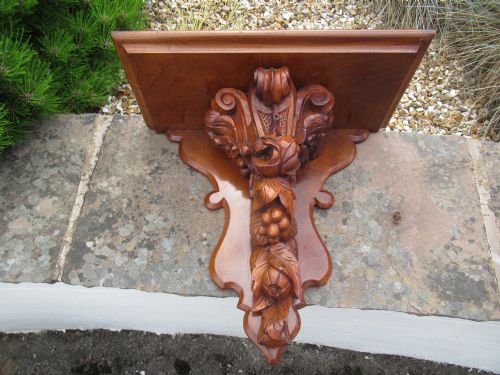
Carved wood examples rely on traditional timber manipulation, utilising walnut, pine, and red walnut shaped with hand chisels and gouges. Many of these wooden surfaces receive layers of gesso, paint, or gold leaf to create gilded finishes.
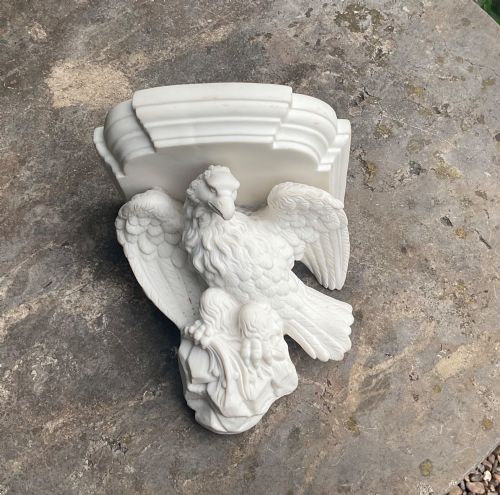
Plaster and parian pieces are cast from moulds to achieve intricate sculptural detail such as eagles and classical motifs. Metal brackets involve cast iron, bronze, or ormolu techniques, often combined with ceramic, porcelain, or ebonised wood elements.
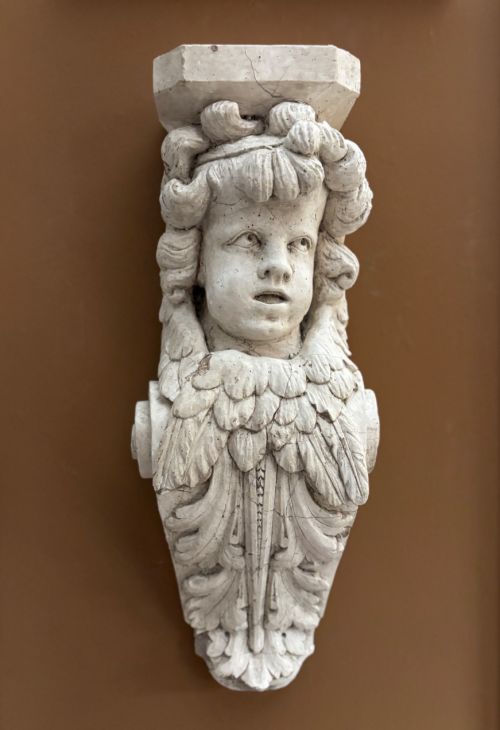
Cherubs and putti peer from several nineteenth-century brackets, watching the room with placid indifference.
What varies in quality
The standard of carving defines the artistic merit of wooden corbels, separating mechanical workshop output from fluid, deep-relief hand sculpture. Crispness in the cast of plaster, iron, or ormolu details indicates the fidelity of the original mould.
Surface treatment preservation distinguishes exceptional pieces, particularly the integrity of original gilding, paint layers, or patination on walnut and giltwood. The presence of matching pairs adds significant architectural utility and visual balance.
Henri Dasson
The Decorative Wall Corbels Glossary
- Corbel
- A structural piece of stone, wood, or metal jutting from a wall to carry a superincumbent weight. In decorative contexts, it often serves a purely ornamental or display function.
- Giltwood
- Wood that has been prepared with gesso and covered with thin gold leaf or metal leaf. This technique provides a brilliant reflective surface common in baroque and rococo revival pieces.
- Ormolu
- Finely chased and gilt bronze applied to furniture or decorative objects. It gained popularity in luxury French and English interiors during the eighteenth and nineteenth centuries.
- Putto
- A representation of a human infant, usually nude and sometimes winged, derived from classical art. They frequently populate baroque and rococo wall brackets.
- Parian
- A type of fine-grained, unglazed porcelain resembling white marble, developed in the nineteenth century. It takes its name from Parian marble found on the Greek island of Paros.
Decorative Wall Corbels: Frequently Asked Questions
How do I mount a heavy wall corbel safely?
Heavy wooden or cast iron corbels require secure fixing into wall studs or masonry using appropriaterawl plugs and heavy-duty screws.
Consult a professional builder to ensure the wall structure can support the combined weight of the corbel and any items placed upon it.
Can these wall brackets hold a shelf?
Many of these pieces are designed with flat upper surfaces specifically to function as shelf brackets or small wall display ledges.
Heavier cast iron or substantial wooden pairs offer robust support, while smaller decorative brackets suit lighter ornamental objects.
How should I clean giltwood and carved wood?
Giltwood requires extreme care, as moisture and aggressive rubbing can damage the delicate gold leaf layer.
Dust gently with a soft dry brush and avoid all chemical cleaning products to preserve the historic surface.
What is the difference between a corbel and a bracket?
A corbel traditionally projects from a wall to support a heavy weight, often possessing a blockish or sculptural profile.
A bracket is a broader term encompassing lighter shelf supports and wall-mounted display fixtures.