
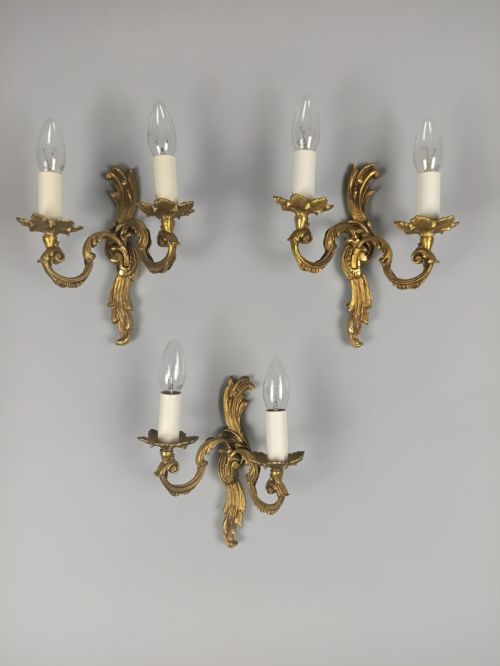


Decorative Twin Arm Lights
These decorative twin arm lights bring architectural presence to a wall, offering balanced illumination through period forms.

Decorative Twin Arm Lights
The selections found here lean heavily towards continental European craftsmanship, particularly French and Italian workshops. Examples range from nineteenth century creations to pieces bearing twentieth century dates.
Most entries arrive in pairs or matched sets, maintaining symmetry across a room. Forms draw directly upon historic design languages rather than modern minimalism.
How they were made
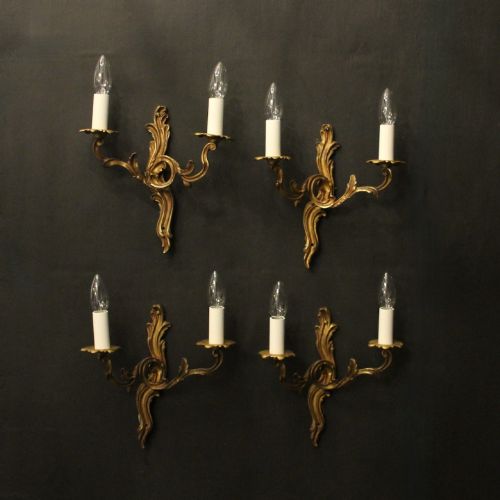
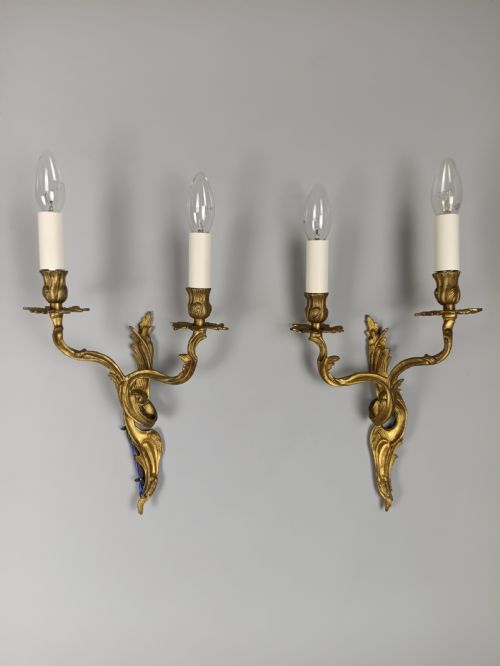
Metalwork dominates the construction, utilising brass, gilt bronze, ormolu and gilt metal shaped to form the structural backplates and branching arms. Artisans employed casting and chasing techniques to achieve crisp surface detail before applying finishes.
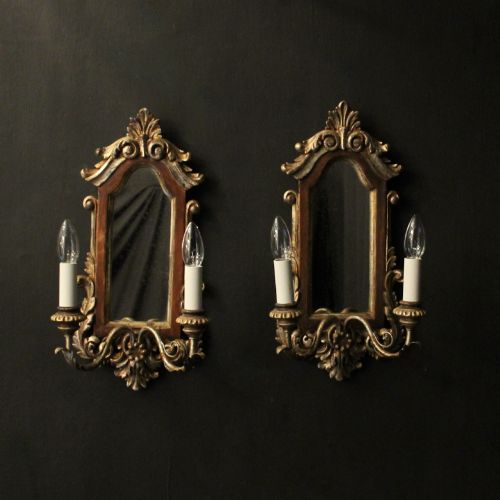
Carved wood and gesso appear where workshops produced giltwood or polychrome frames. These wooden components received layers of preparation before being gilded or painted with floral and fruit motifs.
Listings span periods from the nineteenth century through to nineteen thirty, showcasing French and Italian craftsmanship in metal and carved wood.
What varies in quality
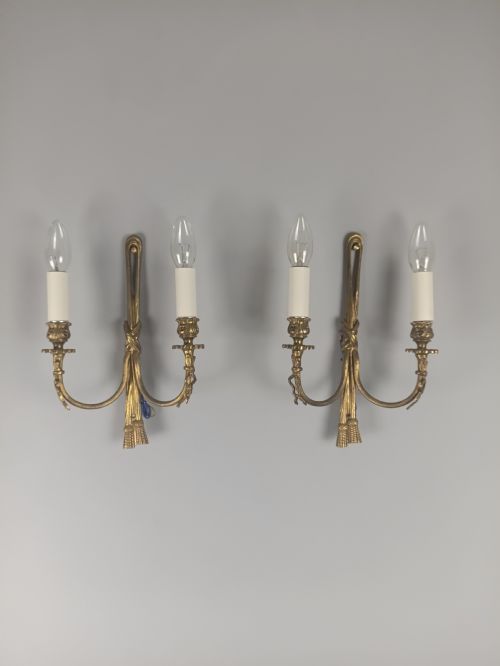
Depth of chisel work and crispness in the casting separate standard production from superior pieces. Finer metalwork retains sharp relief in scrolling acanthus and ribbon motifs without soft edges from worn moulds.
The integrity of the original surface finish dictates visual success. Hand-applied gilding, whether on metal or carved wood, ages with a distinct warmth that mechanical plating cannot replicate.
The Decorative Twin Arm Lights Glossary
- Girandole
- A branched wall light or sconce, frequently incorporating a mirror backplate to reflect candlelight. The term often describes ornate gilded fixtures from French and Italian traditions.
- Ormolu
- Finely chopped high-karat gold applied to a bronze base through a mercury amalgamation process. This technique produces a deep, lasting lustre unique to historic metalwork.
- Gesso
- A plaster-like mixture applied to carved wood surfaces to create a smooth base for gilding. It allows artisans to model delicate relief details before applying gold leaf.
- Polychrome
- Painted in several colours, often depicting naturalistic fruit or floral subjects on wooden or metal backplates. This finish appears frequently on Italian regional pieces.
Decorative Twin Arm Lights: Frequently Asked Questions
How do I hang antique wall lights?
Most wall lights mount securely via a central fixing point on the backplate, requiring appropriate wall anchors depending on the weight of the metal or wood.
Electrical conversion is usually necessary for modern use, so consulting a qualified electrician ensures safe installation against plaster or wood panelling.
Are these lights sold as pairs?
The majority of pieces appear in matched pairs or small sets, designed to create balanced symmetry on either side of a fireplace or mirror.
Single pieces and larger sets of three or four also occur, reflecting original domestic configurations.
What styles are most common?
French Rococo and Neoclassical designs dominate, alongside Italian Rococo Revival and Adam style interpretations.
These aesthetics emphasise scrolling foliage, ribbons, and classical symmetry rather than stark industrial lines.
How do I clean gilt metal and wood?
Dusting gently with a dry, soft brush prevents the accumulation of dirt without risking the delicate surface finish.
Avoid chemical polishes and abrasive cloths, which can strip thin layers of historical gilding from the brass or carved wooden frames.