

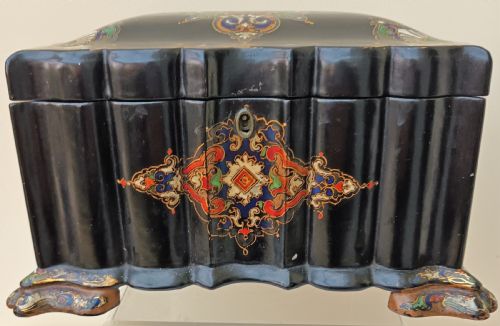


Decorative Tea Storage
These decorative tea storage pieces are timber boxes and canisters designed to hold dry leaf safely, offering tactile charm for any tabletop.
Decorative Tea Storage
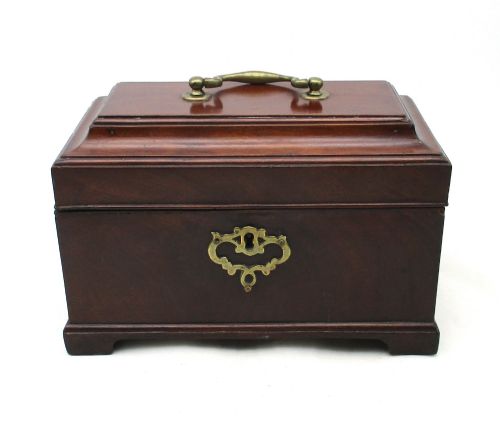
When you search for decorative tea storage, you encounter wooden caddies, lidded boxes, and painted canisters from the eighteenth, nineteenth, and early twentieth centuries. The selection encompasses Georgian mahogany and satinwood boxes, Regency rosewood designs, and Victorian papier-mâché or tortoiseshell pieces.
Most examples take the form of lidded caddies or canisters originally built to preserve precious dry leaves from dampness and air. Alongside traditional timber boxes, you find toleware containers, porcelain jars, and occasional brass vessels.
The objects span varied aesthetic movements including Chinoiserie, Sheraton, and French Second Empire. These pieces served domestic rituals in period drawing rooms and now function as decorative containers.
Materials and Construction
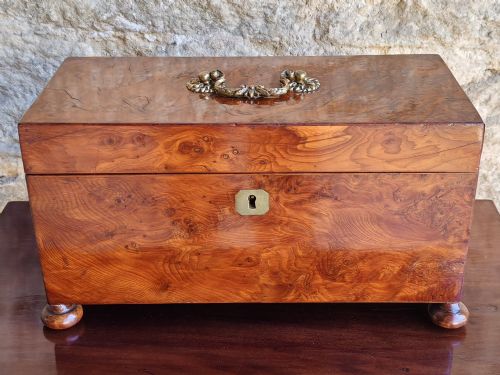
Cabinetmakers utilised dense hardwoods such as mahogany, rosewood, walnut, and satinwood, often applying veneers of burr yew, amboyna, or gonçalo alves. Exotic timber selections were chosen for their rich grain patterns and durability.
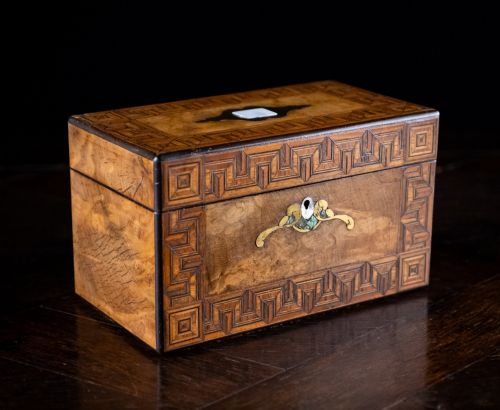
Surface ornamentation involved intricate marquetry, parquetry, Tunbridge Ware inlay, and detailed brass or mother-of-pearl work. Some containers employed papier-mâché or painted toleware finished with decorative lacquer.
Decorative Tea Storage Retail Price Guide 2026
Typical asking prices for decorative tea storage among the pieces listed under this phrase on Sellingantiques today, from the lower quarter to the upper quarter. They describe what is for sale here now, not the wider market.
Some nineteenth-century tea containers doubled as miniature architectural pavilions, shaped like tiny painted pagodas to satisfy European fascination with the East.
Assessing Quality
Quality rests in the precision of the timber selection, the complexity of the veneer work, and the integration of inlay materials like boxwood or tortoiseshell. Superior examples display harmonious grain alignment and careful joinery.
Internal fittings elevate a piece, such as surviving crystal mixing bowls, inner foil-lined canisters, or functioning locks with original keys. The execution of decorative motifs distinguishes standard production from finer cabinetmaking.
Tahan of Paris
The Decorative Tea Storage Glossary
- Tea caddy
- A small box or chest designed to hold tea leaves. Early versions included internal compartments and locking lids to secure expensive contents.
- Marquetry
- Decorative veneer work forming pictures or geometric patterns using various coloured woods. Craftsmen applied these cut-wood designs to the exterior surfaces.
- Toleware
- Enamelled or lacquered metalware painted with decorative scenes or patterns. These painted containers provided robust storage for dry goods.
- Tunbridge ware
- Small wooden objects decorated with mosaic patterns made from tiny wood blocks. This meticulous technique created detailed geometric borders.
- Sarcophagus
- A coffin-shaped box style popular during the Regency period. These caddies typically featured curved or domed lids resting on bun feet.
Decorative Tea Storage: Frequently Asked Questions
What were tea caddies used for?
Tea caddies held precious black and green leaves securely under lock and key. Servants or hosts dispensed the dry leaf from these containers into pots during formal gatherings.
Because tea remained an expensive commodity for much of the eighteenth and nineteenth centuries, protecting the supply was a domestic priority.
How do I date a wooden caddy?
Dating relies on observing timber choices, construction methods, and decorative styles. Georgian pieces often feature solid mahogany or satinwood with simple inlay, while Regency examples favour rosewood and sarcophagus shapes.
Later Victorian boxes frequently incorporate heavier marquetry, papier-mâché, or Tunbridge Ware details that reflect industrial techniques of the period.
Are original glass bowls important?
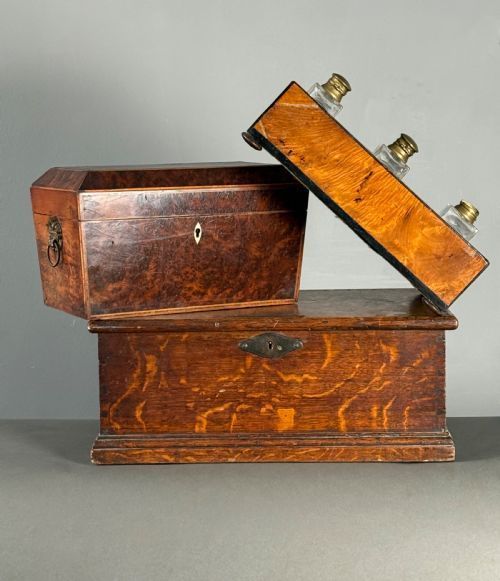
Original glass mixing bowls or internal canisters add considerable interest for collectors. Many Georgian and Regency caddies included a central glass vessel used for blending different teas.
Finding these interior components intact alongside matching mixing sticks is uncommon, as fragile glass elements broke over generations of domestic use.
How should I clean antique wood?
Maintain wooden surfaces using a soft cloth to remove dust without applying modern liquid polishes. Preservation of the aged patina depends on minimal intervention and avoiding harsh chemical cleaners.
Keep these boxes away from direct sunlight and radiator heat to prevent timber shrinkage and veneer lifting.