



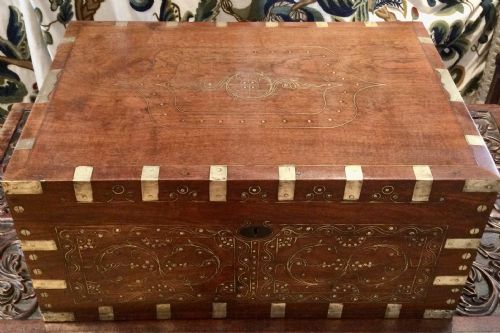


Decorative Storage Trunk
These decorative storage trunks bring worldly character and rich texture into a room while hiding clutter.
Decorative Storage Trunk
A decorative storage trunk is a practical container designed to hold belongings while serving as a prominent focal point in a room. When you search for decorative storage trunks, you encounter a diverse array of forms ranging from substantial chests and coffers to smaller boxes and caskets.
The versions you are most likely to meet on this page span several centuries and global origins, including 18th century pieces, Victorian examples, and early 20th century items. They draw upon styles such as Anglo-Indian, Ottoman, Scandinavian Country, and Regency, reflecting distinct regional craftsmanship and utilitarian histories.
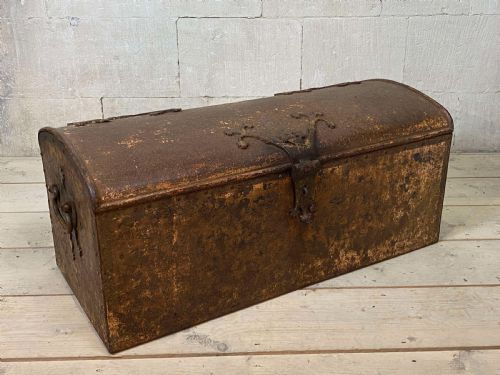
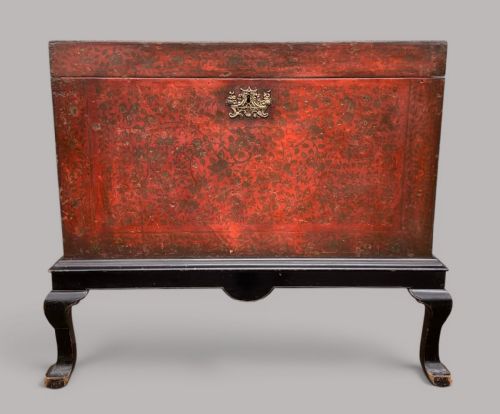
Makers utilised various traditional furniture formats, creating dome top chests, trunks on stands, and portmanteau travel cases. These objects functioned historically for transport or domestic storage, and today they easily adapt to modern interiors as coffee tables or blanket boxes.
How they were made
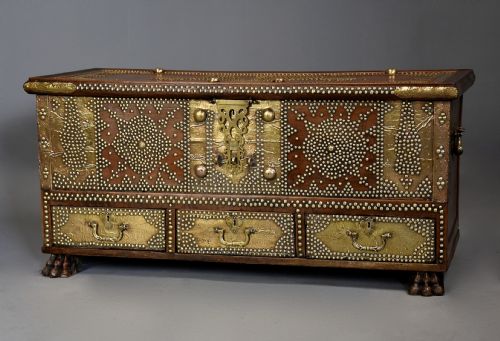
Makers constructed these pieces using sturdy timbers like pine and hardwood, often reinforcing the wooden carcass with iron, brass, or copper plates. Metal banding, corner brackets, and stud work provided structural rigidity for travel while adding strong visual contrast to the wood.
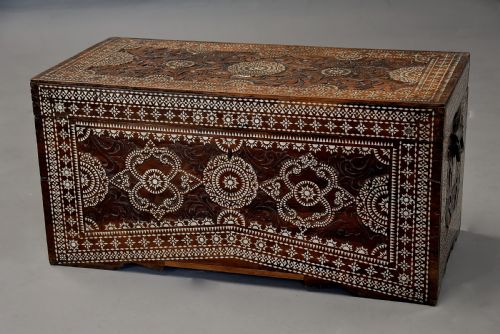
Surface decoration defined the visual appeal of these trunks, incorporating hand-painted finishes, red lacquer, and intricate mother of pearl inlay. Leather upholstery also appeared frequently, fastened securely with rows of decorative brass studs along the edges.
Regional workshops applied specific techniques tailored to their materials, such as Chinoiserie motifs on Indian trunks or folk art painting on Scandinavian pine boxes. This combination of robust joinery and applied ornamentation ensured the pieces could endure both long journeys and daily household use.
Decorative Storage Trunk Retail Price Guide 2026
Typical asking prices for decorative storage trunk among the pieces listed under this phrase on Sellingantiques today, from the lower quarter to the upper quarter. They describe what is for sale here now, not the wider market.
Current listings feature items from the 18th, 19th, and early 20th centuries, utilising pine, hardwood, leather, and lacquer.
What varies in quality
The distinction between standard examples and exceptional pieces often lies in the ambition and execution of the surface ornamentation. Trunks featuring intricate mother of pearl inlay, complex brass studding, or detailed hand-painted scenes demonstrate a higher level of artisan skill.
Materials and structural integrity also dictate the calibre of a piece, with dense hardwoods and well-preserved original leather or lacquer surfaces commanding greater appreciation. The integration of auxiliary elements, such as dedicated stands or specialised metal plating, separates simpler utility boxes from more elaborate decorative commissions.
The Decorative Storage Trunk Glossary
- Portmanteau
- A large travel case or trunk that opens into two equal sections. These were designed for convenience during long journeys.
- Chinoiserie
- European decorative style that reflects Chinese artistic influences. It often appears as painted or lacquered motifs on furniture.
- Zanzibar chest
- A distinct style of trading chest originating from East Africa and the Middle East. They are characterised by heavy brass studding and strapwork.
- Dome top
- A curved lid design utilised on trunks and chests. This shape helped shed water during transit and provided extra internal clearance.
Decorative Storage Trunk: Frequently Asked Questions
How were decorative storage trunks used originally?
These trunks served primarily to transport personal belongings, textiles, and valuables across regions via land or sea. Merchants, travellers, and households relied on their robust construction to protect contents from the elements during transit.
Once settled in a home, they transitioned into stationary furniture for linen and storage. Their sturdy lids also allowed them to function occasionally as impromptu seating or tables.
How do I style a trunk in a modern interior?
A decorative storage trunk works well as a coffee table in a living room, offering both a stable surface and hidden internal storage. Placing one at the foot of a bed provides a convenient spot for extra blankets and pillows.
Because these pieces carry strong regional styles and patinated surfaces, they anchor neutral spaces effectively. Allow the natural wood, leather, or metal details to stand out without overcrowding the top.
How can I tell the period of a trunk?
Dating relies on observing the combination of materials, construction methods, and stylistic motifs present on the piece. Earlier examples from the 18th century often feature hand-cut joints and simpler iron work, while 19th and early 20th century versions might incorporate mass-produced brass studs or specific applied lacquers.
Examining the hinges, locks, and interior linings also offers clues regarding the manufacturing era. Regional characteristics, such as Scandinavian folk art painting or Middle Eastern inlay work, further anchor pieces to specific decades.
Are these trunks suitable for daily use?
Most decorative trunks remain robust enough for everyday household tasks like storing household linens, books, or shoes. Their original construction in hardwood, pine, or reinforced leather was built to withstand demanding travel and domestic handling.
Care should be taken with delicate finishes such as old lacquer, painted surfaces, or mother of pearl inlay. Placing heavy objects directly on fragile tops can cause surface wear, so gentle use preserves their character.