



Decorative Stick Holder
These decorative stick holder examples bring structure to an entrance hall, combining utility with distinct period character.
Decorative Stick Holder
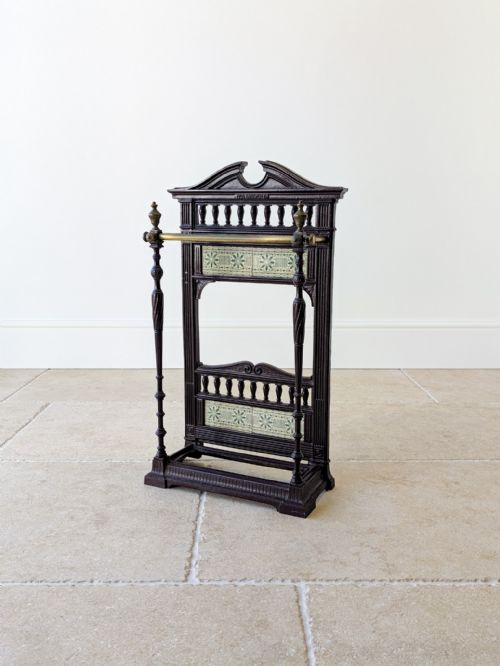
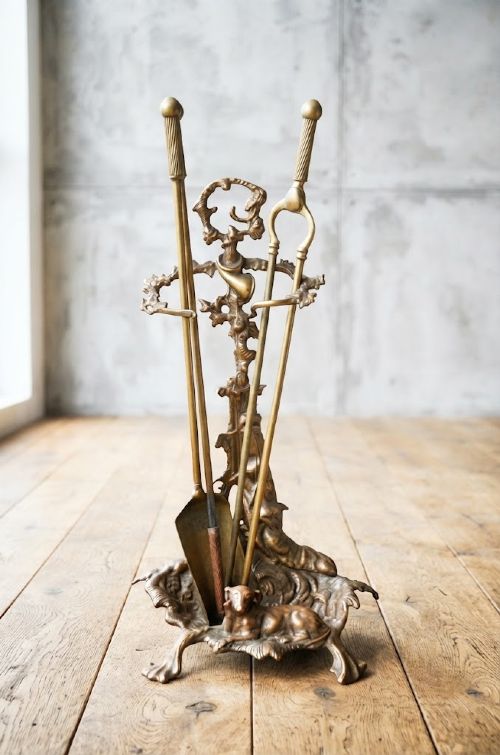
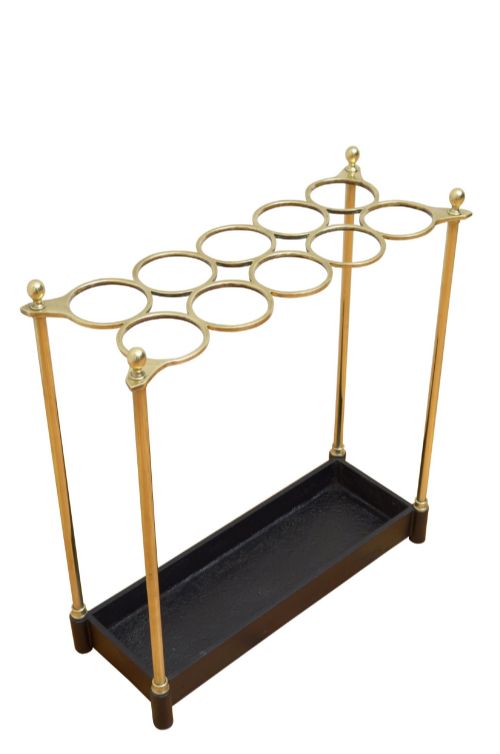
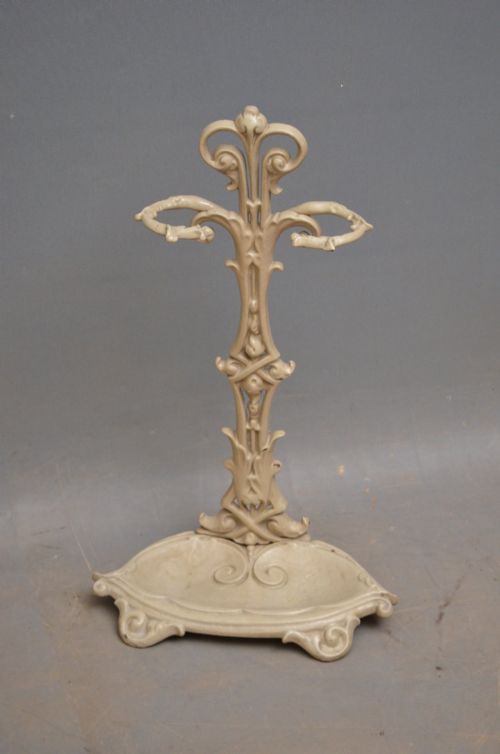
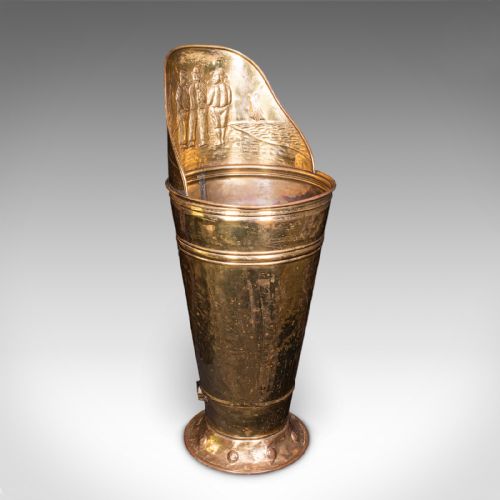
A decorative stick holder serves to store walking canes, umbrellas and fire irons in hallways and principal rooms. The selection includes dedicated umbrella stands, stick stands and combined umbrella and stick stands alongside planters and pots.
Most pieces date from the Victorian and Edwardian eras, with examples stretching from the nineteenth century into the twentieth. Cast iron, brass and ceramic forms predominate, often bearing elaborate ornamentation from the Aesthetic Movement, Art Nouveau and French Chateau styles.
How they were made
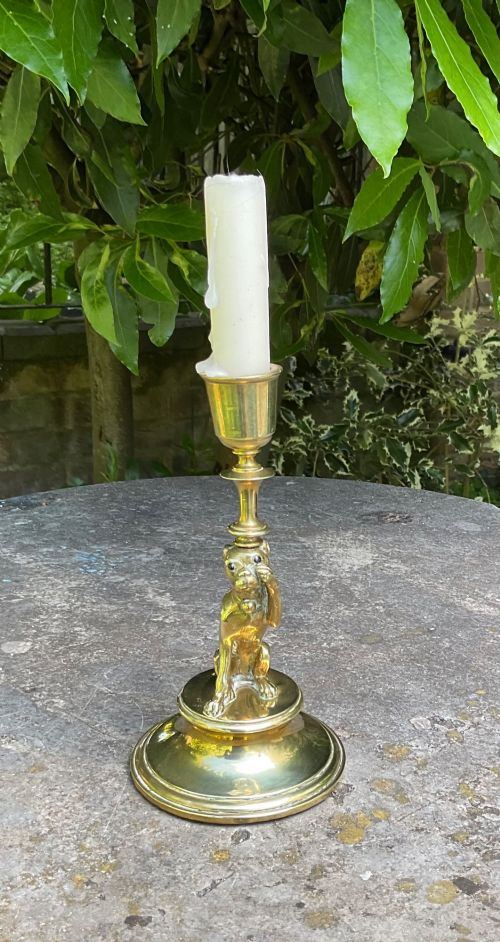
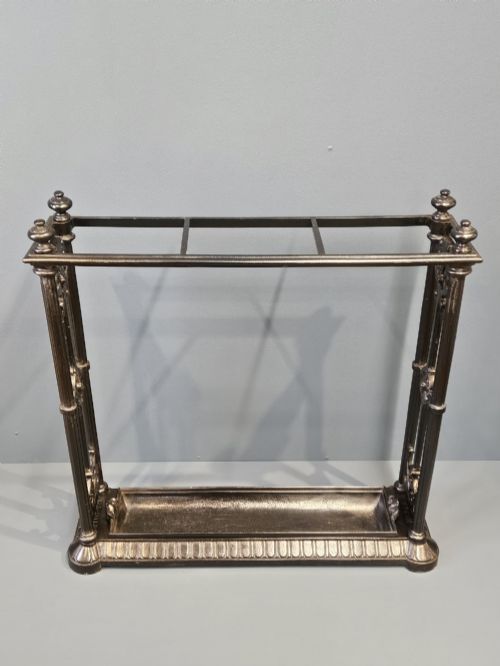
Metalwork stands utilise cast iron, brass and gilt bronze, frequently employing foundry casting for structural rigidity and decorative detail. Cast iron examples often bear manufacturer attribution or stylistic hallmarks associated with makers such as Coalbrookdale.
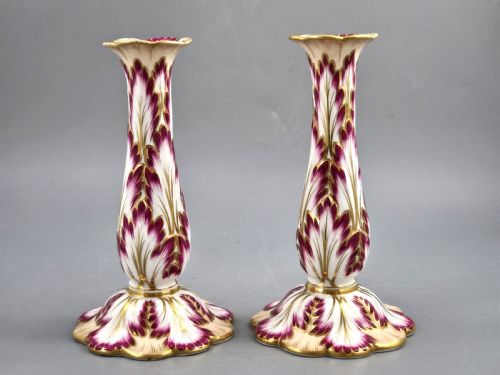
Ceramic and earthenware pieces incorporate moulded clay bodies with applied glazes or painted finishes, seen in Burmantofts Faience and porcelain productions. Additional materials include copper, silver, wood, leather and treen, reflecting diverse domestic requirements.
Listings span the nineteenth and twentieth centuries, featuring brass, cast iron, ceramic, copper and leather forms across Victorian and Edwardian periods.
What varies in quality
Quality rests upon the crispness of the casting in metal pieces and the precision of the modelling in ceramic and earthenware examples. Heavier gauge metals and deeply defined ornamentation distinguish finer productions from standard utility items.
The sophistication of the stylistic execution marks the division between ordinary pieces and superior examples. Design integrity, whether adhering to Aesthetic Movement principles or Art Nouveau curves, dictates the visual presence of the object.
Coalbrookdale·Ridgway·Burmantofts Faience
The Decorative Stick Holder Glossary
- Aesthetic Movement
- A late nineteenth-century design style emphasising visual beauty over narrative subject matter. It appears frequently on brass and ironwork of the period.
- Coalbrookdale
- A prominent ironfoundry known for producing cast iron stick stands and garden furniture. Their pieces often feature registration numbers or manufacturer marks.
- Spelter
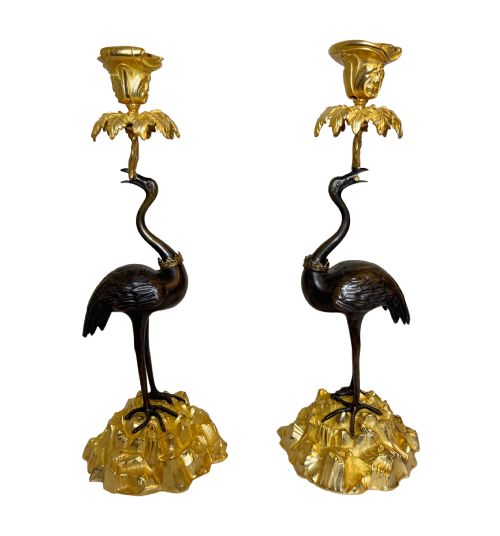
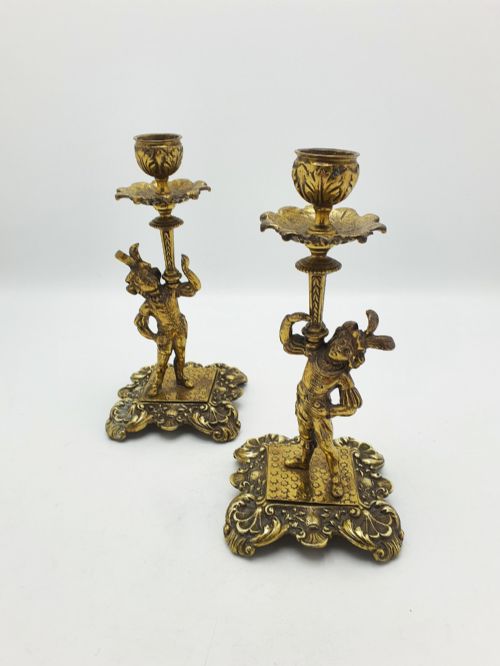
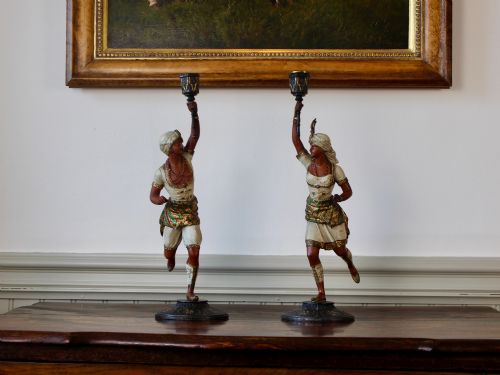
- An alloy of zinc and lead used as a substitute for bronze in decorative figures and candlesticks. It is typically painted or electroplated to simulate more costly metals.
- Treen
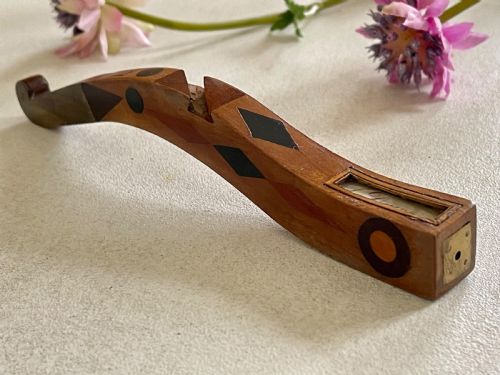
- Small handmade wooden household objects created by turning or carving. Items include knitting sheaths and turned vessels.
- Old Sheffield Plate
- A technique of fusing a thin sheet of silver to a thicker copper base. It was widely utilised before the invention of electroplating.
Decorative Stick Holder: Frequently Asked Questions
What is a decorative stick holder used for?
These pieces were originally designed for domestic hallways to hold walking sticks, umbrellas and occasionally fire irons. They kept wet or muddy items contained while serving as a prominent entrance hall furnishing.
Today, they continue to function in narrow entryways or mudrooms. Their substantial construction makes them suitable for modern umbrella and walking cane storage.
How do I identify a Victorian stick stand?
Victorian examples frequently utilise heavy cast iron with floral or figurative motifs, such as figures of William Wallace or classical designs. They often display registration marks or manufacturer attributions from prolific foundries.
Earlier nineteenth-century pieces tend to feature robust brass construction or simpler profiles. Later Edwardian items adopt lighter aesthetic movements or incorporate ceramic elements.
Are these stands suitable for wet umbrellas?
Metal and ceramic stands naturally withstand moisture from damp umbrellas and walking sticks. Many retain original drip pans positioned at the base to protect flooring.
Leather or wooden variants require more careful management regarding moisture. Placing a modern liner inside these organic forms prevents water damage to the historic material.
What styles are common among these holders?
The selection encompasses Victorian, Edwardian, Aesthetic Movement, Art Nouveau and French Chateau aesthetics. Cast iron pieces often reflect industrial foundry output, while brass models show country house influences.
Continental designs introduce alternative motifs like cold-painted spelter or distinct brass profiles. This variety allows the hardware to complement both traditional and eclectic interiors.