



Decorative Standing Lamp
A decorative standing lamp brings height and ambient light to a room, offering both functional illumination and sculptural presence.
Decorative Standing Lamp
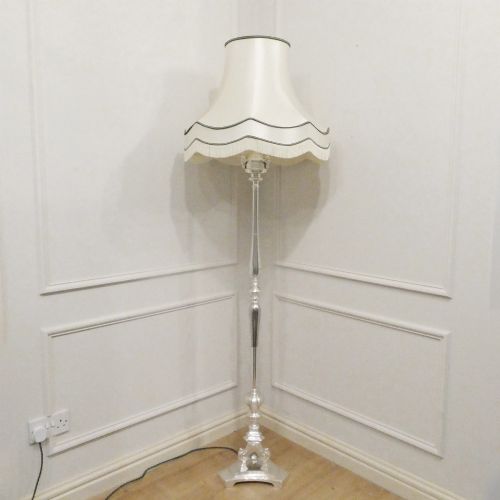
A decorative standing lamp typically manifests as a standard lamp, floor lamp, or torchere designed to elevate a light source on a vertical shaft. These pieces frequently appear alongside lamp tables and occasional tables that incorporate lighting elements or serve adjacent functions.
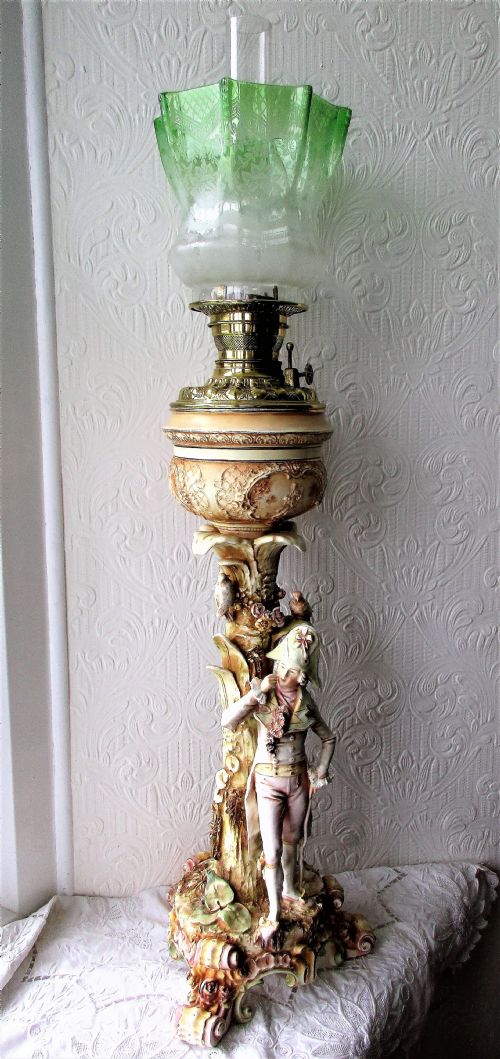
The selection draws from the nineteenth century through the early twentieth century, encompassing Victorian, Edwardian, and Art Nouveau eras. Continental influences emerge strongly through French Chateau, Venetian Baroque, and Italian styles alongside Anglo-Indian decorative expressions.
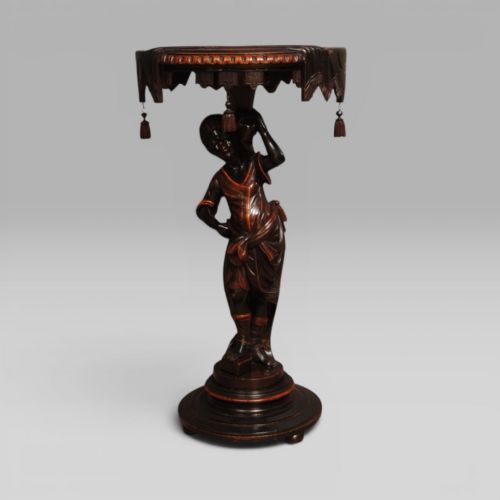
Standard lamps and floor lamps dominate the taller lighting formats, while torcheres provide slender vertical display columns. Subsidiary forms include occasional tables, wine tables, and side tables constructed from mahogany, giltwood, and brass.
Materials and construction methods
Metals form a primary structural component, utilising cast and turned brass, copper, gilt bronze, and painted iron for columns and standard lamp bases. Woodwork employs carved timber, flamed mahogany, giltwood, and gesso, frequently enriched with polychrome paint, lacquer, or marquetry details.
Surface ornamentation relies on traditional craft techniques including hand carving, gilding, marble inserts, glass stems, and fabric shades. Structural supports frequently utilise tripod bases, ebonised tripartite feet, and column shafts to ensure stability.
Decorative Standing Lamp Retail Price Guide 2026
Typical asking prices for decorative standing lamp among the pieces listed under this phrase on Sellingantiques today, from the lower quarter to the upper quarter. They describe what is for sale here now, not the wider market.
Listings feature standard lamps and floor lamps spanning the nineteenth century, Edwardian era, and 1930s, constructed in brass, giltwood, and mahogany.
Quality variations in standing lamps
The refinement of surface decoration distinguishes finer examples, particularly in the crispness of hand-carving on wood and gesso elements. Superior metalwork displays clean casting, secure joints, and well-executed patination on brass, copper, and gilt bronze surfaces.
The Decorative Standing Lamp Glossary
- Torchere
- A tall ornamental stand or floor lamp designed to hold a light source or display an object. These slender vertical supports often feature carved or gilded wood.
- Standard lamp
- A British term for a floor-standing lamp designed to illuminate a room from a raised height. They frequently incorporate wooden columns or brass stems.
- Tripod base
- A three-legged support structure used to stabilise vertical furniture and standard lamps. This configuration appears frequently on nineteenth-century tables and lamp bases.
- Giltwood
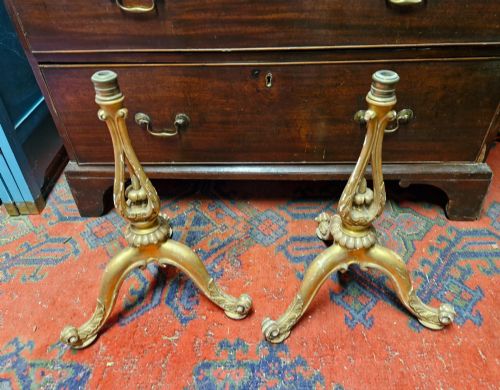
- Timber that has been coated with gold leaf or a gold-coloured metallic finish. This technique highlights carved decorative mouldings on nineteenth-century frames and floor lamps.
- Gesso
- A plaster-like mixture applied to wood surfaces as a base for painting or gilding. It allows for crisp relief ornamentation on standard lamps and decorative tables.
Decorative Standing Lamp: Frequently Asked Questions
What is a torchere lamp?
A torchere is a tall, slender standing lamp or display column designed to elevate a light source or decorative object.
These pieces use vertical height to create ambient illumination and decorative impact without occupying significant floor space.
How do I identify a Victorian standard lamp?
Victorian standard lamps often feature robust brass construction, carved timber columns, and traditional decorative motifs from the nineteenth century.
Examinations of the metal patina, wood grain, and base construction help distinguish these period pieces from later reproductions.
Where should I place a floor lamp?
Floor lamps suit corners, seating areas, or spaces requiring vertical height and layered illumination.
Their substantial presence makes them effective focal points in both traditional and eclectic room schemes.
What materials were used for antique lamps?
Antique standing lamps commonly utilise brass, copper, gilt bronze, carved wood, and giltwood.
Additional elements such as marble tops, glass stems, and fabric components frequently complement the primary metal and wooden structures.