


Decorative Standard Lamp
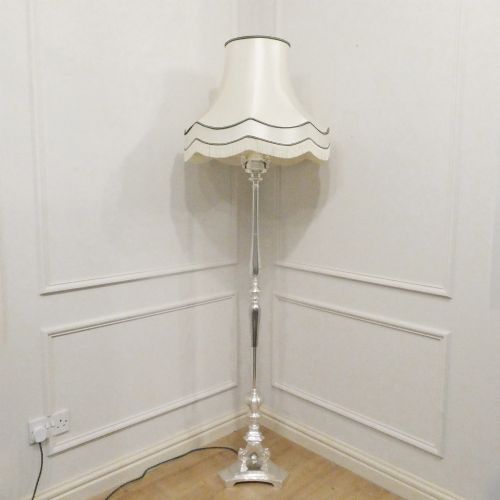
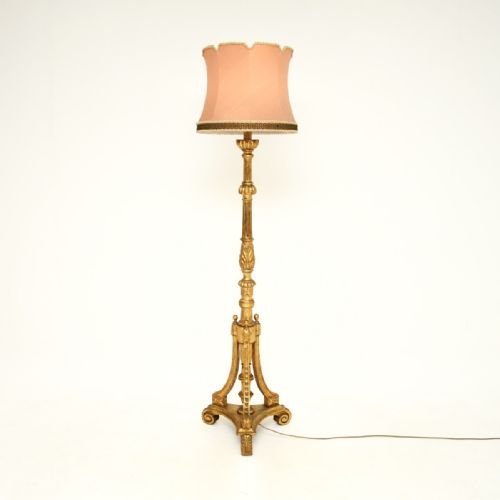
These decorative standard lamp examples bring height and presence to a room, offering both form and illumination through varied historical styles.
Decorative Standard Lamp
A decorative standard lamp provides vertical lighting and sculptural presence within a room, drawing the eye upwards while illuminating a specific corner or seating area.
The selection ranges widely across periods, including Victorian, Edwardian, and early twentieth-century examples, alongside nineteenth-century pieces.
Forms vary from slender brass columns and telescopic stems to carved wood figures, giltwood structures, and painted toleware.
How they were made
Metals such as brass, copper, and iron form the structure of many pieces, often paired with weighted bases for stability.
Carved wood, gesso, and giltwood provide ornate surface decoration, sometimes enhanced with polychrome paint, gold leaf, or marblisation.
Fabric shades and glass stems complete the construction, bringing textural contrast to the metallic and wooden elements.
Materials span brass, giltwood, fabric, glass, and polychrome paint across Victorian, Edwardian, and 1930s periods.
What varies in quality
The depth and execution of the carving separate standard work from finer pieces, particularly visible in figural standards and giltwood surfaces.
Materials dictate presence, with solid brass, cast bronze, and heavy iron offering a different weight and finish than lighter metal or timber constructions.
Original finishes such as polychrome paint and gilding retain more character than later interventions.
Messenger
The Decorative Standard Lamp Glossary
- Standard Lamp
- A tall freestanding floor lamp designed to illuminate a room from a vertical position. These objects combine lighting utility with decorative woodwork or metalwork.
- Giltwood
- Timber that has been coated with a thin layer of gold leaf or gold paint. This technique creates a bright, reflective surface popular in baroque and revival styles.
- Toleware
- Painted or lacquered metalware, often tin, used to add colour and pattern to decorative items. It appears in various hues across domestic lighting.
- Telescopic
- Describing a lamp standard with an adjustable height mechanism. This allows the overall height of the stem to be raised or lowered.
- Polychrome
- Decorated in multiple colours. This term describes painted surfaces that utilise various pigments to create pictorial or decorative depth.
Decorative Standard Lamp: Frequently Asked Questions
Where should I place a standard lamp?
These lamps suit corners or seating areas where overhead lighting feels too harsh. Their height allows them to anchor furniture groupings without occupying table space.
Position them beside armchairs or sofas to provide reading light while adding vertical interest to the room's composition.
How do I date a standard lamp?
Dating relies on observing the materials, construction methods, and stylistic motifs present in the base and stem. Victorian and Edwardian examples often feature heavy brass or carved wood.
Later pieces from the 1930s introduce simpler ironwork or distinct painted finishes that reflect the design shifts of the period.
Are these lamps wired for modern use?
Many examples arrive with modern wiring or have been adapted for contemporary electrical standards. It remains advisable to have any vintage electrical item checked by a qualified professional.
Rewiring preserves the historical base while ensuring safe daily operation in a modern home.
What styles are available?
The selection encompasses a broad range of historical aesthetics, from Victorian brass and Art Nouveau curves to Italian Baroque giltwood. Chinoiserie and French Chateau influences also appear.
Each style employs distinct materials, such as carved gesso or polychrome paint, to achieve its specific decorative effect.