




Decorative Silver Platter
These decorative silver platter examples bring nineteenth-century handwork and international revival styles straight to the modern table.
Decorative Silver Platter
A decorative silver platter encompasses large chargers, serving trays, footed tazzas, and wall plates spanning the eighteenth to the twentieth centuries. Buyers seeking a decorative silver platter will frequently encounter nineteenth-century silver plated copper and bronze items, alongside distinct regional metalwork.
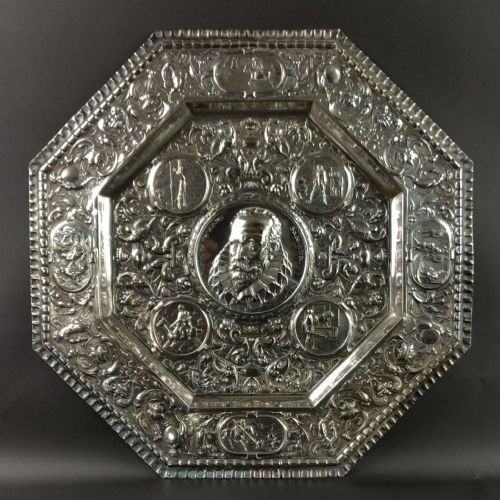
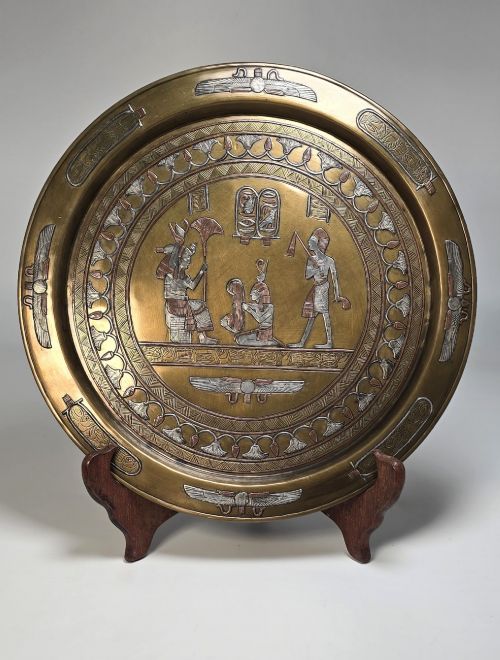
The selection ranges from Victorian revivalist chargers bearing figural battle scenes to Art Deco serving pieces and Middle Eastern inlaid trays. Anglo-Indian, Kashmiri, and Cairo Ware items appear alongside traditional English pewter and solid silver gilt sideboard dishes.
Materials and Techniques
Many items utilise silver plating applied over copper, bronze, or electrotype metal bases, reflecting nineteenth-century industrial techniques. Artisans also employed solid silver, pewter, and patinated copper as foundational materials.
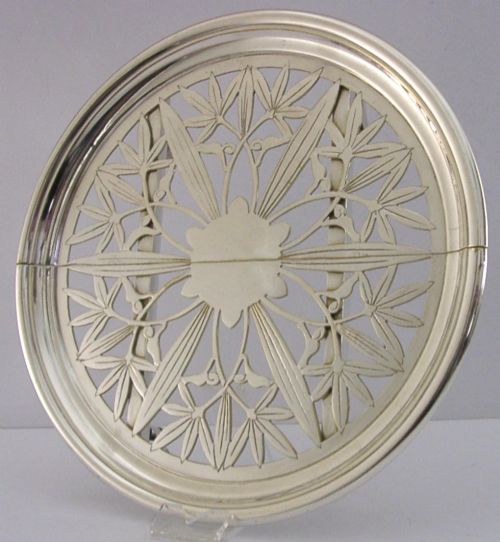
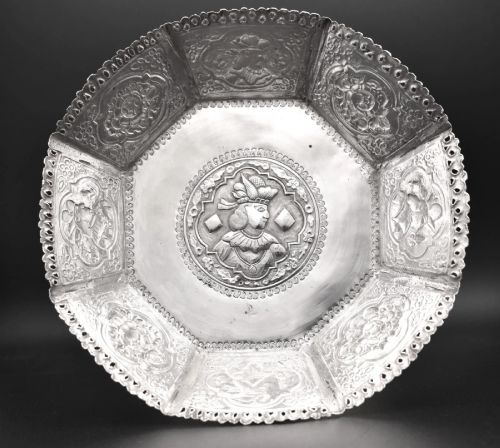
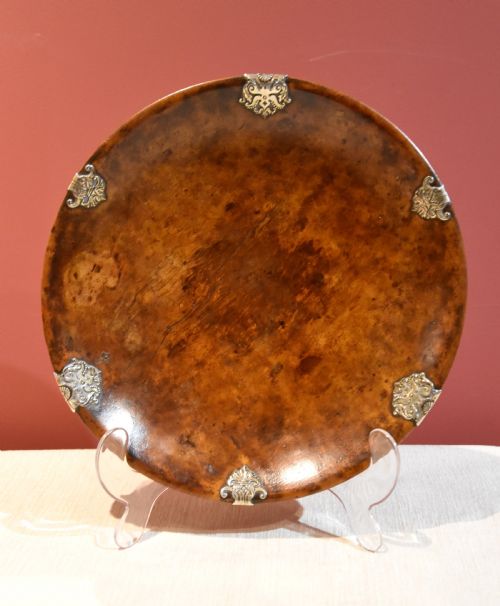
Surface decoration frequently relies on repoussé work, chasing, and metal inlay using silver and copper. Pierced metalwork, hand-beaten finishes, and silver mounting on turned wood appear across specific styles.
Listings feature items spanning the eighteenth through the twentieth centuries, encompassing Victorian, Art Deco, and Egyptian Revival styles.
Assessing Quality and Execution
Quality rests upon the crispness of the hand-hammered repoussé detail and the precision of inlaid metalwork on chargers and trays. Heavier gauge metal bases and substantial silver plating distinguish finer domestic and international pieces.
Makers known for advanced electrotype techniques and Parisian design output command attention for their structural execution. The depth of historical relief work and the preservation of original patination direct the distinction between standard production and exceptional examples.
Christofle·Elkington and Co·S Duncomb
The Decorative Silver Platter Glossary
- Repoussé
- A metalworking technique where the artisan hammers the design from the reverse side to form a raised relief on the front. This method creates the three-dimensional figural scenes seen on many nineteenth-century chargers.
- Electrotype
- A replica or object produced through an electrolytic deposition of silver onto a prepared mould. Makers utilised this process to capture fine sculptural detail without solid metal costs.
- Charger
- A large ornamental plate or dish traditionally displayed on a sideboard or wall rather than used for serving food. These items often feature heavy ornamentation or commemorative figural scenes.
- Tazza
- A shallow bowl or plate raised upon a central foot or pedestal. Such pieces serve as decorative centrepieces in various nineteenth-century collections.
- Cairo Ware
- Late nineteenth-century metalware originating from Egypt featuring intricate silver and copper inlay upon a brass, bronze, or copper ground. These pieces typically display traditional Islamic geometric or calligraphic motifs.
Decorative Silver Platter: Frequently Asked Questions
How were decorative silver platters used historically?
Large chargers and heavy trays served primarily as sideboard displays to demonstrate household wealth and taste during formal dinners. Many incorporated raised figural scenes intended for visual appreciation rather than daily dining service.
Smaller trays and tazzas functioned as calling card receptacles or decorative centrepieces within Victorian and Edwardian drawing rooms. Wall plates featured mounting loops or rims designed specifically for vertical display.
How do I identify Cairo Ware metalwork?
Cairo Ware items typically display contrasting inlay work composed of thin silver and copper wires hammered into a dark patinated bronze or copper body. The decorative schemes incorporate Islamic geometric patterns, foliage, and Arabic script.
Originating around the late nineteenth century, these pieces emerged from workshops catering to the European Grand Tour market. Their construction combines traditional Middle Eastern inlay methods with forms popular among Victorian collectors.
What is the difference between a tray and a charger?
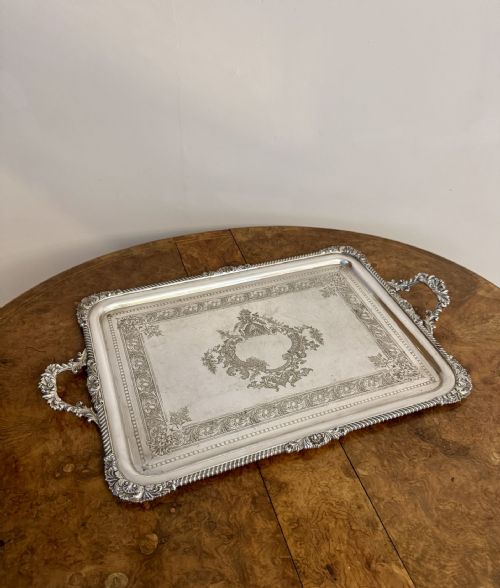
A tray is generally manufactured with integrated handles or a flat base intended for carrying drinks, food, or vessels from room to room. Trays prioritise functional stability and grip alongside aesthetic decoration.
Chargers are ornamental plates lacking functional handles, designed to sit beneath smaller service dishes or stand independently on sideboards and walls. Their surfaces often feature deep repoussé relief work that would impede stable placement of dining ware.
How should I clean antique silver plated items?
Cleaning requires mild soap, warm water, and a soft cloth to remove surface dust without stripping the underlying plating. Abrasive polishes and chemical dips must be avoided because they wear down thin nineteenth-century silver layers.
Patinated copper, bronze, and patinated pewter require minimal intervention to preserve their historic dark surfaces. Gentle dusting maintains the stability of inlaid wires and hammered details.