

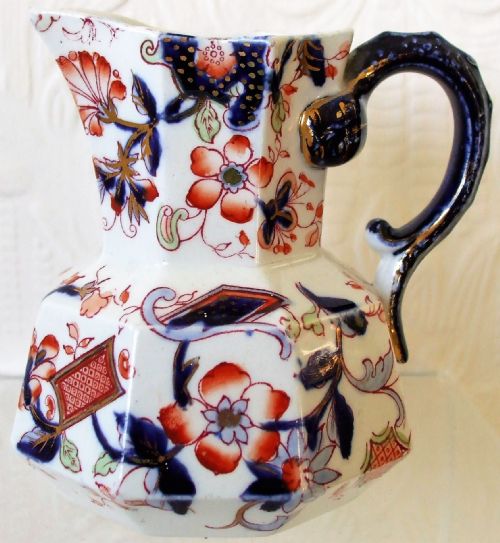


Decorative Porcelain Jug
A decorative porcelain jug brings tactile charm and historic artistry to a room, offering refined form through painted scenes, gilding and sculptural handles.
Decorative Porcelain Jug
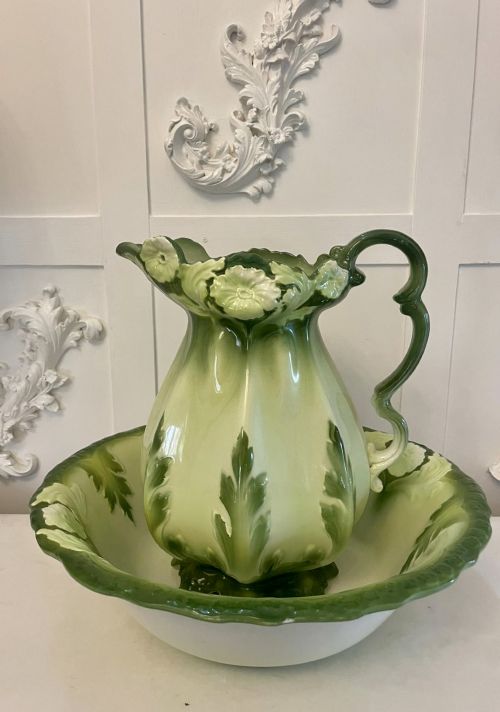
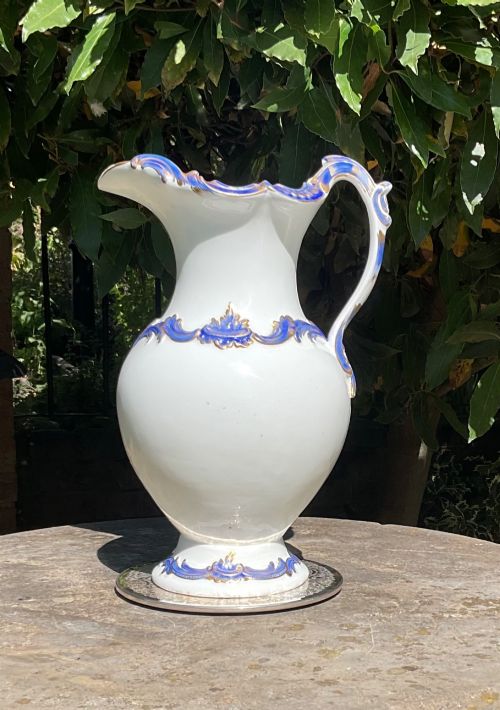
A decorative porcelain jug encompasses diverse forms including water jugs, ewers, and pitchers originating from the nineteenth and early twentieth centuries. These vessels served functional washstand duties or purely decorative roles in Victorian and Edwardian interiors.
Buyers meet variations spanning Victorian Rococo Revival curves, Art Nouveau fluidity, and Aesthetic Movement motifs. Many survivors form part of larger jug and bowl sets or stand as individual ornamental ewers.
Makers utilised porcelain alongside ceramic and earthenware bases, applying enamel, gold leaf, and cobalt blue glaze. These pieces reflect distinct periods from the eighteen seventies through to nineteen twenty.
Materials and production techniques
Potters shaped fine porcelain bodies into complex forms such as cleft jugs and reticulated ewers using specialised moulds and throwing techniques. Skilled artisans then applied glazes and hand-painted floral or figural panels before kiln firing.
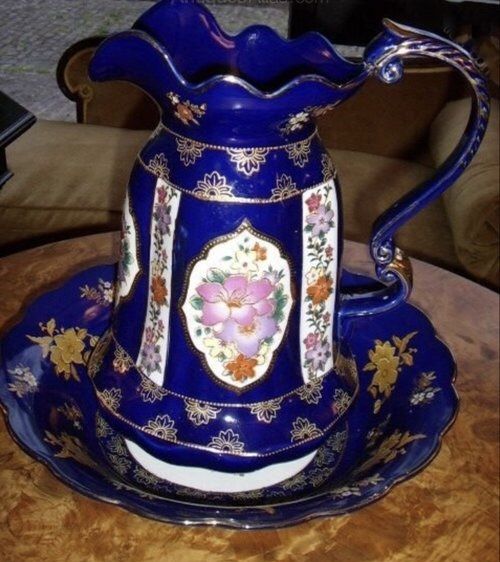
Gilding, gold leaf, and raised gold decor were meticulously added to accentuate handles, rims, and panels. Enamel colours were layered onto cobalt blue grounds or white porcelain surfaces to achieve rich decorative contrasts.
Decorative Porcelain Jug Retail Price Guide 2026
Typical asking prices for decorative porcelain jug among the pieces listed under this phrase on Sellingantiques today, from the lower quarter to the upper quarter. They describe what is for sale here now, not the wider market.
Materials recorded across the inventory include earthenware, ceramic, enamel, and gold leaf applied over fine porcelain.
Distinctions in craftsmanship
Quality rests in the precision of the hand-painted details, the crispness of reticulated work, and the richness of the gilding applied to the porcelain. Superior pieces demonstrate exceptional control in enamel application and balanced proportions across complex ewer forms.
The sophistication of the stylistic influence, whether Persian, Japanese Imari, or classical revival, elevates the artistic merit of the vessel. Maker attribution and the preservation of delicate raised gold decor further separate standard production from masterworks.
Keeling and Co·Grainger Worcester·Royal Worcester·Doulton Burslem·Royal Crown Derby·Royal Dux·Coalport
The Decorative Porcelain Jug Glossary
- Ewer
- A large jug with a wide spout and handle, traditionally used for holding water or wine.
- Reticulated
- Ceramic work featuring an openwork or netted pattern carved into the body before glazing.
- Gilding
- The application of gold leaf, gold dust, or a gold-coloured mixture to the surface of the porcelain.
- Hydra jug
- A specific classical vessel shape characterised by multiple handles or distinctive pouring rims.
- Imari
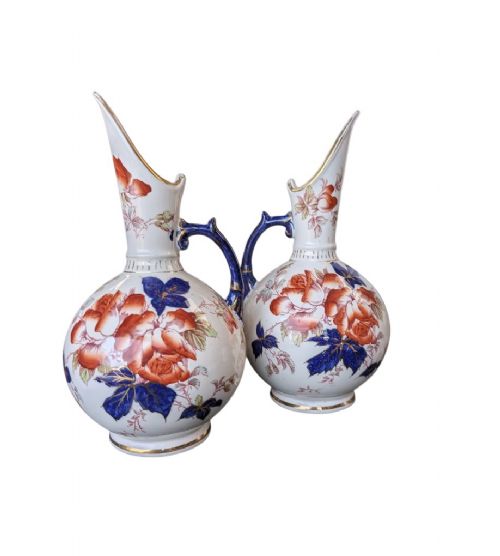
- A style of Japanese decoration featuring deep cobalt blue and iron red with gold accents.
Decorative Porcelain Jug: Frequently Asked Questions
What is a decorative porcelain jug used for?
These vessels historically served practical washing duties on bedroom washstands or functioned purely as ornamental display pieces in formal rooms.
Today, they add historic character to interiors, often displayed on mantelpieces, sideboards, or as standalone floral vases.
How do I date a porcelain ewer?
Dating relies on maker marks, factory culls, and stylistic indicators such as Victorian curves or Art Nouveau asymmetry.
Catalogue research helps link specific pattern names and decorator signatures to distinct decades between eighteen thirty and nineteen twenty.
How should I clean my antique jug?
Careful dusting with a soft, dry cloth preserves delicate hand-painted enamel and raised gold decorations over time.
Immersion in water or harsh chemical cleaners should be avoided to protect antique glazes and metallic leaf.