


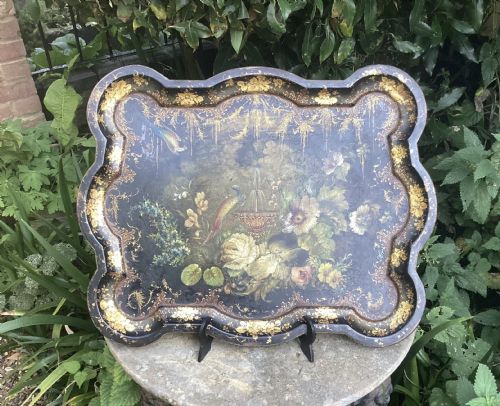

Decorative Papier Mache Tray
These decorative papier mache tray pieces are solid serving and display items from the Georgian, Regency, and Victorian eras, prized for their painted and gilded surfaces.
Decorative Papier Mache Tray
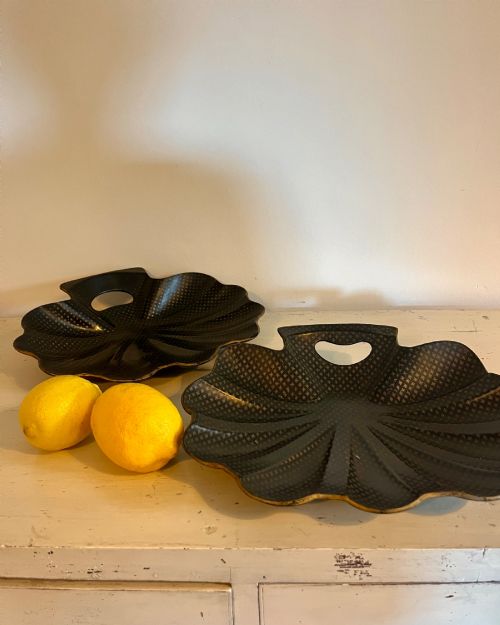
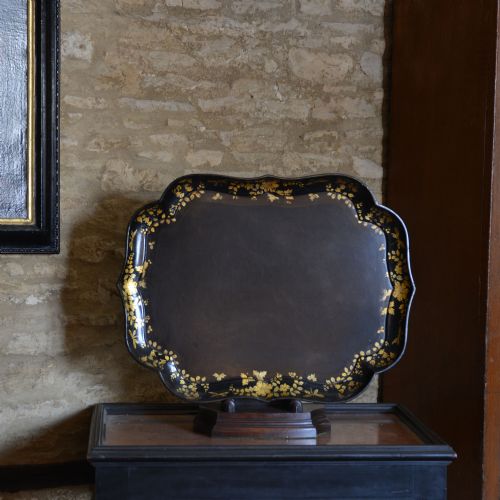
A decorative papier mache tray is a functional serving or display surface shaped from pulped paper, most commonly found in Georgian, Regency, and 19th Century forms. These pieces range from small dishes and card baskets to massive oval trays and occasional tables mounted on stands.
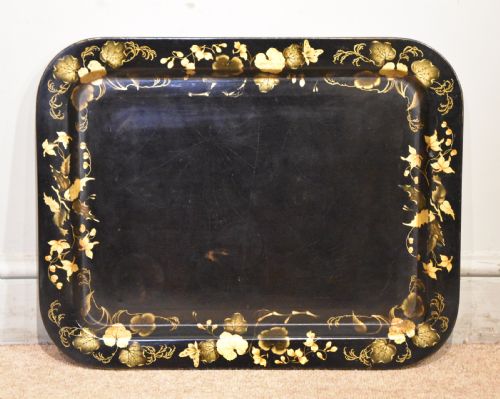
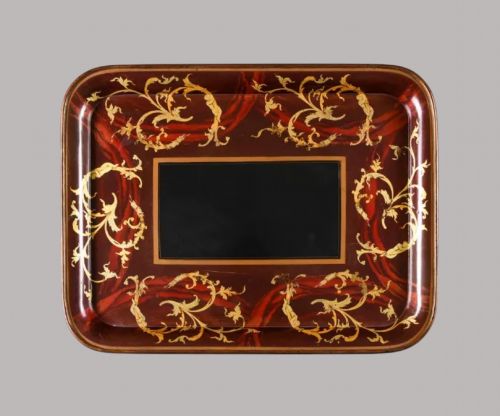
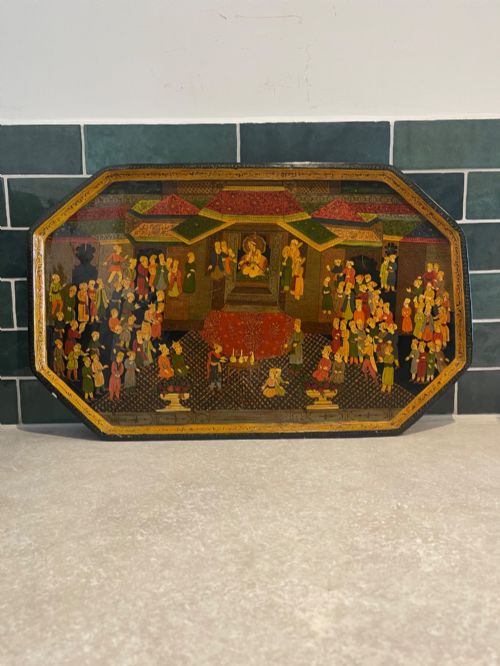
The version you are most likely to meet on this page is the 19th Century or Regency rectangular and oval tray, often finished with lacquering or Chinoiserie motifs. They also appear alongside toleware and Japanese export pieces from the Edo and Meiji periods, as well as Kashmiri variants.
Buyers choose these objects for their rich historical ornament and their adaptability as serving items or tabletop displays. Their robust construction allows them to transition easily from functional service to mounted wall or stand display.
How they were made
These trays are constructed using layers of paper pulped or pasted together, then pressed and dried into rigid forms before receiving a durable lacquer base. This layered technique creates a lightweight yet exceptionally sturdy body capable of supporting considerable weight.
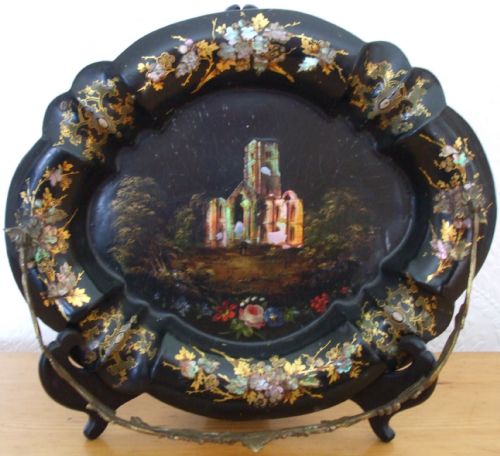
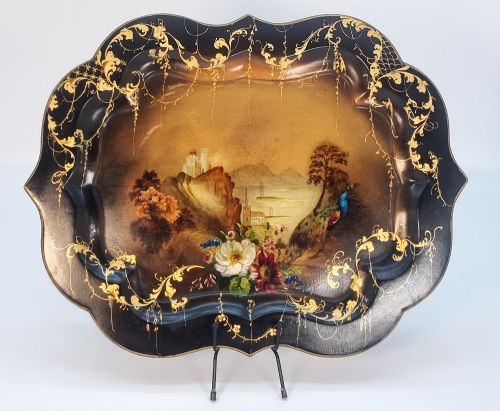
Surface decoration relies heavily on hand painting, gold leaf application, and gilding, frequently enhanced by inlaid mother-of-pearl. Japanning and lacquer techniques provide the signature deep gloss finish characteristic of the best examples from English and international workshops.
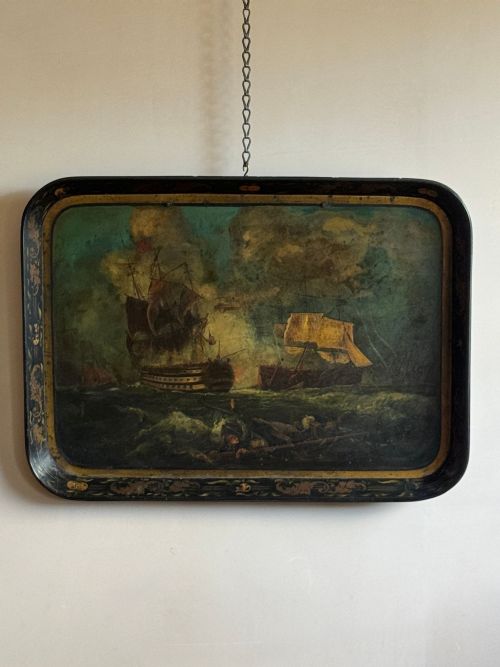
One remarkably honest fishing-themed tray proudly embraces a delightfully naive 18th-century charm.
What varies in quality
Quality rests primarily in the crispness of the hand-painted details and the depth of the lacquer finish. Pieces bearing the marks of established makers display finer brushwork and more complex landscape or figural scenes.
The preservation of the original gilt embellishments and mother-of-pearl inlay dictates the overall standing of an example. Substantial proportions and well-maintained structural integrity also separate standard utilitarian items from the finest examples.
Jennens and Bettridge·Clay
The Decorative Papier Mache Tray Glossary
- Papier-mâché
- A composite material made from paper pulp or layers of paper reinforced with glue, chalk, and resin, then baked and lacquered. This substance forms the lightweight core of the trays.
- Japanning
- A European imitation of East Asian lacquerwork achieved through successive coats of varnish and heat drying. It produces a glossy black or coloured surface often decorated with gilt motifs.
- Toleware
- Metalware, usually iron or tin, coated with lacquer or enamel and frequently painted. It shares overlapping aesthetic and manufacturing histories with papier-mâché objects of the period.
- Chinoiserie
- A European artistic style reflecting Chinese motifs and techniques, popular in interior decoration throughout the 18th and 19th centuries. It appears frequently on the painted surfaces of these trays.
- Mother-of-pearl
- The iridescent inner layer of mollusc shells, used extensively for inlay work on papier-mâché surfaces. It catches the light to add dimension to landscapes and floral patterns.
Decorative Papier Mache Tray: Frequently Asked Questions
What are decorative papier mache trays made of?
These trays are manufactured from layered paper pulp and binders, compressed into sturdy boards and finished with protective lacquer.
Craftsmen then decorated these smooth surfaces using paint, gold leaf, and mother-of-pearl inlay.
How were these trays used historically?
Owners utilised them primarily for serving tea, coffee, or refreshments in formal drawing rooms.
Larger versions also functioned as card trays or were eventually mounted on stands to serve as occasional tables.
How do I care for a papier mache tray?
Keep these items away from direct sunlight, excessive moisture, and high heat to protect the delicate lacquer and paintwork.
Dust them gently with a dry, soft cloth and avoid chemical cleaners entirely.
How can I tell the period of a tray?
Georgian and Regency pieces often feature neoclassical motifs or simpler japanned finishes, while Victorian examples lean toward rich floral or Chinoiserie decoration.
Maker signatures or stamps, when present, provide the most reliable guide to dating an item.