




Decorative Oval Hanging Mirror
A decorative oval hanging mirror brings proportion and reflected light to a room, drawing the eye with its curved frame.
Decorative Oval Hanging Mirror
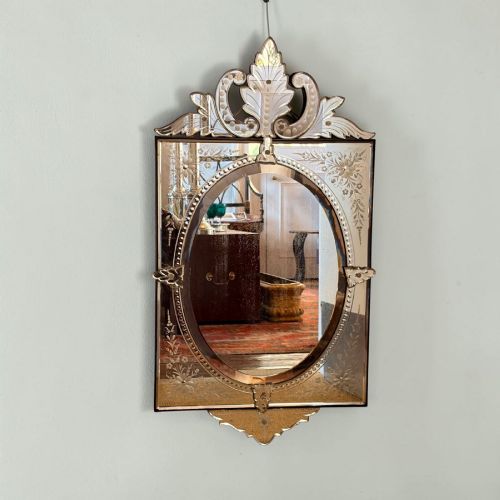
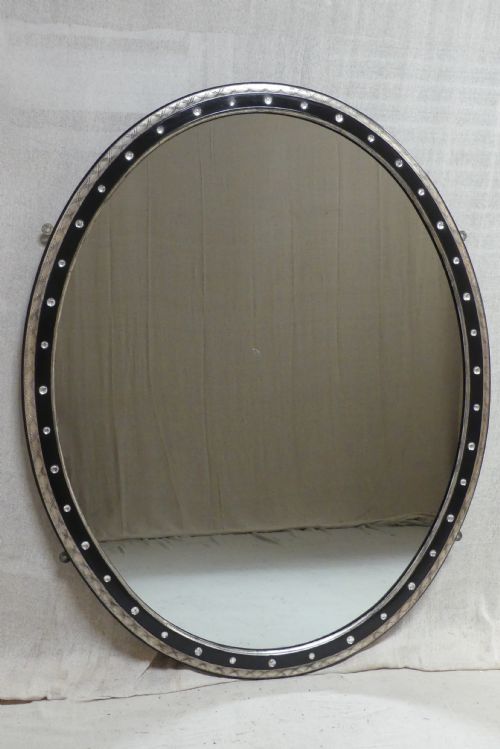
A decorative oval hanging mirror takes many forms across the Victorian, Edwardian, and Regency periods, utilising timber, gesso, and glass to shape the wall space.
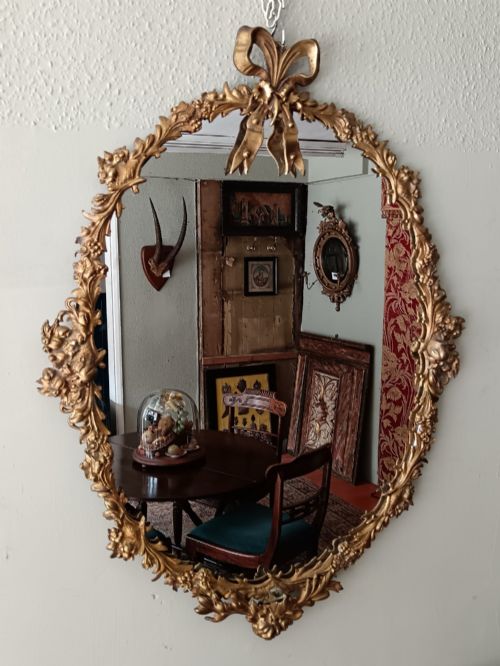
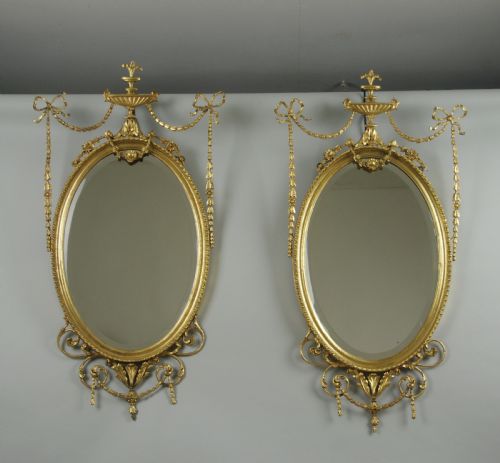
The most common examples on this page date from the nineteenth and early twentieth centuries, displaying revival styles such as Louis XVI, Adam, and Rococo.
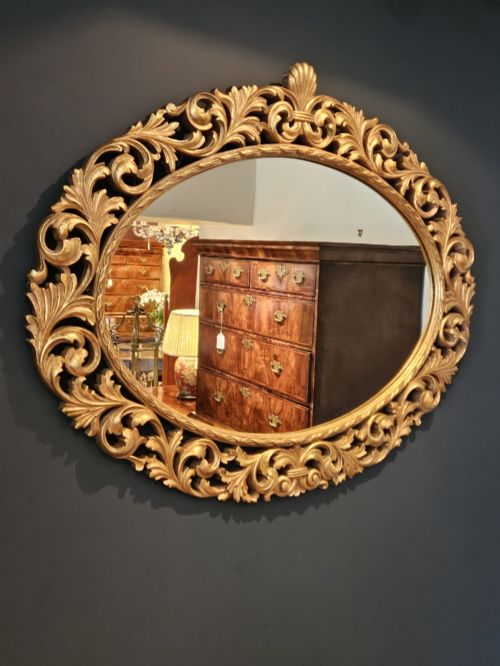
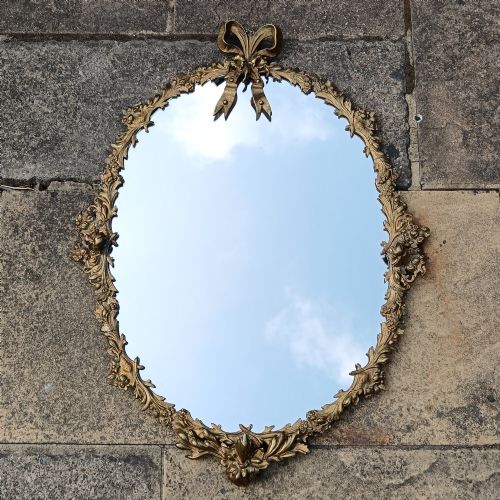
These wall mirrors range from large carved timber and parcel gilt pieces to smaller mahogany frames with fretwork or metal structures.
How they were made
Frames are constructed from carved timber, mahogany, or composition gesso, shaped into curves and applied with layers of gilt or bronze.
Makers set bevelled or flat glass plates securely into these moulded surrounds, often adding hanging fixings suited to the weight of the timber and metal.
Several mirrors arrive paired up, offering identical reflections for symmetry-loving decorators.
What varies in quality
The depth and crispness of the carving distinguish a standard frame from a superior one, particularly in the hand-worked detail of gesso and giltwood ornament.
The clarity and original condition of the glass plate, alongside the integrity of the underlying timber joinery, dictate the overall standard of the mirror.
The Decorative Oval Hanging Mirror Glossary
- Gesso
- A plaster-like mixture applied to timber frames to form a smooth surface for gilding. It allows for intricate moulded decoration.
- Giltwood
- Timber covered with a thin layer of gold leaf. It gives frames a warm metallic lustre.
- Parcel Gilt
- A finish where only specific parts of a wooden frame are gilded, leaving the underlying mahogany or timber exposed elsewhere.
- Fretwork
- Openwork ornamentation cut from wood, often seen on the edges of eighteenth and nineteenth-century mahogany frames.
- Bevelled Glass
- A mirror glass plate with an angled edge. This technique catches the light at the periphery of the reflection.
Decorative Oval Hanging Mirror: Frequently Asked Questions
How do I hang a heavy antique oval mirror?
Check the weight of the timber and frame before selecting a wall fixing. Use heavy-duty fixings secured directly into wall studs or appropriate masonry anchors to support the load safely.
Ensure the original hanging rings or cords on the back of the mirror remain strong enough for the task. If necessary, supplement them with professional-grade mirror wire or brackets.
Where should I place an oval wall mirror?
Hang the mirror at eye level in hallways, above mantelpieces, or opposite windows to bounce natural light around the room. The curved shape softens rigid architectural lines.
Keep the piece away from damp environments like unventilated bathrooms to protect the gesso, timber, and silvered backing of the glass.
How do I clean an antique mirror frame?
Dust the carved giltwood or timber gently with a soft, dry brush to remove surface particles. Avoid liquid cleaners on the frame, as moisture damages old gesso and gilt.
Clean the glass plate with a soft cloth and a minimal amount of glass cleaner applied to the cloth rather than sprayed directly onto the glass, preventing liquid seeping behind the edges.
How can I tell a Victorian mirror from an Edwardian one?
Victorian mirrors often feature heavier ornamentation, deep gesso mouldings, and strong Rococo or Adam revival influences. Mahogany and heavily gilded timber dominate this period.
Edwardian pieces tend to present lighter proportions, sometimes incorporating metal frames or simpler carved details while retaining traditional oval formats.