





Decorative Metal Cup
These decorative metal cup pieces bring classical design and solid weight to a room, offering tactile historical character.
Decorative Metal Cup
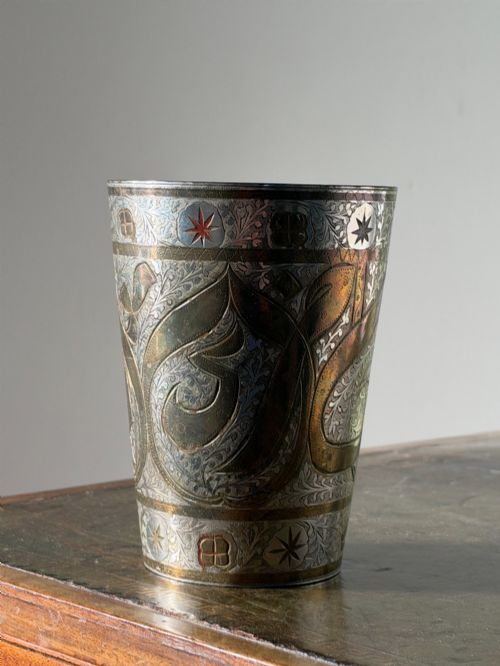
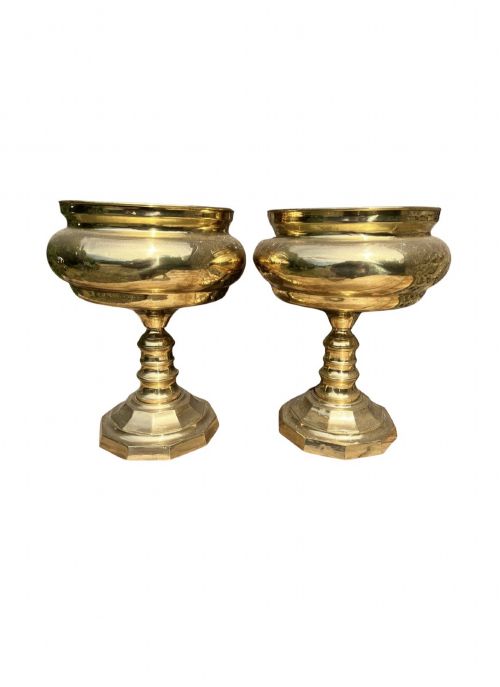
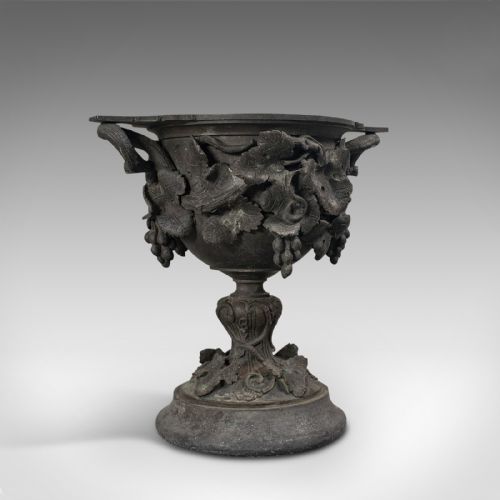
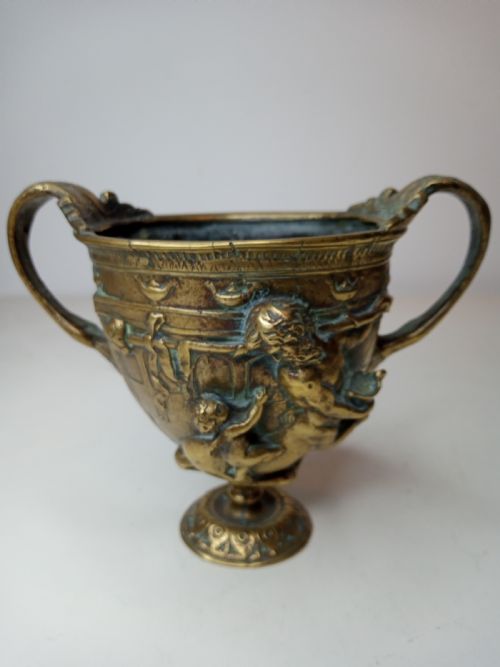
When you search for a decorative metal cup, you encounter vessels ranging from small chalices to large two-handled trophy vases and tazzas. These objects often draw on classical forms and historical revivals, serving as display items rather than everyday tableware.
You are most likely to meet 19th century and Victorian examples on this page, alongside pieces from the Arts and Crafts and Jugendstil movements. Forms include urns, goblets, and tazzas produced in continental Europe and Britain.
How they were made
Makers utilised cast bronze, brass, and pewter, often combining metalwork with contrasting materials like Siena marble and ebonised wood. Bronze and brass components were frequently cast and finished by hand to achieve crisp classical detailing.
Enamel work and applied decorative patterns, such as the mistletoe motif on pewter, demonstrate specialised surface techniques. Structural elements like handles and lids were cast separately and joined to the main body of the vessel.
Decorative Metal Cup Retail Price Guide 2026
Typical asking prices for decorative metal cup among the pieces listed under this phrase on Sellingantiques today, from the lower quarter to the upper quarter. They describe what is for sale here now, not the wider market.
Mistletoe patterns adorn pewter vessels, allowing festive botany to remain permanently cast in metal on a nineteenth-century chalice.
What varies in quality
The refinement of the casting and the crispness of the chased or engraved detail separate standard production from superior pieces. Weight, balance, and the quality of the base material, such as genuine Siena marble or heavy bronze, dictate the overall standard.
The integrity of construction, particularly where handles or stems join the main vessel, determines how well a piece survives. Surface patination and the preservation of original enamel or contrasting wood accents also influence the desirability of the object.
Kayserzinn
The Decorative Metal Cup Glossary
- Tazza
- A shallow cup or bowl mounted on a stem and foot, frequently utilised for display in neoclassical interiors.
- Kantharos
- An ancient Greek cup style featuring two high-swung handles, seen in later classical revival metalwork.
- Jugendstil
- The continental European manifestation of Art Nouveau, characterised by flowing organic lines and natural motifs.
- Grand Tour
- A period of European travel undertaken by the wealthy in the 18th and 19th centuries, inspiring classical souvenir bronzes.
- Tyg
- A large drinking vessel with multiple handles, often produced in pewter or ceramic during revival periods.
Decorative Metal Cup: Frequently Asked Questions
What is a decorative metal cup used for?
These vessels functioned primarily as decorative objects, mantelpiece ornaments, or trophies rather than practical drinking vessels.
Collectors display them on sideboards, desks, or architectural ledges to add metallic texture and historical weight to an interior.
How do I care for bronze and brass?
Keep the metal clean with a soft, dry cloth to prevent dust accumulation. Avoid aggressive polishes that strip away historical patination.
Protect pieces mounted with marble or enamel from moisture and direct sunlight to preserve the combined materials.
How can I tell a 19th-century piece from earlier periods?
Examine the casting quality, tool marks, and fastening methods used on the underside or interior of the vessel. Nineteenth-century interpretations often employ revival styles like Neoclassical or French Rococo with machine-assisted finishing.
Compare the base materials and patination against documented examples from specific periods such as the Georgian era or Victorian times.
What styles are common in these metal cups?
Neoclassical, Grand Tour, and French Rococo Revival dominate earlier pieces, drawing heavily on classical antiquity.
Later works embrace Arts and Crafts and Jugendstil aesthetics, focusing on Celtic revival motifs and organic plant forms.