



Decorative Marble Centerpiece
A decorative marble centerpiece anchors a room with classical weight, bringing stone and metal together on the dining table or sideboard.
Decorative Marble Centerpiece
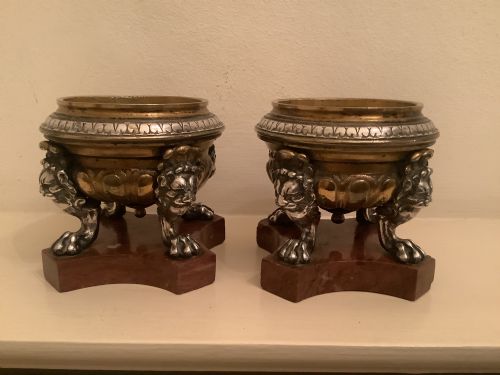
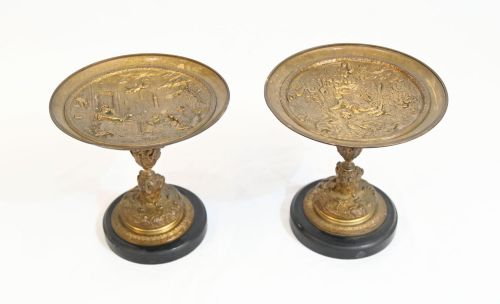
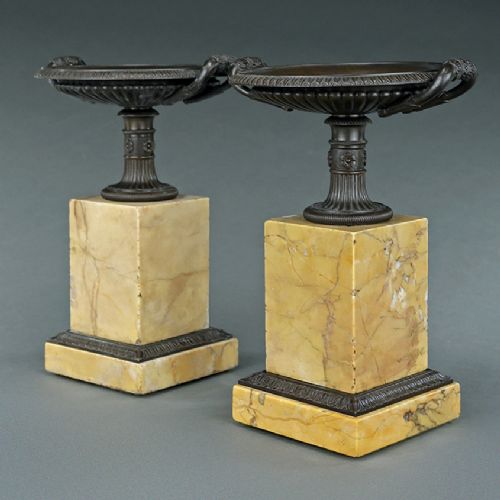
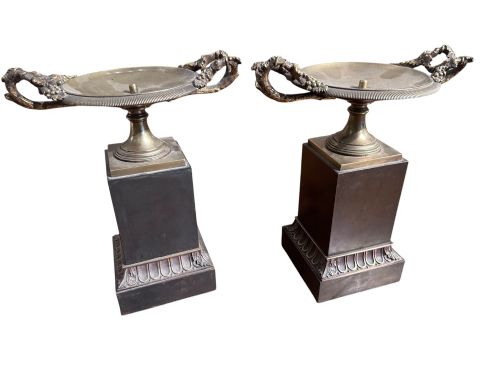
A decorative marble centerpiece takes the form of a tazza, urn, bowl or lamp designed to sit prominently in the centre of a room or table. These objects draw primarily on French Empire, Neoclassical, and Grand Tour styles from the nineteenth century, reflecting a deep fascination with classical antiquity. Buyers searching for a decorative marble centerpiece will frequently encounter pairs of bronze and marble tazzas resting on classical bases.
The materials span white and coloured marbles combined with cast bronze, ormolu, silver plate, alabaster, glass, and occasional Limoges enamel plaques. Forms range from low comports and flat dishes to campana urn bases supporting lamps or candelabra. Most examples date from the nineteenth century, specifically around the eighteen seventies and eighties, originating from French and Italian workshops.
How they were made
Makers shaped the heavy stone bodies of these centerpieces from solid marble and softer alabaster, turning and polishing the stone to a smooth finish. Metal components such as handles, feet, and rims were cast in bronze and frequently finished with ormolu gilding or silver plating.
Artisans assembled these mixed-media objects by mounting metal bowls or dishes securely onto stone bases, sometimes incorporating enamel plaques or glass elements into the composition. The integration of bronze casting with turned marble required precise engineering to ensure the heavy pieces remained stable.
Decorative Marble Centerpiece Retail Price Guide 2026
Typical asking prices for decorative marble centerpiece among the pieces listed under this phrase on Sellingantiques today, from the lower quarter to the upper quarter. They describe what is for sale here now, not the wider market.
The listings show nineteenth-century pieces combining marble, bronze, ormolu, and alabaster in French Empire and Grand Tour styles.
What varies in quality
Quality in a decorative marble centerpiece reveals itself in the crispness of the bronze casting and the depth of the ormolu gilding. Finer pieces demonstrate meticulous hand-chasing on the metal mounts, whereas simpler items show softer detail from worn moulds.
The selection of the marble itself marks another distinction, with uniform grain and rich colouration separating superior examples from plain stone. Matching pairs also command greater attention, requiring symmetry in both the stone turning and the metalwork.
The Decorative Marble Centerpiece Glossary
- Tazza
- A shallow bowl or dish mounted on a stem and foot, commonly used as a centerpiece or decorative display piece in nineteenth-century interiors.
- Ormolu
- Gilt bronze produced by applying a finely ground gold-mercury amalgam to cast bronze, creating a rich golden surface.
- Campana Urn
- A bell-shaped vessel with a wide mouth and a tapered foot, frequently used in classical designs for urns and lamp bases.
- Grand Tour
- A cultural journey undertaken by nineteenth-century travellers who collected classical souvenirs, including miniature bronzes and architectural marbles.
Decorative Marble Centerpiece: Frequently Asked Questions
What is a decorative marble centerpiece?
A decorative marble centerpiece is a nineteenth-century ornamental object, such as a tazza, urn, or lamp base, designed to anchor a table arrangement. These pieces combine carved stone with cast bronze and ormolu.
They reflect classical revival styles popular across France and Italy during the eighteen seventies and eighties.
How were marble centerpieces used historically?
Historically, these pieces occupied the middle of dining tables, sideboards, or library mantels to display fruit or simply serve as sculptural ornaments. They projected taste and an appreciation for classical antiquity.
Wealthy households placed paired tazzas or large urns in prominent reception rooms to catch the light and impress visitors.
How do I style a marble centerpiece today?
Place a tazza or urn on a large dining table, sideboard, or console where the stone and metalwork can be appreciated from multiple angles. Keep the surrounding surface relatively clear to let the sculptural form dominate.
Pairing matching pieces at opposite ends of a long room creates a balanced, formal arrangement inspired by nineteenth-century interiors.
How can I tell nineteenth-century pieces apart?
Nineteenth-century examples display distinct manufacturing traits, such as sand-cast bronze components, hand-chased surface details, and specific handling of white or coloured marbles. French and Italian pieces often incorporate regional stylistic markers like Empire mounts or Grand Tour motifs.
Comparing the weight, patination, and joining techniques helps distinguish genuine nineteenth-century work from later reproductions.