
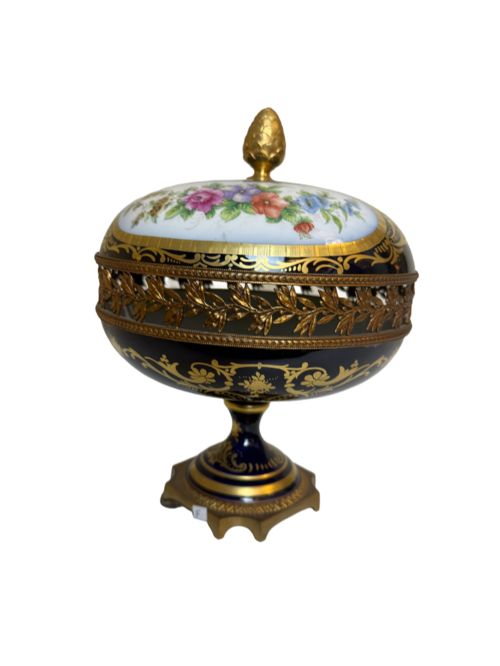

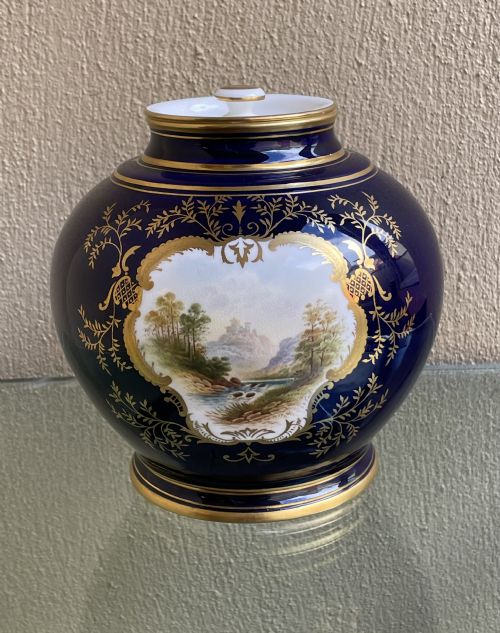


Decorative Lidded Porcelain Jar
These decorative lidded porcelain jar pieces bring intricate painting and rich glaze work to a room, offering both traditional storage and display presence.
Decorative Lidded Porcelain Jar
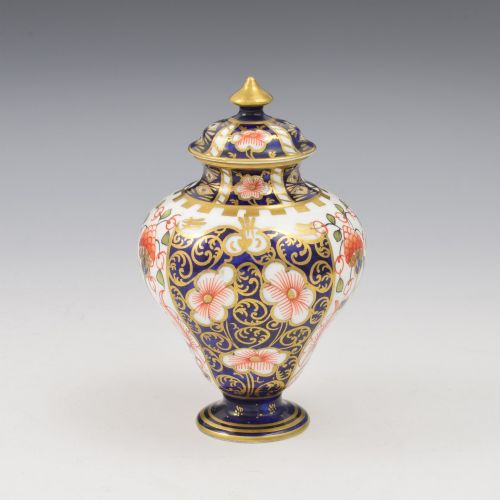
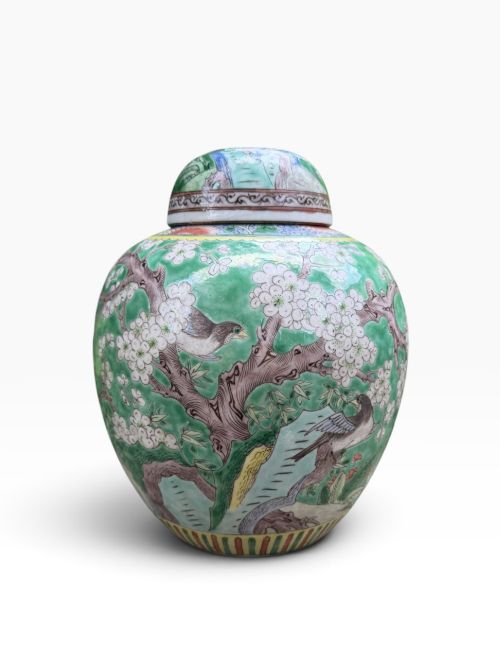
A decorative lidded porcelain jar combines utility with display, originating from varied international traditions spanning the nineteenth and twentieth centuries. The selection on this page centres on ginger jars, pot pourri vessels, and handled covered urns originating from English, European, and Asian workshops.
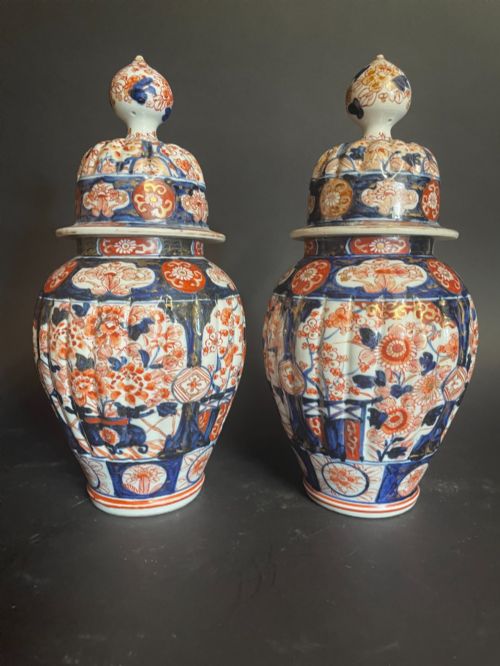
English factories favour painted fruit motifs and classical shapes, while nineteenth-century Japanese exports utilise the distinctive Imari palette and Satsuma glazes. Buyers encounter everything from compact tea caddies to large floor-standing palace pieces intended for focal display.
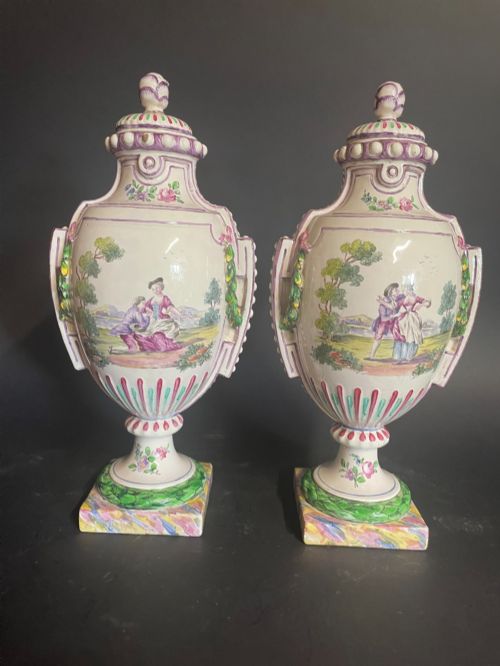
Continental European makers contribute continental porcelain and faience versions, often drawing on Chinese blue and white styles or ornate Victorian aesthetics. Each form balances the vessel body with a matching fitted cover to complete the silhouette.
How they were made
Potters shape fine ceramic clay or porcelain on a wheel or in a mould before applying initial cobalt or underglaze painting. Artisans then layer coloured enamels, gilt, and gold leaf over the fired surface before a second kiln firing fixes the decoration.
Surface embellishment frequently involves hand-painted scenes, transfer printing, or raised enamel work combined with gilding highlights on the shoulders and rims. Some English and continental pieces incorporate silver-plated mounts or fitted brass collars around the opening to secure the lid.
The inventory spans English factory production, Chinese export ceramics, and nineteenth-century Japanese Kutani and Arita wares.
What varies in quality
Quality rests upon the precision of the hand-painted brushwork and the clarity of the glaze beneath the colours. Finer examples display crisp detail in multi-layered enamel palettes and meticulous registration of gilt borders without blurring.
The weight and purity of the porcelain body, alongside the exact fit of the lid to the neck, separate standard production from superior studio and factory output. Retaining the original matching cover significantly elevates the integrity of any piece.
Royal Crown Derby·Sceaux Faience·Royal Worcester·Coalport·Minton·Arita·Herend·Wolfsohn Dresden·Meissen·Royal Winton·Kang Xi·Kutani·Carlton Ware·Sevres
The Decorative Lidded Porcelain Jar Glossary
- Imari palette
- A traditional Japanese colour scheme dominated by cobalt blue, iron red, and gilt highlights. It gained immense popularity in European export markets during the nineteenth century.
- Pot pourri
- A vessel featuring a pierced or perforated cover designed to release ambient scents from dried flower petals held within. Royal Worcester specialised in painted fruit versions of these jars.
- Ginger jar
- A wide-shouldered, high-bellied storage vessel with a short neck and flat-rimmed cover, originally intended for spices. Chinese export and Japanese examples dominate this form.
- Gilding
- The application of gold leaf or powdered gold paint to ceramic surfaces to accentuate rims, handles, and painted panels. It requires careful firing to bond securely with the glaze.
- Faience
- Tin-glazed earthenware produced in European workshops, offering an opaque white ground for hand-painted decoration. Sceaux pieces represent this technique.
Decorative Lidded Porcelain Jar: Frequently Asked Questions
What were ginger jars used for?
These vessels originally served to transport and store spices, herbs, and salted ginger along international trade routes. Their sturdy ovoid shape and heavy walls protected perishable contents during long sea journeys.
Over time, Western households adopted them purely for display, placing them on mantelpieces and side tables to introduce colour and pattern to a room.
How do I date a lidded porcelain jar?
Dating relies heavily on maker marks stamped or painted on the base, stylistic clues such as Art Deco geometric lines or Victorian floral abundance, and manufacturing techniques.
Examining the glaze thickness, wear on the foot rim, and the pigment chemistry also helps specialists assign pieces to specific decades or centuries.
What is the difference between porcelain and earthenware?
Porcelain uses refined kaolin clay fired at very high temperatures, resulting in a vitreous, non-porous white body that can ring when struck. Earthenware utilises coarser clay fired at lower temperatures, remaining porous unless sealed with an opaque glaze.
English and continental workshops produced both, with porcelain generally commanding higher regard for its durability and fine finish.
How should I clean my porcelain jar?
Dust the surface regularly with a soft, dry lint-free cloth to prevent particulate buildup on delicate enamel and gilt areas. Avoid using harsh chemical cleaners, abrasive pads, or submerging pieces with metallic mounts.
If washing is necessary, use lukewarm water with mild soap, rinse thoroughly, and dry immediately by hand.