






Decorative Lidded Jars
These decorative lidded jars bring painted porcelain, ceramic, and cloisonné craftsmanship to mantelpieces and side tables.
Decorative Lidded Jars
Decorative lidded jars appear in ceramics, porcelain, and earthenware from the nineteenth century through the mid twentieth century. Buyers encounter ginger jars, pot pourri vases, and tea caddies originating from English factories, European potteries, and Japanese workshops.
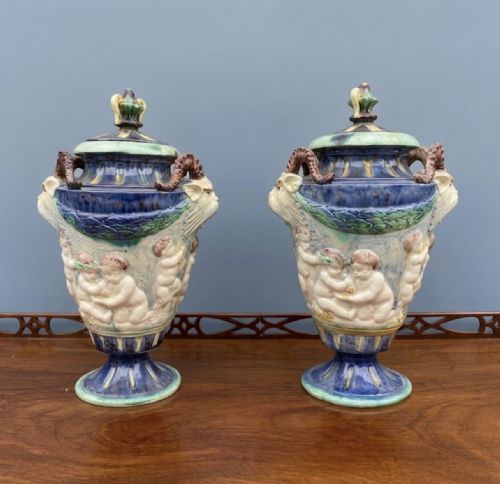
The selection ranges from Victorian majolica and Imari palette pieces to Edwardian porcelain and Art Deco designs. Forms vary from gourd pots and biscuit barrels to large covered vases finished with hand painted details.
Materials and Techniques
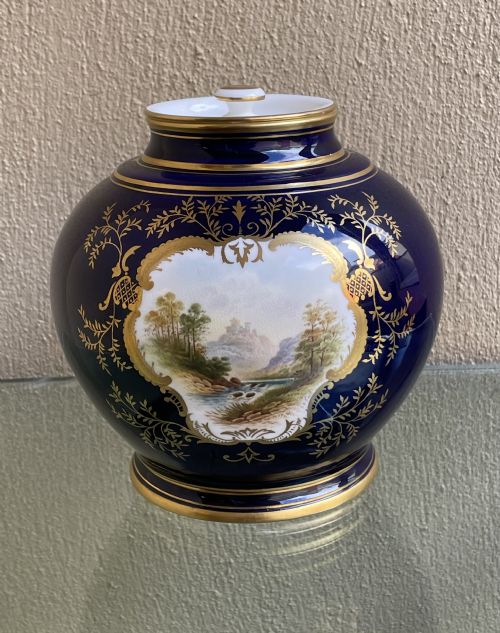
Potters shaped ceramic and porcelain bodies on wheels or in moulds before applying glazes, enamel colours, and gilding. Many pieces combine painted mineral pigments with gold leaf and metallic mounts.
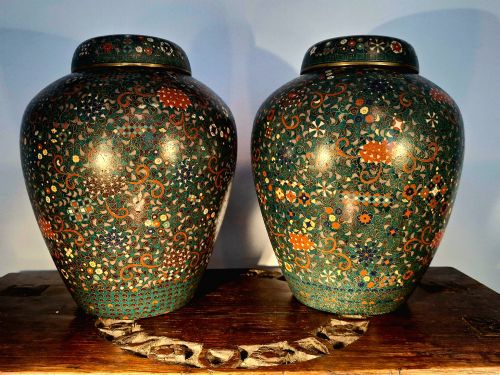
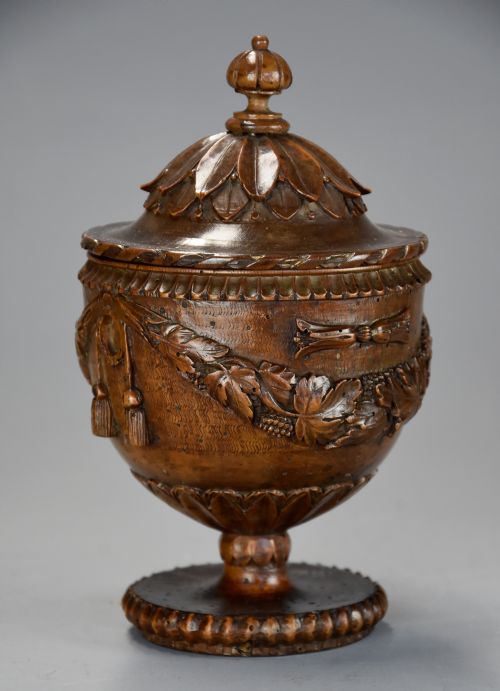
Cloisonné items utilise metal wires soldered to a base to form cells filled with enamel paste, while carved wooden vessels demonstrate dense joinery and turned construction.
Decorative Lidded Jars Retail Price Guide 2026
Typical asking prices for decorative lidded jars among the pieces listed under this phrase on Sellingantiques today, from the lower quarter to the upper quarter. They describe what is for sale here now, not the wider market.
A nineteenth century chemist jar collection stands ready to dispense dry remedies with wooden dignity.
Craftsmanship and Execution
Quality rests in the precision of the hand painting and the crispness of the moulded or carved details. Finer examples display assured brushwork by named artists and balanced polychrome palettes.
The weight of the material, the clean fit of the cover to the base, and the depth of the glaze separate standard production wares from superior studio and factory output.
Royal Crown Derby·Royal Worcester·Coalport·Minton·Wolfsohn Dresden·Mason s Ironstone
The Decorative Lidded Jars Glossary
- Imari
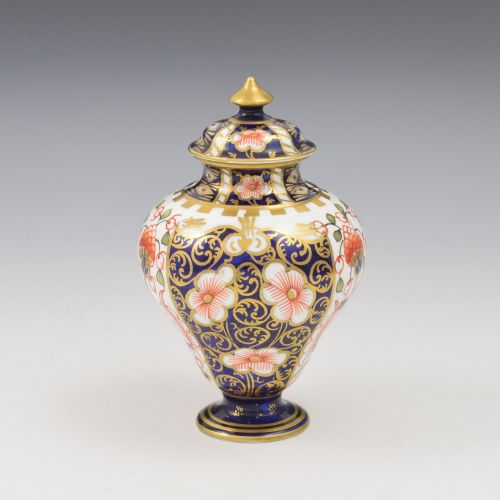
- A Japanese export porcelain style utilising underglaze blue and iron red with gold highlights. This palette was widely copied by European potteries during the nineteenth century.
- Pot Pourri
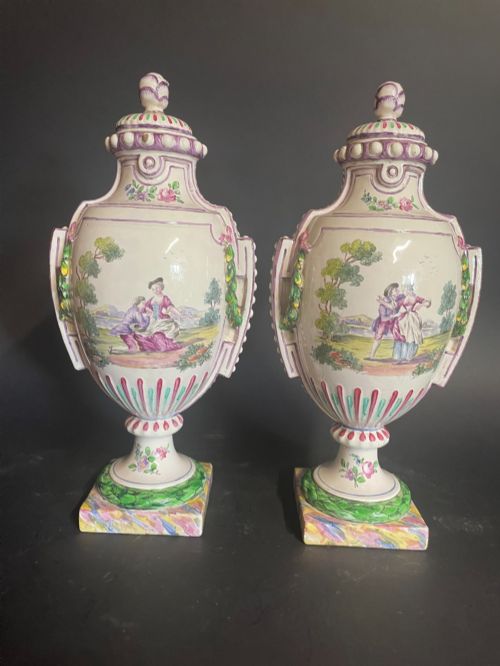
- A vessel featuring a pierced or perforated cover designed to release the scent of dried flowers and spices held within. These forms often display elaborate hand painted fruit or floral scenes.
- Cloisonne
- An enamelwork technique where thin metal wires are soldered to a body to create compartments for coloured glass pastes. The piece is fired and polished smooth.
- Biscuit
- Unglazed ceramic or porcelain fired once to harden the clay body before decoration. Biscuit barrels were common table accessories in Victorian households.
- Ginger Jar
- A wide bell shaped storage vessel with a domed cover originally used for shipping spices. Later ceramic versions served purely ornamental purposes in domestic interiors.
Decorative Lidded Jars: Frequently Asked Questions
What were decorative lidded jars used for originally?
Many of these vessels served practical household functions such as storing tea, ginger, or dry foodstuffs in the pantry or dining room. Others held scented botanicals to freshen domestic spaces.
Over time, forms like ginger jars and pot pourri vases transitioned into purely ornamental display objects placed on mantelpieces and sideboards.
What is the difference between a ginger jar and an urn?
Ginger jars typically feature a rounded shoulder and a short straight neck fitted with a matching domed cover. They derive from utilitarian shipping containers.
Urns usually stand on a distinct foot or pedestal with a more classical silhouette, often functioning strictly as decorative display pieces rather than storage vessels.
How should I clean antique ceramic and enamel jars?
Dust these pieces gently with a dry microfiber cloth to remove surface particles without disturbing delicate enamel or gilt surfaces. Avoid immersing painted ceramic wares in water.
Harsh chemical cleaning agents will strip gold leaf and damage nineteenth century glazes permanently.
How can I tell a Victorian jar from an Edwardian one?
Victorian examples often lean towards heavier majolica glazes, ornate Chinoiserie patterns, or traditional Imari palettes. The forms tend to be robust and richly coloured.
Edwardian and later pieces frequently show lighter pastel grounds, refined floral painting by known studio artists, or transitional Art Deco geometric motifs.