




Decorative Hearth Dogs
Decorative hearth dogs bring undeniable character to a chimney breast, holding logs securely above the ash while framing the hearth with cast metal or polished brass.
Decorative Hearth Dogs
Decorative hearth dogs, also known as andirons or chenets, are functional supports placed inside an open fireplace to keep burning logs elevated for better air circulation. The selection spans the nineteenth century, including Georgian examples, Victorian designs, and early twentieth-century pieces.
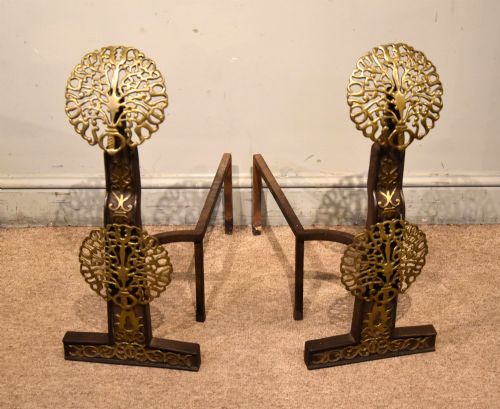
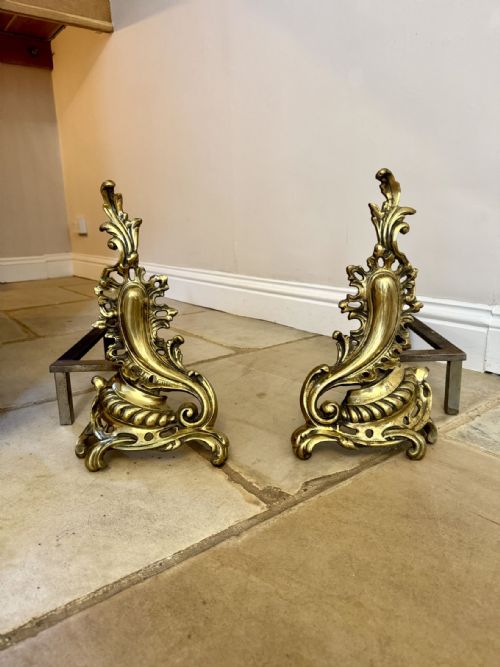
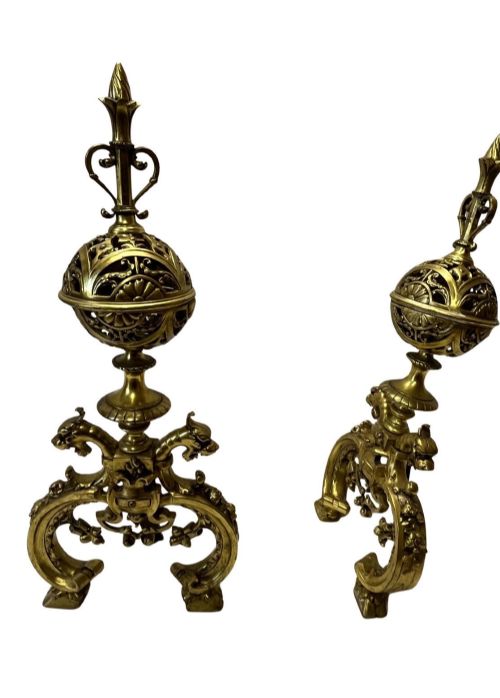
Most examples found here originate from French and English workshops, taking the form of paired heavy metal supports. Their designs range from simple wrought iron bars to elaborate figural sculptures, French rococo curves, and gothic revival motifs.
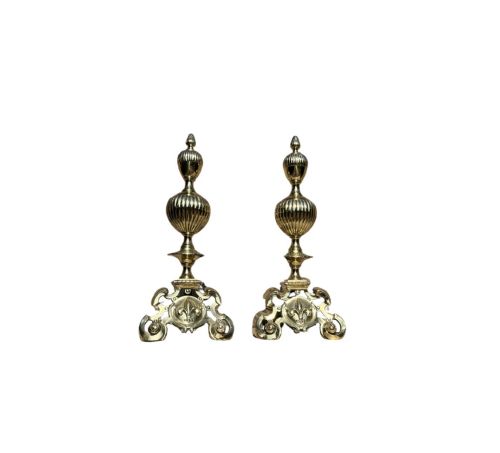
While primarily designed to hold fuel off the hearth floor, many incorporate decorative elements like cast brass finials, bronze mounts, and ormolu detailing. These objects double as sculptural ornaments for the fireplace when the hearth is unlit during warmer months.
How they were made
Foundry workers utilised traditional metalworking techniques, pouring molten iron or brass into detailed moulds to achieve complex relief patterns. Cast iron provided the heavy, heat-resistant structure needed for the main billet bars and grates.
Blacksmiths shaped wrought iron and steel by hand using heat and an anvil, creating durable uprights and functional legs. Brass and bronze components were frequently cast separately before being hand-finished, polished, and assembled with threaded rods or pins.
Decorative Hearth Dogs Retail Price Guide 2026
Typical asking prices for decorative hearth dogs among the pieces listed under this phrase on Sellingantiques today, from the lower quarter to the upper quarter. They describe what is for sale here now, not the wider market.
Listings feature items spanning the nineteenth century, including Georgian and Victorian periods, alongside early twentieth-century examples.
What varies in quality
The distinction between standard pairs and superior examples lies in the crispness of the casting and the depth of hand-chasing on the metal surface. Finer sets display sharply defined scrollwork, symmetrical proportions, and substantial weight rather than thin, mass-produced plate metal.
Material combination also elevates a piece, particularly where cast bronze or fire-gilt ormolu mounts are applied to heavy iron or brass bases. Superior pairs retain matching components and original fixings, showing careful integration between the decorative front standard and the utilitarian log bar behind.
The Decorative Hearth Dogs Glossary
- Andiron
- A metal support for holding wood in an open fireplace, consisting of a horizontal bar with a vertical decorative front.
- Chenet
- The French term for an andiron, frequently applied to more ornate domestic fireplace furniture from continental workshops.
- Fire basket
- A metal grate that holds burning fuel inside a fireplace, often combined with integral andirons or backplates.
- Ormolu
- Gilded bronze, created by applying a mercury and gold amalgam to cast bronze, seen on high-status decorative pieces.
Decorative Hearth Dogs: Frequently Asked Questions
What are decorative hearth dogs used for?
These metal supports hold logs above the hearth floor to allow air to circulate beneath the fire for better burning.
They also serve a decorative purpose, framing the fireplace opening with polished brass, iron, or bronze sculpture when the hearth is empty.
How do I clean antique brass andirons?
Dust the metal regularly with a soft cloth to prevent grime build-up on the cast and chased surfaces.
Avoid harsh commercial metal polishes that strip away the aged patina built up over centuries of domestic use.
Are these suitable for a working fireplace?
Many heavy iron and steel pairs are robust enough to support burning logs in an active open hearth.
Lighter ormolu and delicate brass decorative pieces are better suited for display or use with gas-effect fire baskets.
How do I date a pair of hearth dogs?
Dating relies on identifying stylistic markers such as French rococo curves, Victorian ornamentation, or gothic revival motifs.
Manufacturing methods, such as hand-wrought ironwork versus machine casting, also help determine the period of origin.