





Decorative Hallway Stand
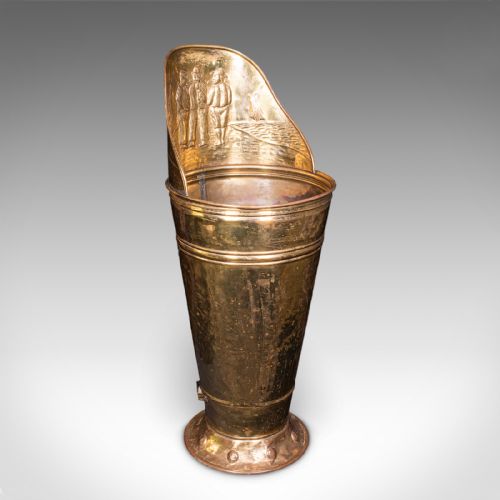
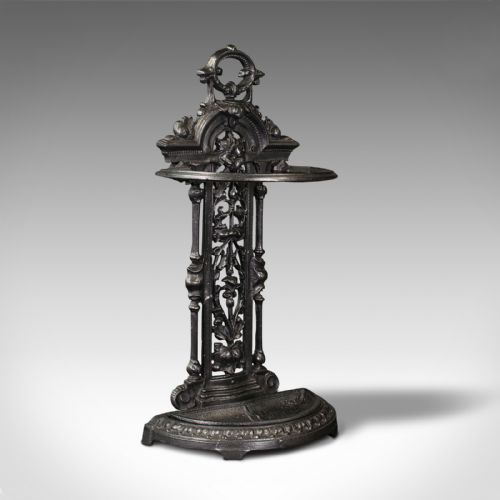
A decorative hallway stand gathers the coats, umbrellas, and sticks of a busy entrance in solid cast iron, brass, and earthenware.
Decorative Hallway Stand
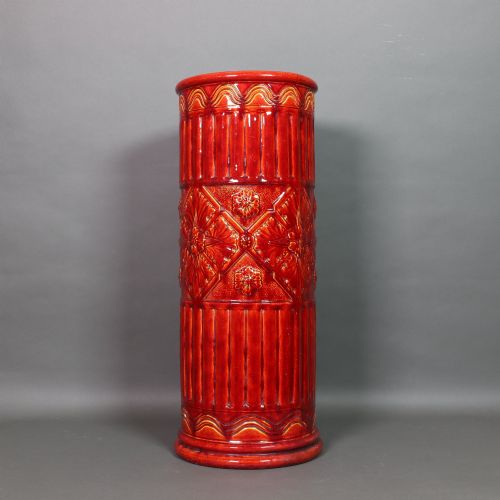
A decorative hallway stand encompasses practical entryway furnishings designed to hold walking sticks, umbrellas, and occasionally coats or hats. The examples found here span the Victorian, Edwardian, and mid-century periods, alongside nineteenth-century works and specific years such as 1880, 1890, 1900, and 1920.
The dominant forms on this page are umbrella stands, stick stands, and combined stick and umbrella stands, accompanied by occasional coat hooks, wall mirrors, and hallway valet mirrors. These pieces originate from English, French, and Dutch traditions, reflecting country house and reception spaces of their era.
Buyers will encounter varied styling within the selection, ranging from straightforward Victorian cast iron to the distinct visual vocabulary of the Aesthetic Movement, Victorian Gothic Revival, Art Nouveau, Dutch Traditional, and Dutch Revival.
Materials and construction methods
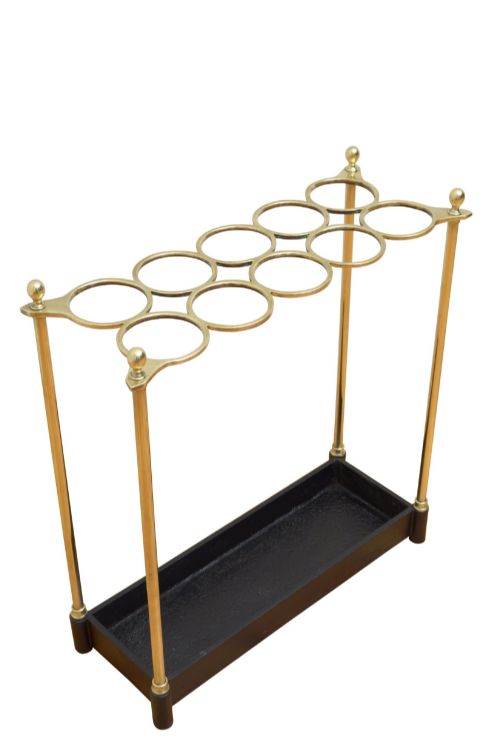
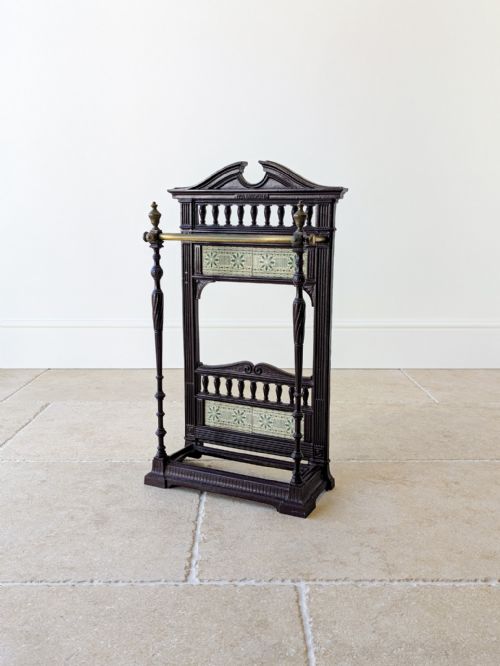
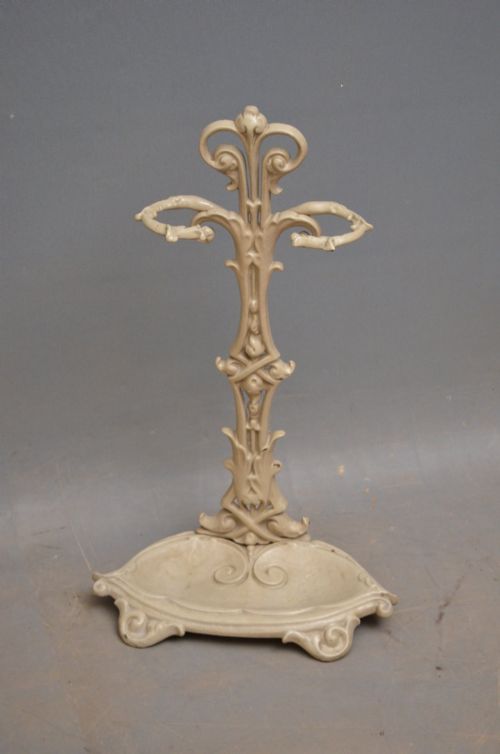
Foundries utilised cast iron and brass as primary structural metals, frequently shaping them into robust frames capable of supporting heavy wet umbrellas and walking sticks. Cast iron examples often feature intricate openwork patterns, while brass versions utilise decorative ball finials and shaped tubular components.
Ceramic elements appear through earthenware and glazed faience, notably in works associated with Burmantofts, adding colourful panels and glazed bodies to metal frames. Additional detailing relies on applied paint, wood, and glass components integrated into mirrors and hooks.
Decorative Hallway Stand Retail Price Guide 2026
Typical asking prices for decorative hallway stand among the pieces listed under this phrase on Sellingantiques today, from the lower quarter to the upper quarter. They describe what is for sale here now, not the wider market.
Listings feature works spanning the Victorian, Edwardian, and 19th-century periods, alongside specific dates from 1880 to 1920.
Assessing quality in hallway stands
The sophistication of the casting work separates standard production pieces from finer foundry output, particularly in cast iron stands where crisp relief and clean openwork define the surface. Foundry attributions, such as those linked to Coalbrookdale or influenced by their designs, carry distinct craftsmanship indicators.
The integration of secondary materials like Burmantofts faience ceramic inserts and decorative brass finials influences the overall character and finish of the stand. Preserved original paint, stable glaze surfaces, and intact structural assembly further distinguish superior examples from simpler utilitarian items.
Coalbrookdale·Burmantofts Faience
The Decorative Hallway Stand Glossary
- Aesthetic Movement
- A late nineteenth-century design style emphasising visual beauty over narrative content. It influenced ceramics and metalwork with refined ornamentation.
- Cast Iron
- An iron-carbon alloy poured into moulds to create rigid, decorative frames. It formed the heavy base structures of nineteenth-century umbrella holders.
- Faience
- Tin-glazed earthenware known for rich surface colours and decorative finishes. Burmantofts produced notable examples of this ceramic work.
- Finial
- A decorative terminal ornament placed at the top of a post or structure. Brass ball versions frequently top nineteenth-century umbrella stands.
- Valet Mirror
- A wall-mounted looking glass combined with functional hooks or trays for hallway use. These pieces served entryway reception areas.
Decorative Hallway Stand: Frequently Asked Questions
What is a decorative hallway stand used for?
These stands provide a dedicated space in an entrance hall for wet umbrellas, walking sticks, and coats.
They keep entryways tidy while adding metalwork or ceramic decoration to the reception area.
How do I care for cast iron and brass stands?
Metal stands require dry dusting and occasional light cleaning to preserve their surface finish and prevent moisture accumulation.
Ceramic inserts should be kept dry and protected from impact to maintain the glaze.
Are these stands suitable for daily modern use?
Solid construction in cast iron and brass makes these stands durable enough for holding umbrellas and walking sticks every day.
Their substantial weight helps prevent tipping when loaded with heavy items.
How can I tell Victorian stands from Edwardian ones?
Victorian stands often feature heavier cast iron frames with Gothic Revival or ornate Aesthetic Movement detailing.
Edwardian pieces tend to show lighter forms, sometimes incorporating Dutch traditional styling or refined brass mirror frames.