






Decorative Globe
A decorative globe brings the world into a room, offering terrestrial mapping and celestial models mounted for display.
Decorative Globe
A decorative globe is a cartographic or planetary sphere designed to sit on a desk, stand on a floor, or serve as a sculptural object within a room. When you search for decorative globe, you encounter pieces that range from compact terrestrial spheres to larger floor-standing models from the Edwardian era and the interwar years.
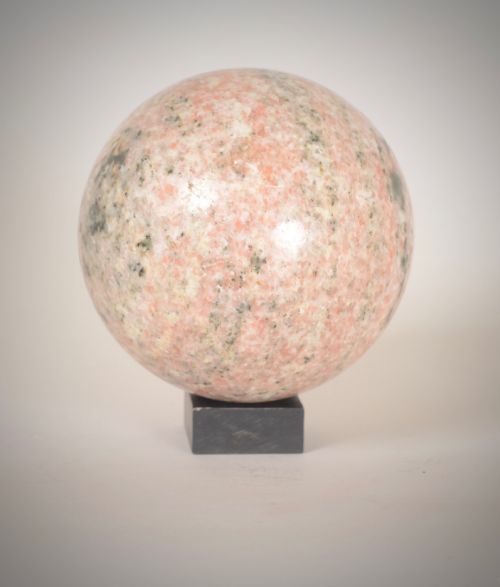
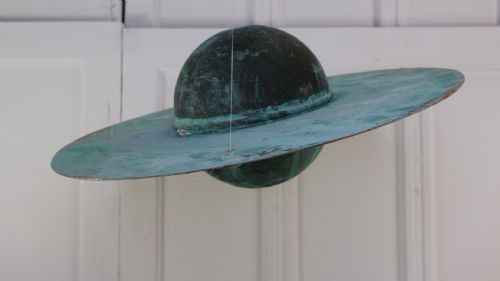
The selection on this page includes floor-standing globes and terrestrial world globes housed in stands, alongside spherical string boxes and granite spheres. These pieces bring a sense of geography and scholarly design to domestic interiors, serving as both functional maps and striking decorative centrepieces.
How they were made
These pieces utilise traditional materials such as paper applied to spherical cores, supported by mounts and stands formed from brass, copper, and mahogany. Craftspeople printed gores on paper to wrap around spheres accurately, combining cartography with cabinetmaking and metalwork.
Makers paired terrestrial mapping with sturdy bases of wood, stone, and metal, ensuring the spheres balanced securely on ball feet or pedestals. The construction reflects the manufacturing methods of the nineteenth and early twentieth centuries, balancing practical geography with decorative appeal.
Decorative Globe Retail Price Guide 2026
Typical asking prices for decorative globe among the pieces listed under this phrase on Sellingantiques today, from the lower quarter to the upper quarter. They describe what is for sale here now, not the wider market.
Some spherical objects disguise their scholarly mapping entirely, choosing instead to dispense garden twine from their polished bellies.
What varies in quality
Quality in these pieces rests upon the crispness of the cartographic printing, the fidelity of the paper gores, and the stability of the mounting structure. Superior examples display clear geographical details, well-preserved paper without significant loss, and heavy, solid bases of turned wood or cast metal.
The distinction between standard items and finer examples lies in the materials chosen for the stands and the precision of the sphere's rotation. Well-made versions feature substantial brass components, careful hand-finishing, and durable construction that survives intact across the decades.
The Decorative Globe Glossary
- Gore
- A tapered strip of paper printed with map segments, designed to be pasted onto a spherical ball to form a complete globe.
- Terrestrial globe
- A scale model of the Earth displaying landmasses, oceans, political boundaries, and shipping routes.
- String box
- A small container, often spherical in shape and raised on feet, designed to dispense twine or cord through an aperture.
- Floor standing globe
- A large terrestrial or celestial globe supported by a dedicated floor pedestal or stand, often incorporating a horizon ring.
Decorative Globe: Frequently Asked Questions
Where should I place a floor standing globe?
A floor standing globe works well in a study, library, or spacious hallway where it can be viewed from multiple angles. It requires sufficient clearance around the base to allow movement and appreciation of the cartography.
Position the piece away from direct sunlight and excessive heat sources to protect the paper gores and wooden stands from fading or drying out over time.
How do I clean a paper globe?
Dust a paper globe gently with a soft, dry cloth or a clean artist's brush to remove surface particles without damaging the fragile surface. Avoid using water, damp cloths, or chemical cleaning sprays, as moisture will lift the paper gores and ruin the printed map.
Handle the sphere by its horizon ring or mounting hardware rather than touching the paper surface directly whenever possible.
What periods do these globes come from?
The pieces seen here span the Edwardian period, the 1920s, and the 1930s, reflecting changing cartographic styles and manufacturing techniques across the decades. Earlier nineteenth-century examples also appear alongside interwar designs.
Each period brings distinct typography, mapping data, and mounting styles that help identify the era of production.
Can I read historical place names on them?
Yes, terrestrial globes preserve the geopolitical boundaries, colonial territories, and place names of the era in which they were manufactured. Studying the cartography offers a window into historical geography and international borders at the time of publication.
Older globes often feature outdated national names and colonial possessions that differ significantly from modern maps.