
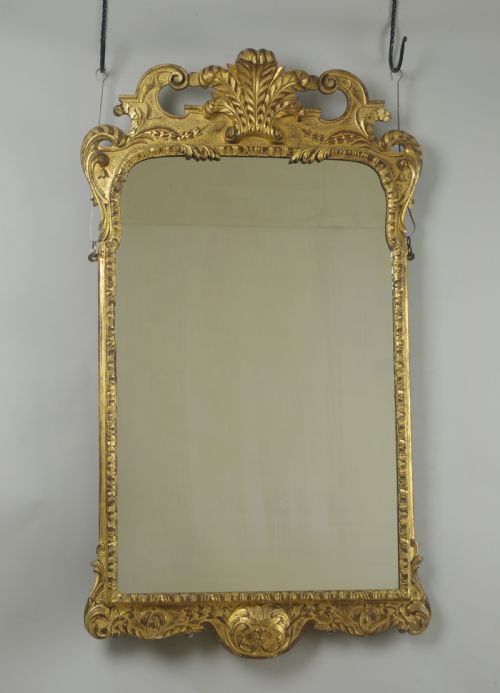
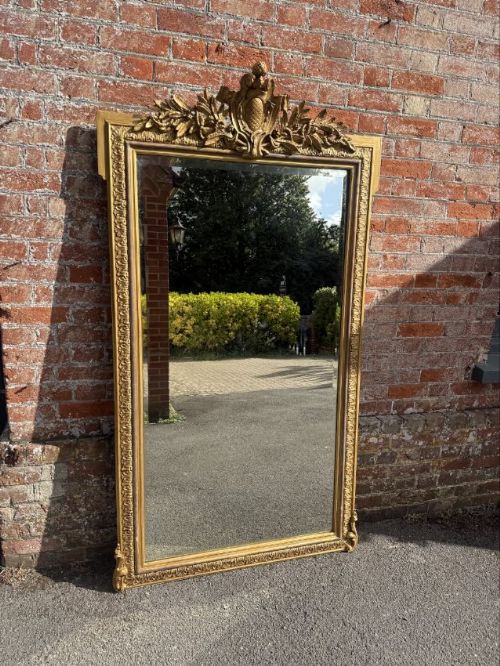
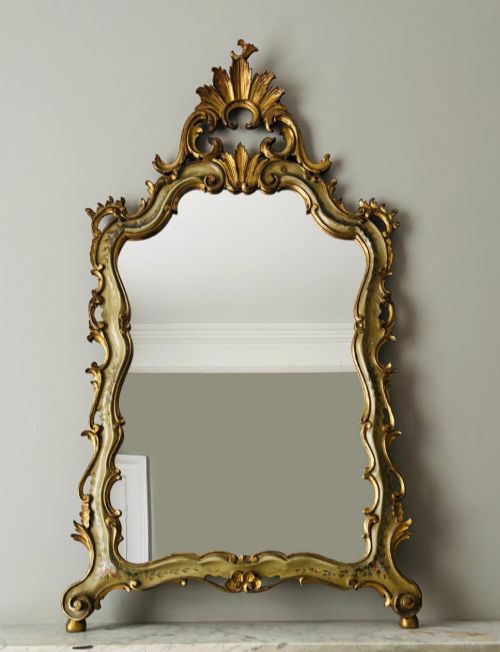
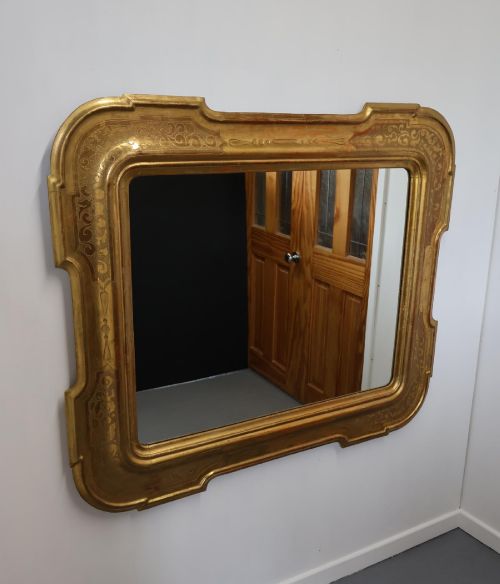
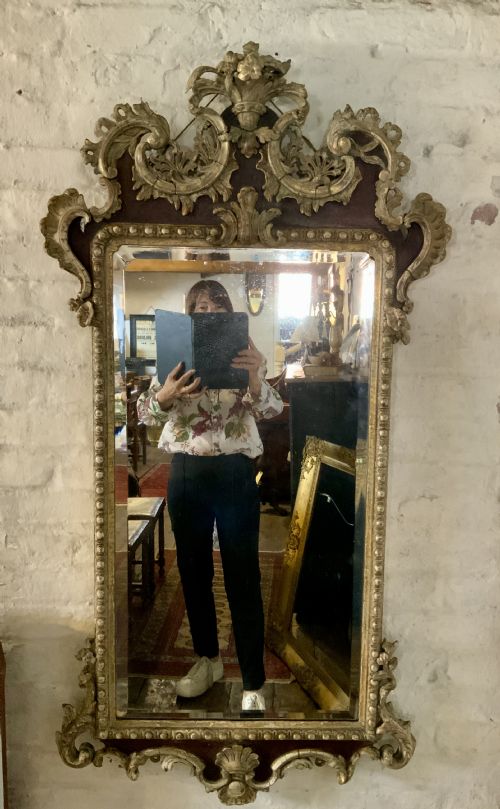
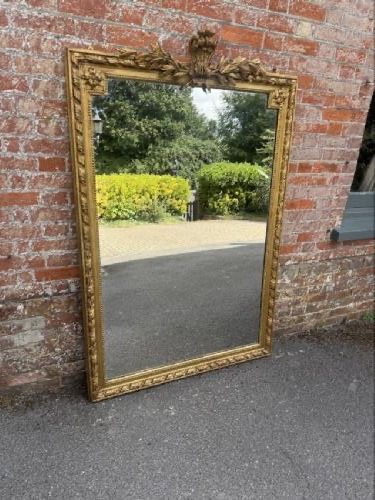
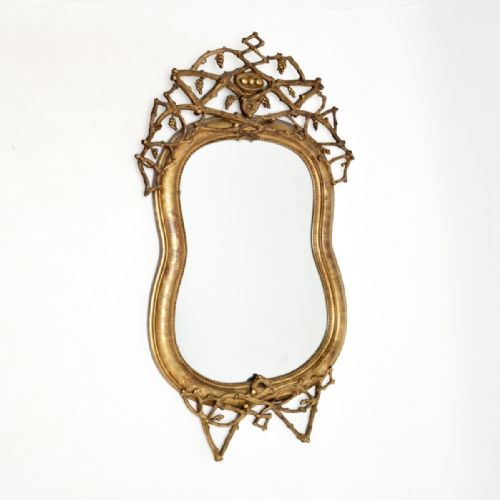

Decorative Giltwood Mirror Frame
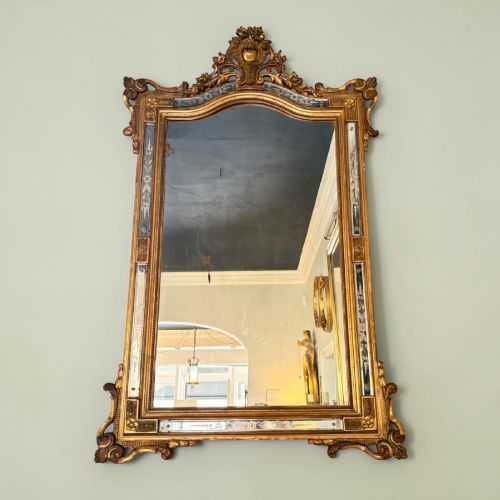
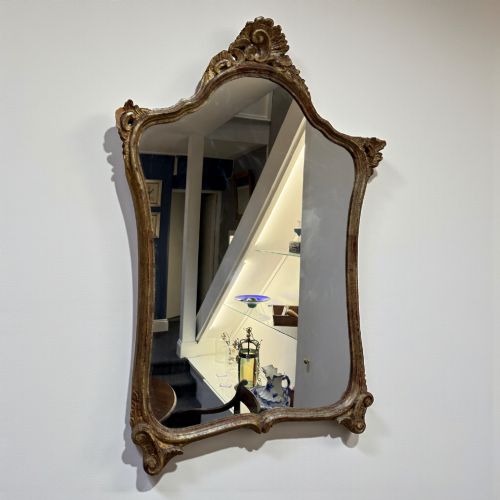
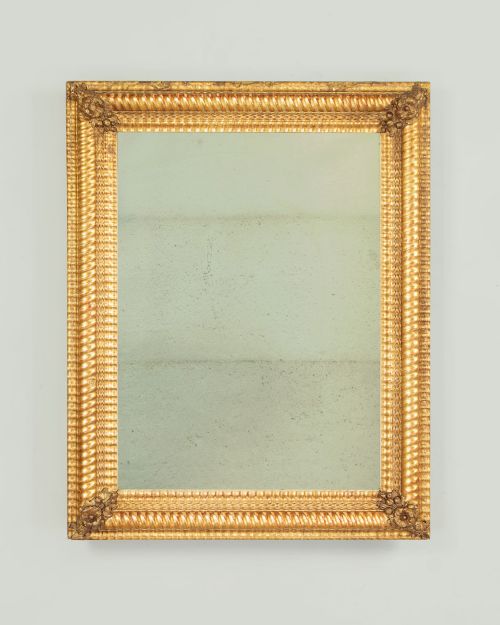
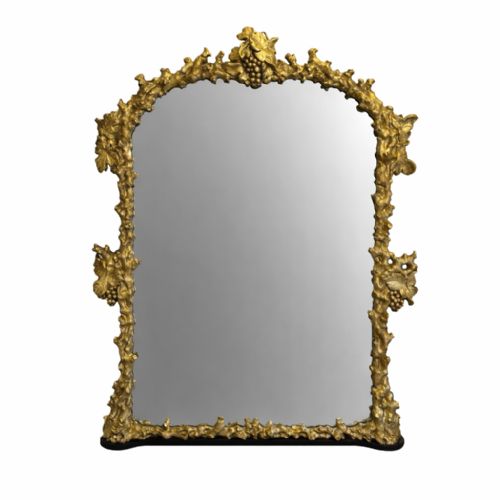
These decorative giltwood mirror frame pieces bring warmth and reflection to a room, catching light across carved surfaces and gilded details.
Decorative Giltwood Mirror Frame
A decorative giltwood mirror frame forms a focal point in a room, combining woodwork and reflective glass in wall mirrors, overmantels, and girandoles. These pieces emerge primarily from the eighteenth, nineteenth, and early twentieth centuries, reflecting changing domestic tastes across generations.
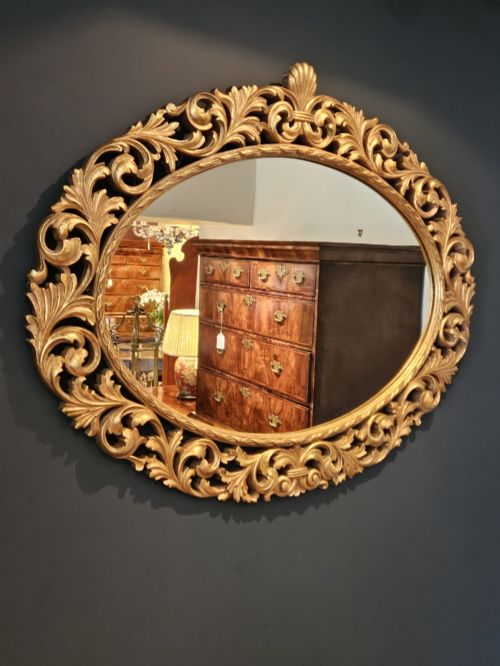
The buyer meets various formats here, from large Italian Florentine and French Rococo Revival overmantels to smaller Victorian oval wall mirrors and convex porthole designs. French chateau influences and Regency styles appear alongside simpler carved timber and gesso items.
Origin plays a strong role in defining these objects, with Italian and French workshops supplying many of the heavily carved and painted examples. English Victorian and Regency interpretations tend toward architectural precision, whilst maintaining the gilded surface treatment essential to the category.
Materials and Construction
Makers built these frames using timber cores of wood or carved timber, upon which layers of gesso were applied to create a smooth bed for fine ornamentation. Plaster, canvas, and paint also support the structure in specific pieces.
The visible surface relies on gold leaf or silver and gold leaf applied over the gesso, sometimes accompanied by painted polychrome details or ebonised accents. Etched glass or lightly foxed mirror plates sit within these constructed surrounds.
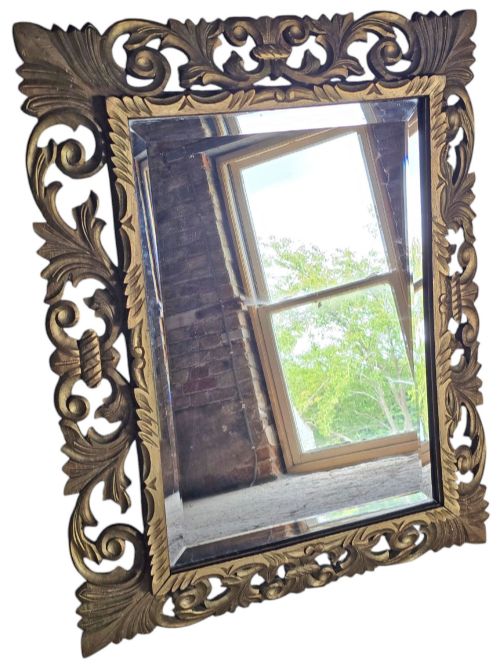
Several pieces incorporate delicate motifs of vine leaves and floral sprays carved directly into the timber to catch the light.
Quality and Craftsmanship
Depth and crispness of the carving distinguish finer examples, particularly where floral motifs, vine leaves, or elaborate rococo scrolls retain sharp definition. Heavy moulding and substantial timber construction separate substantial statement pieces from simpler decorative items.
The integrity of the gilded surface matters greatly, with hand-applied gold leaf showing a richer depth than later repaint interventions. Original mirror glass, whether clear or showing light foxing, adds authenticity compared to modern replacements.
The Decorative Giltwood Mirror Frame Glossary
- Giltwood
- Wood that has been coated with gold leaf or a gold-coloured finish. This material creates the bright, reflective surface characteristic of these frames.
- Gesso
- A plaster-like mixture applied to wooden frames to provide a smooth base for carving and gilding. It allows for intricate relief work before the gold leaf is laid down.
- Overmantel
- A large mirror designed to hang above a fireplace mantelpiece. These pieces often span significant widths to anchor the room's central hearth.
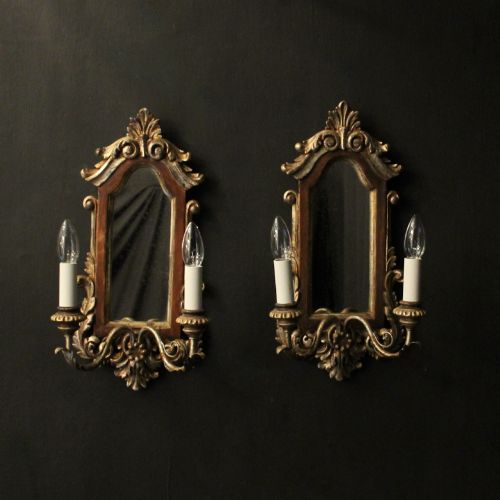
- Girandole
- A decorative wall mirror fitted with one or more candle branches attached to the frame. The polished metal or glass reflects the candle flames to increase illumination.
- Foxed
- Describing mirror glass that shows spots, fading, or discoloration due to age and the deterioration of the backing. This natural ageing process appeals to many collectors.
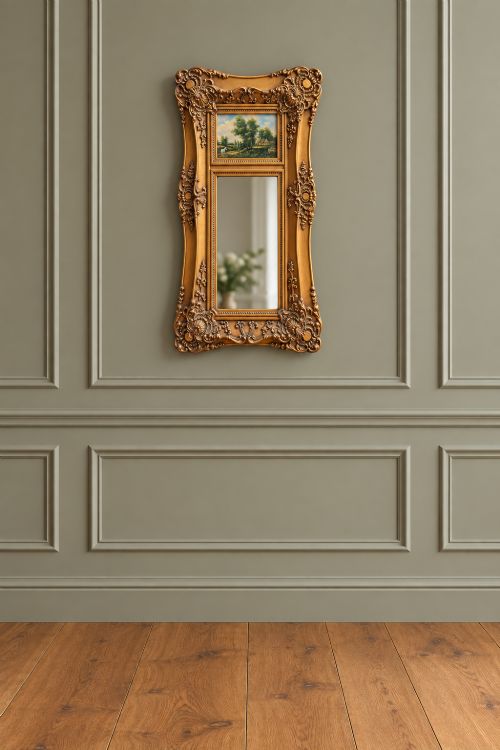
- Trumeau
- A decorative wall mirror incorporating a painted panel or artwork above the glass. These French pieces often integrate directly into interior wall panelling.
Decorative Giltwood Mirror Frame: Frequently Asked Questions
How do I hang a heavy overmantel mirror?
Secure hanging requires fixing directly into wall studs or masonry using substantial brackets rated for the weight of the timber and glass.
Professional installation is recommended for large nineteenth-century pieces to ensure stability against the wall.
Are foxed mirror plates original?
Light foxing typically indicates genuine age, showing where the silvering behind the glass has oxidised over decades of use.
Many collectors prize this natural deterioration as proof of period authenticity rather than a defect.
What is the difference between Rococo and Regency styles?
Rococo frames feature asymmetrical scrolls, floral garlands, and exuberant curves inspired by natural forms.
Regency pieces lean toward classical restraint, often incorporating architectural moulding, convex circles, and formal symmetry.