


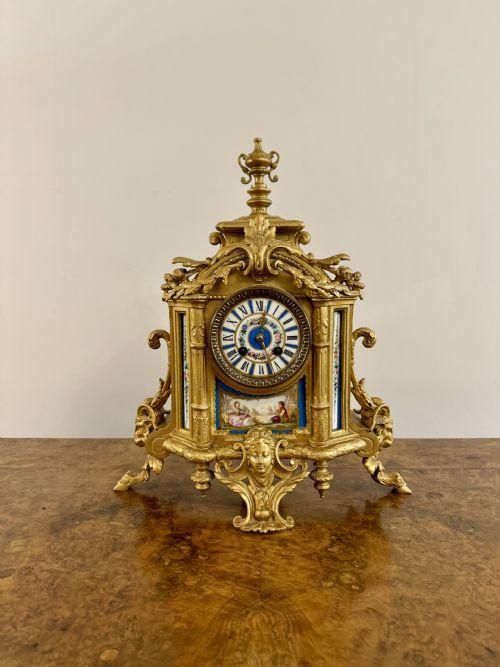


Decorative Gilt Bronze Clock
A decorative gilt bronze clock brings the heavy golden presence of nineteenth-century French workshops into a room.
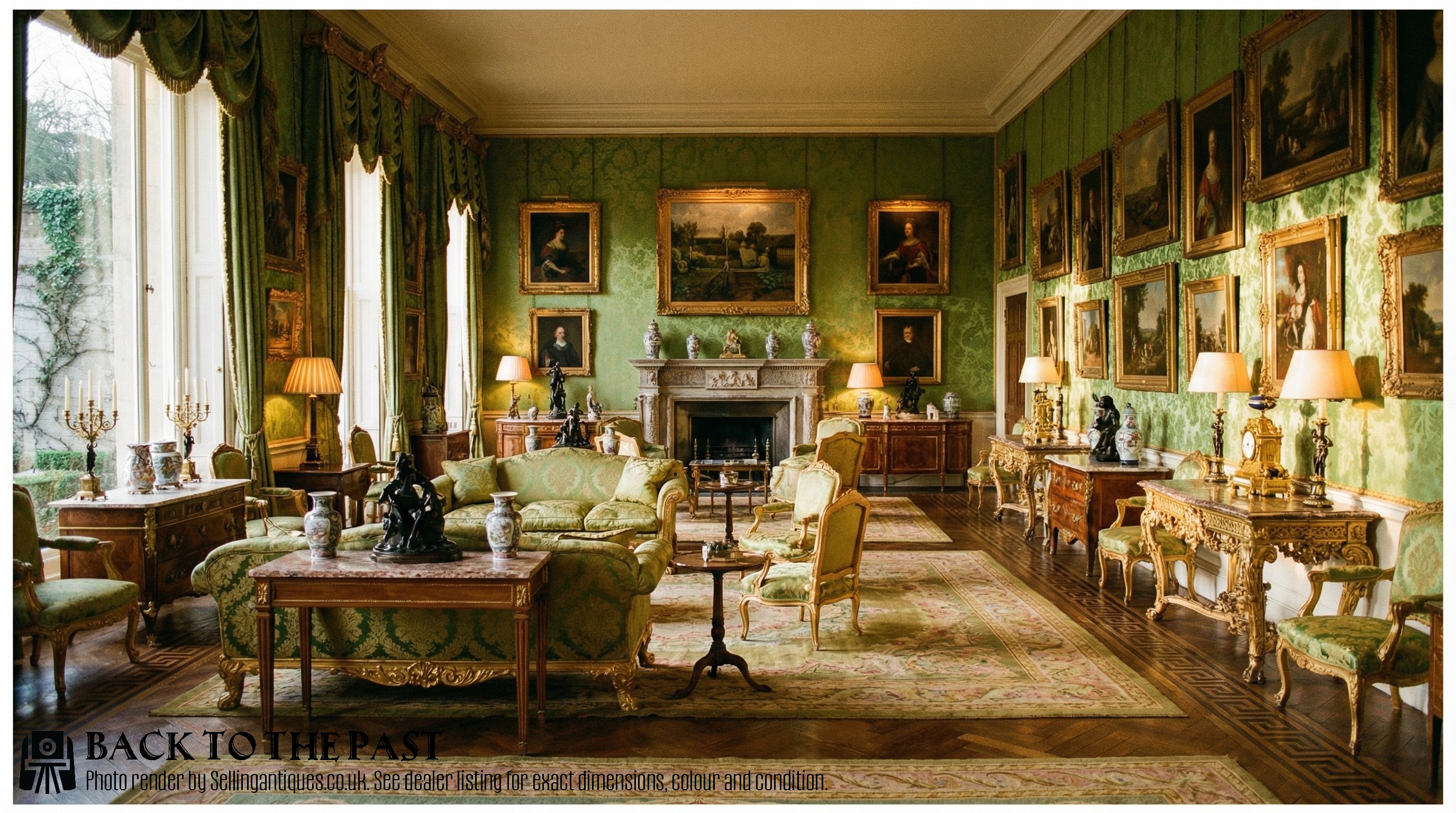
Decorative Gilt Bronze Clock
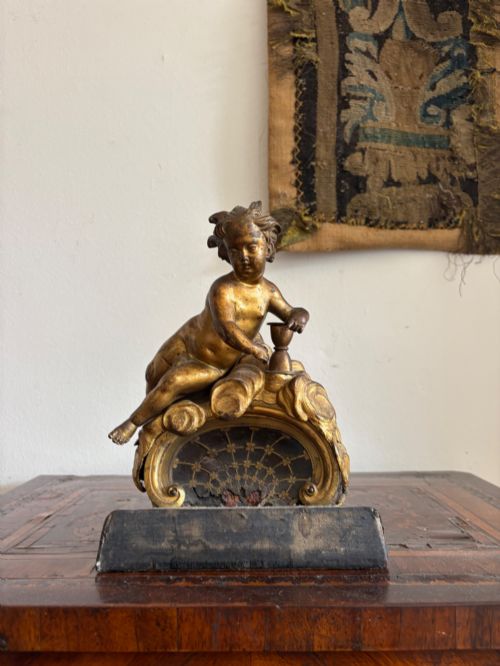
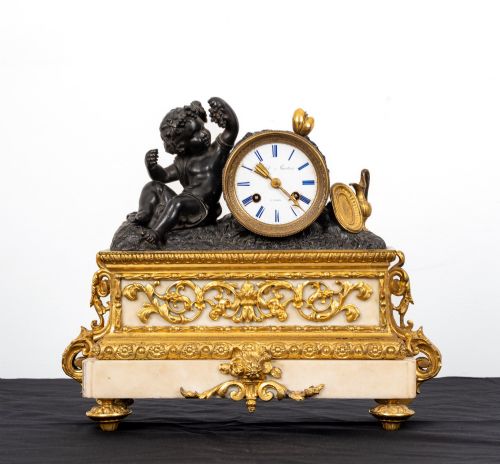
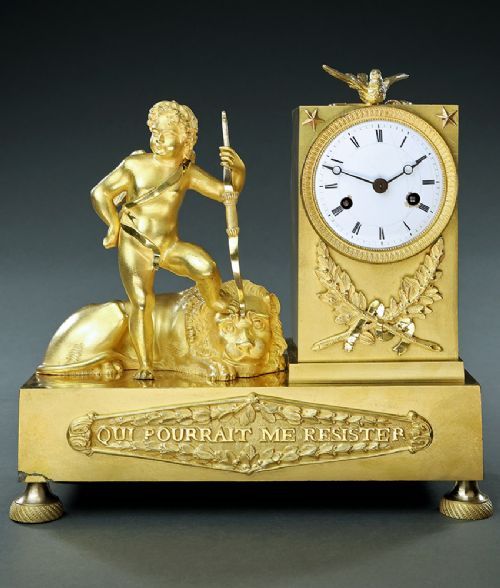
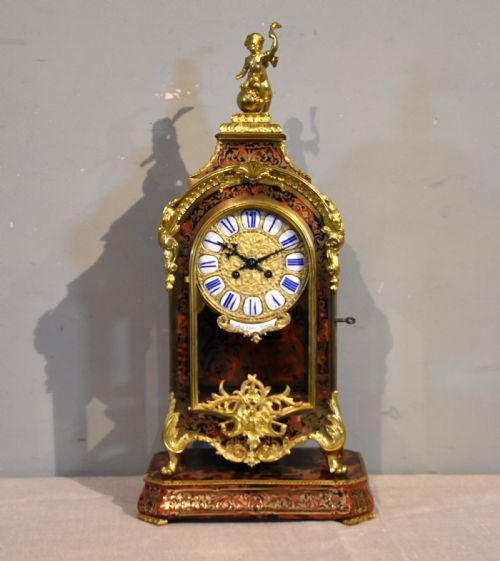
A decorative gilt bronze clock is typically a French mantel timepiece produced during the nineteenth century across periods such as the Victorian era, Napoleon III, and the Second Empire. These objects combine timekeeping with sculptural bronze work, taking forms ranging from simple shelf clocks to elaborate mantel clock garniture sets with side pieces.
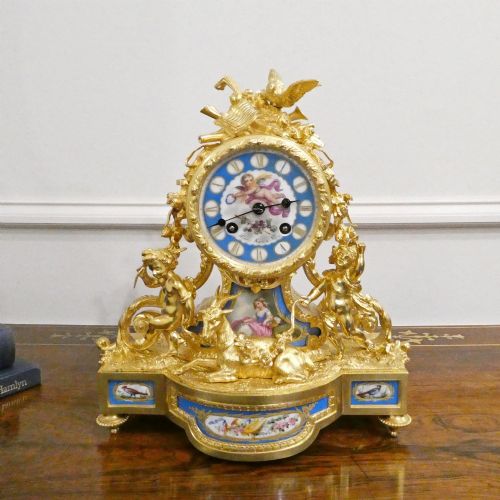
Buyers encounter numerous revival styles, particularly French Rococo, Louis XIV, and Neoclassical designs. Many pieces feature figures, mythological scenes, or architectural marble bases alongside the central clock face.
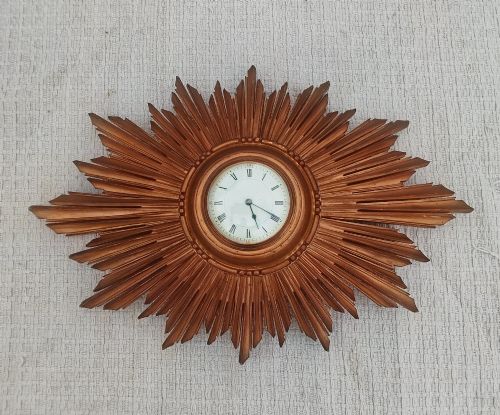
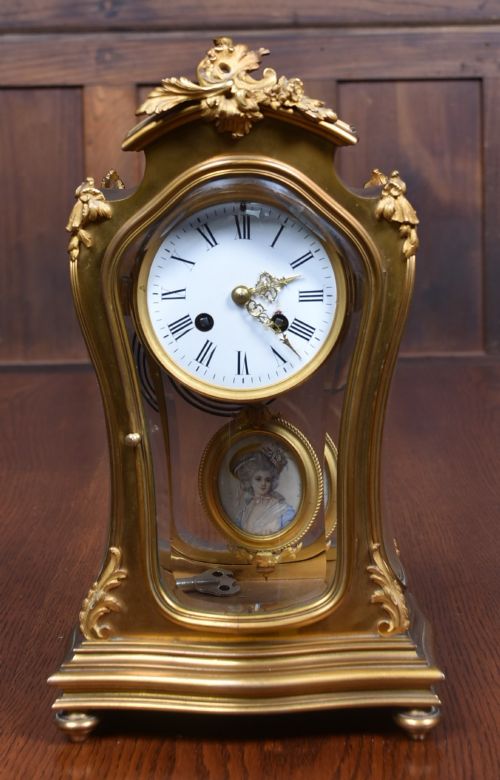
While mantel clocks dominate the selections, the inventory also encompasses wall clocks, crystal regulators in glass cases, and occasional decorative mounts or objects salvaged from larger pieces.
Materials and Techniques
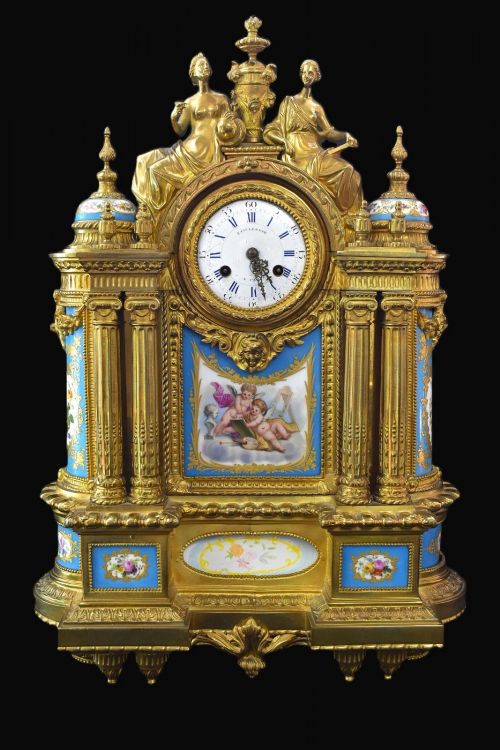
These clocks rely heavily on cast bronze finished with mercury gilding or ormolu to achieve a bright golden surface. Makers paired this metallic warmth with contrasting materials like white marble, rouge marble, patinated bronze, and hand-painted porcelain panels.
Dial construction typically involves individual enamel cartouches or painted metal faces, sometimes protected behind convex glass. Intricate detailing is achieved through chiselling and chasing the cast bronze after it comes from the foundry.
Assessing Quality
The integration of materials dictates the overall success of the piece. Superior clocks feature heavy marble plinths, robust porcelain elements, and movements signed by known makers that complement the sculptural bronze housing without feeling disjointed.
Henry Marc·Siffel and Cartier·Etienne Lenoir·Rodier·Le Roy Paris·Meissen·Hessen Paris·Henri Jacot·PH Mourey
The Decorative Gilt Bronze Clock Glossary
- Ormolu
- A gold-coloured bronze alloy or the technique of applying finely ground high-carat gold to bronze objects. This process creates the characteristic bright metallic finish seen on many nineteenth-century French clock cases.
- Champleve
- An enamelling technique where troughs are carved into the metal surface and filled with coloured glass paste before firing. It frequently appears on nineteenth-century clock dials and bezels.
- Garniture set
- A clock accompanied by matching decorative side pieces such as urns or candelabra. These sets were designed to sit symmetrically on a mantelpiece.
- Crystal regulator
- A clock encased entirely in glass panels within a brass or gilt frame, allowing the swinging pendulum and movement to be viewed from all sides.
- Pendule d'officier
- A portable travelling clock with a gilt bronze case and a handle on top. These originated as military timepieces before becoming popular domestic decorative objects.
Decorative Gilt Bronze Clock: Frequently Asked Questions
Why does my clock run fast or slow?
Mechanical clocks are sensitive to temperature changes and minor shifts in how level the mantelpiece is. You can regulate the speed using the small adjustment arbor on the dial or by altering the pendulum bob.
Clockmakers use a small square key to turn this regulator until the beat matches standard time over twenty-four hours.
How do I identify a Napoleon III clock?
Napoleon III pieces often mix rich ormolu mounts with Sevres-style porcelain panels and dark marble bases. They date from the mid to late nineteenth century during the Second Empire.
Look for heavy, exuberant casting that borrows heavily from Louis XIV and Rococo revival aesthetics.
Where should I place a heavy marble and bronze clock?
These clocks are exceptionally heavy due to the solid bronze casting and marble plinths. Choose a sturdy mantelpiece, shelf, or console table that can support the weight without sagging.
Ensure the surface is completely flat so the pendulum swings evenly without catching on the back of the case.