




Decorative French Table Clock
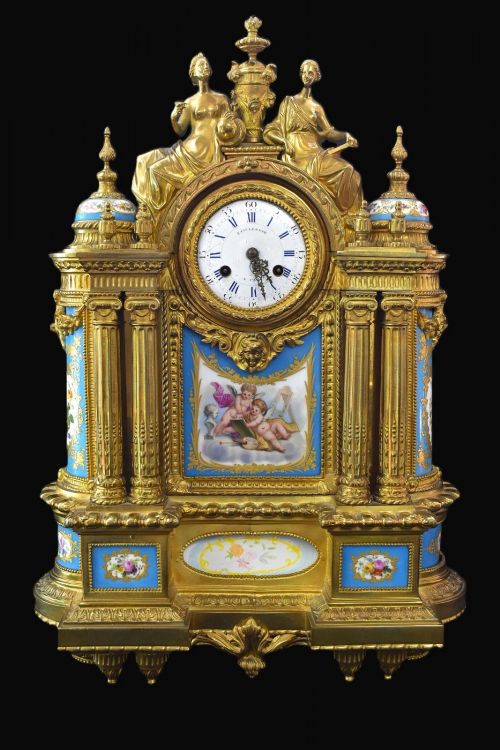
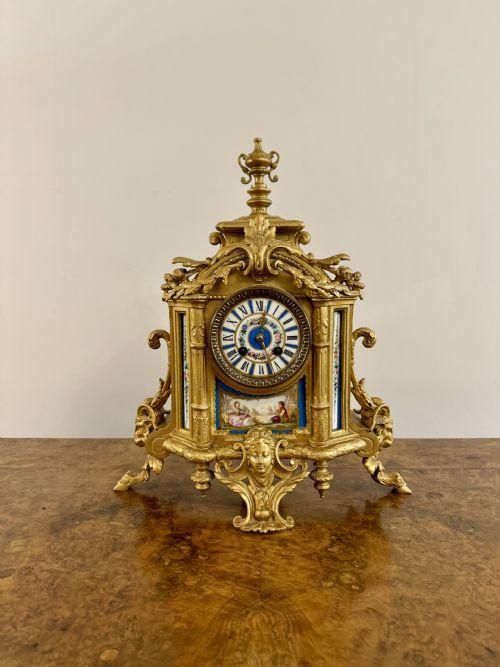
A decorative french table clock brings unmistakable nineteenth-century grandeur to a room, combining architectural presence with intricate metalwork and painted porcelain dials.
Decorative French Table Clock
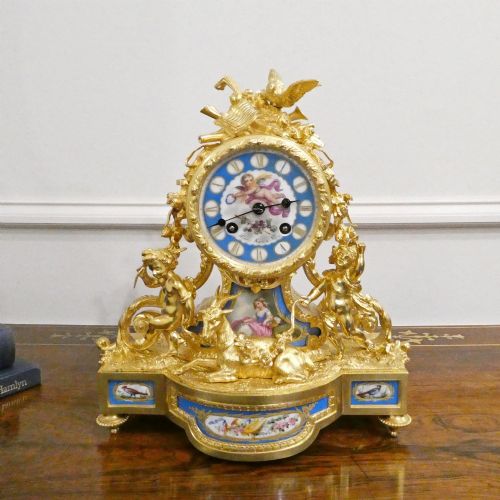
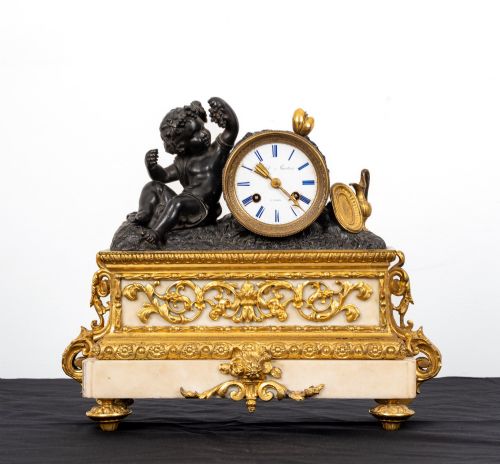
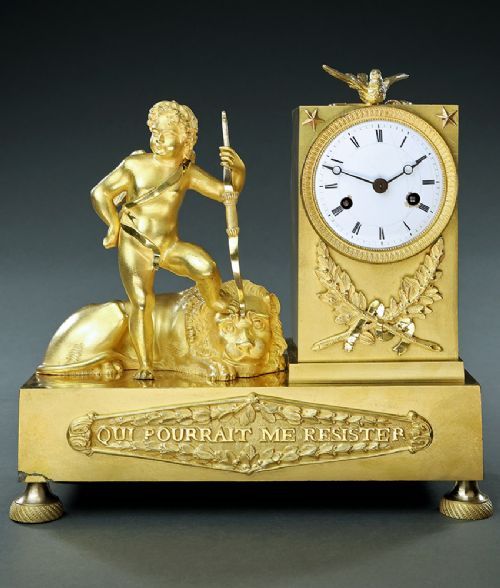
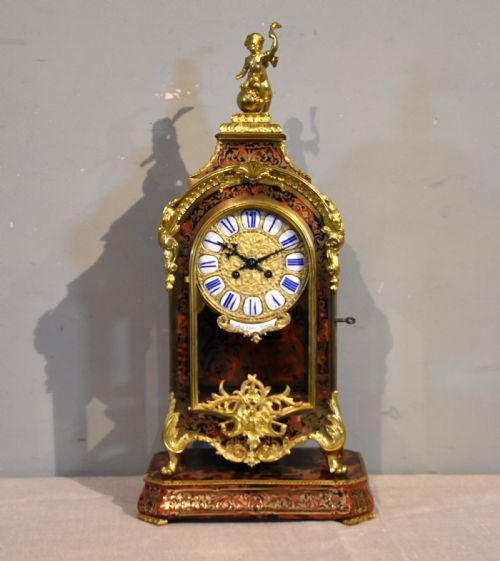
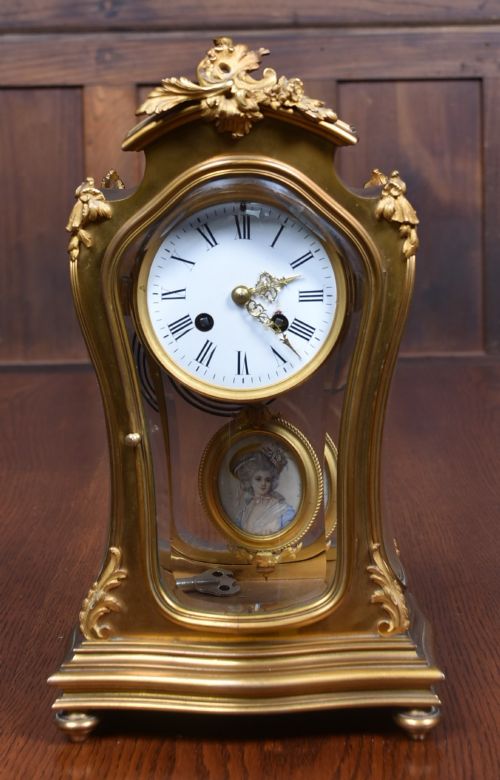
A decorative french table clock is primarily encountered as a mantel or carriage clock originating from the nineteenth century, spanning periods from the 1850s through to 1900. These timepieces take the form of substantial architectural mantel pieces housed in marble, gilt bronze, and ormolu, alongside portable brass carriage clocks.
The aesthetic vocabulary draws heavily on historical revivals, with French Rococo, Louis XVI, and Empire styles dominating the pieces seen here. Makers translated these classical and ornate motifs into domestic ornaments that served as both functional timepieces and sculptural centrepieces for the home.
Mantel clocks on this page frequently incorporate painted porcelain panels, putti figures, or enamel dials, while carriage clocks offer a more restrained, glass-panelled alternative. Buyers select these objects for their strong period character and the intricate craftsmanship of their cast metal cases.
How they were made
Cases were constructed from cast bronze, brass, and gilt metals, often enhanced with fire-gilded ormolu surfaces that required precise application of gold amalgam. Marble and faux tortoiseshell served as substantial structural housings, while intricate panels utilised champleve enamel and hand-painted porcelain.
Dials were commonly formed of white enamel with painted Roman numerals, or incorporated miniature enamel paintings signed by the artisan. Movements were engineered to house 8-day mechanisms, sometimes featuring repeating complications or platform escapements suited for portable carriage clocks.
The listings here span the Victorian era alongside nineteenth-century French periods, using materials including marble, porcelain, and gilt bronze.
What varies in quality
The distinction between tiers of quality rests heavily on the crispness of the bronze and ormolu casting, where sharper chisel work and deeper chasing separate finer sculptural details from softer production. Cases adorned with hand-painted Sevres-style porcelain panels or signed enamel miniatures indicate a higher grade of manufacture.
Maker attribution also dictates standing, with documented signatures from notable horologists and bronze-founders conferring greater artisanal authority upon the piece. Furthermore, the preservation of original gilding and the integration of matching components across the case and movement elevate the status of the clock.
Henry Marc·Etienne Lenoir·PH Mourey·Henri Jacot·Hessen Paris
The Decorative French Table Clock Glossary
- Ormolu
- Gilt bronze produced by applying a finely ground high-carat gold mercury amalgam to a bronze object, which is then fired to drive off the mercury. This technique creates a durable, warm golden finish characteristic of nineteenth-century decorative pieces.
- Champleve
- An enamelling technique where troughs or cells are hollowed out of a metal surface and filled with vitreous enamel powder before being fired. The resulting design sits flush with the surrounding metal borders.
- Boulle
- A style of marquetry utilising tortoiseshell and brass inlay, named after the cabinetmaker Andre-Charles Boulle. It appears on architectural clock cases styled after the Louis XIV period.
- Capucine
- A specific type of French striking alarm carriage clock featuring a bell mounted visibly on top of the case. They typically possess a handle for portability and robust brass framing.
- Repeater
- A clock mechanism that chimes the hours and quarters upon demand when a lever or cord is activated by the user. This complication required sophisticated internal gear trains.
Decorative French Table Clock: Frequently Asked Questions
Where should I place a mantel clock?
These clocks sit naturally upon a fireplace mantel, sideboard, or sturdy table where their weight and height can be properly supported.
Ensure the surface is level to allow the pendulum and escapement to operate accurately without interference.
What is a carriage clock used for?
Carriage clocks were originally designed as portable timepieces for travellers during the nineteenth century, housed in protective glass and brass cases.
Today they function as compact table clocks that can be moved easily between rooms.
How do I identify a Louis XVI style clock?
Look for symmetrical neoclassical motifs, including urns, fluted columns, ribbons, and geometric architectural lines.
These designs contrast sharply with the asymmetrical, curving botanical forms found in earlier Rococo revival pieces.