
Decorative Fireplace Screen
A decorative fireplace screen guards a hearth when the grate is cold, bringing brass, iron, glass and tapestry into the room.
Decorative Fireplace Screen
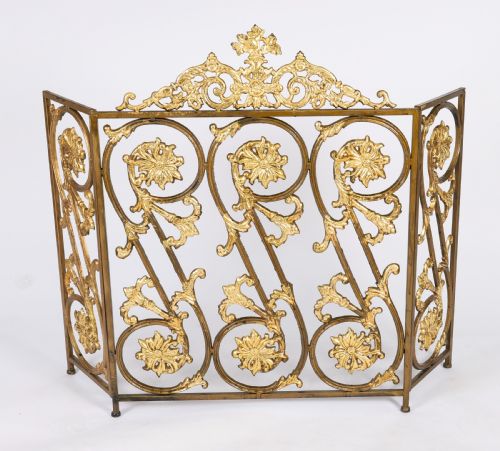
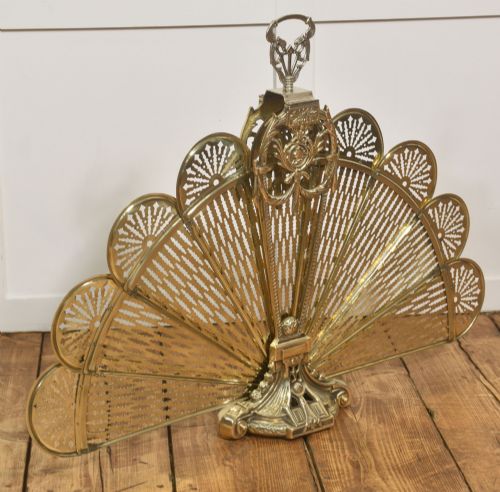
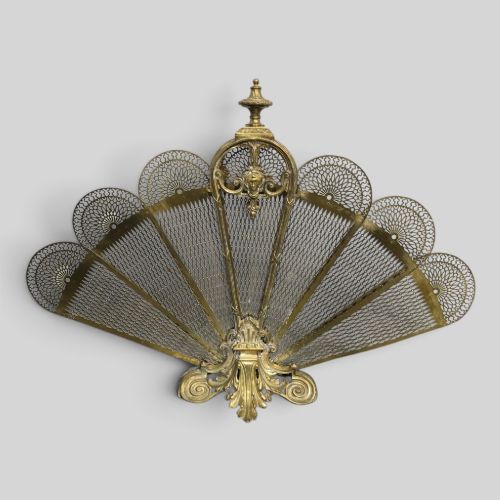
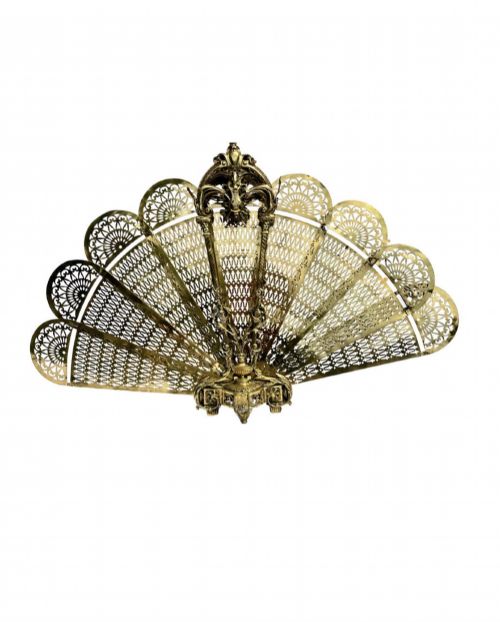
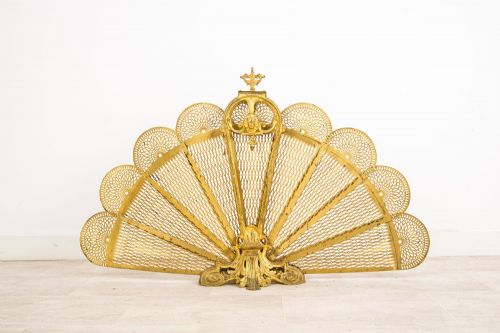
A decorative fireplace screen is a functional piece of room furniture that doubles as an ornament when the hearth is unlit. These guards range from folding peacock fans to rigid panels set on iron stands, designed to shield a room from drafts or cover an empty grate during warmer months.
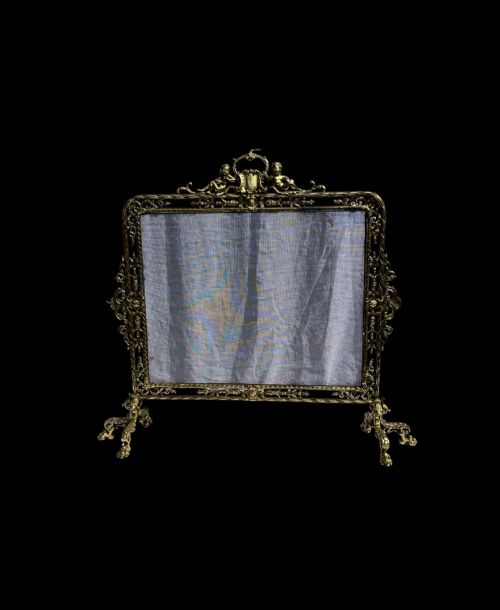
The pieces available span the nineteenth century into the twentieth, taking forms such as table screens, folding fans and upright guards. French revivals, Arts and Crafts designs and Victorian brass frames dominate the selection.
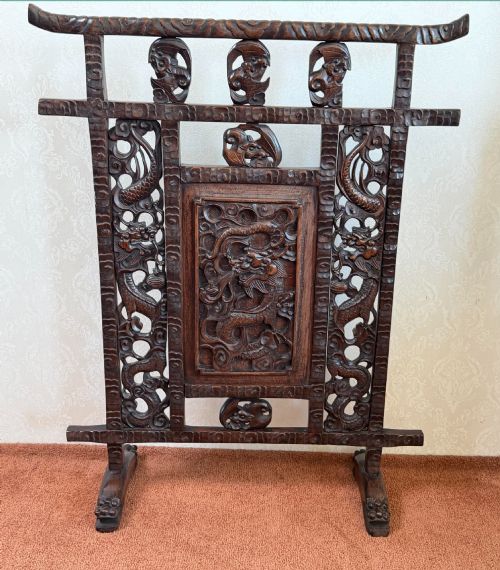
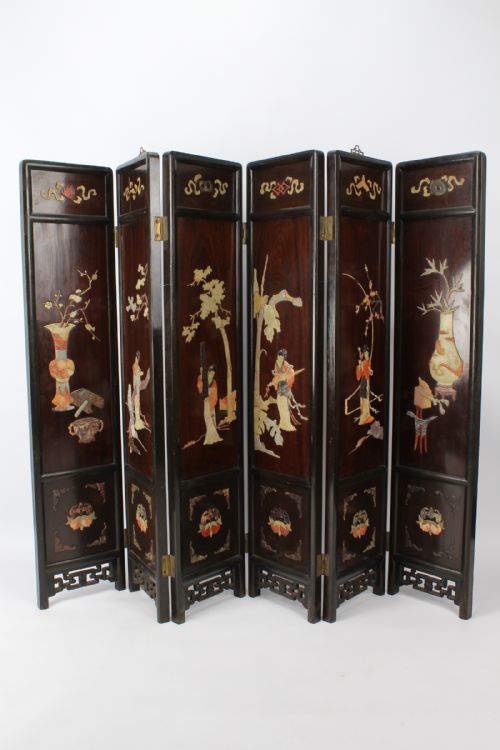
Makers utilised various formats including Chinese hardwood and folding screens, glass reflectors, and needlework tapestry panels mounted in timber frames. Each type served to dress the fireplace while managing space and light in domestic interiors.
How they were made
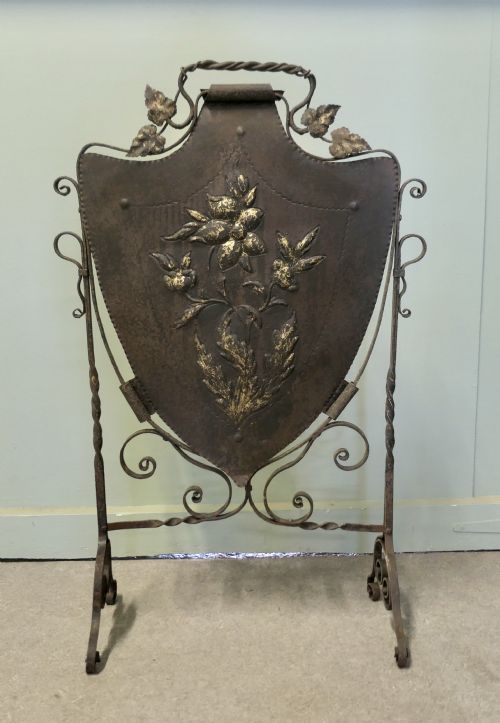
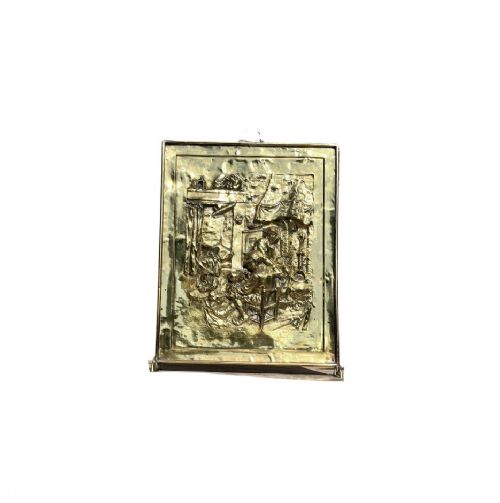
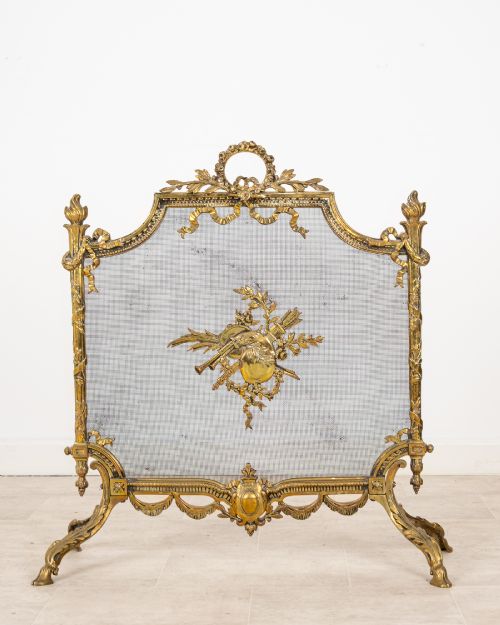
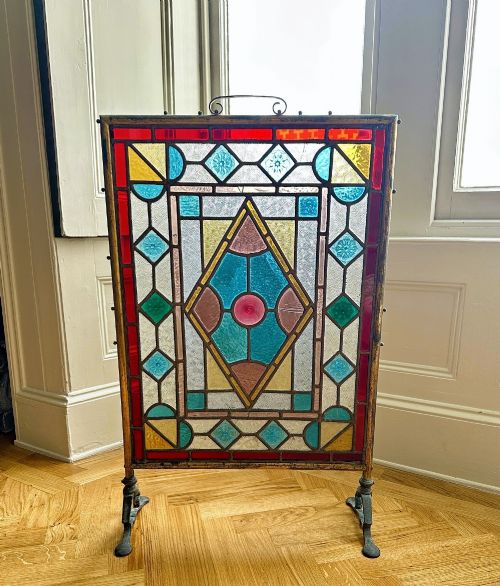
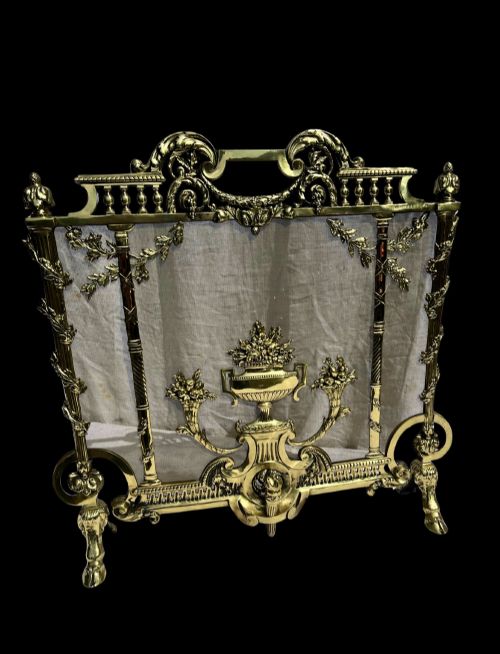
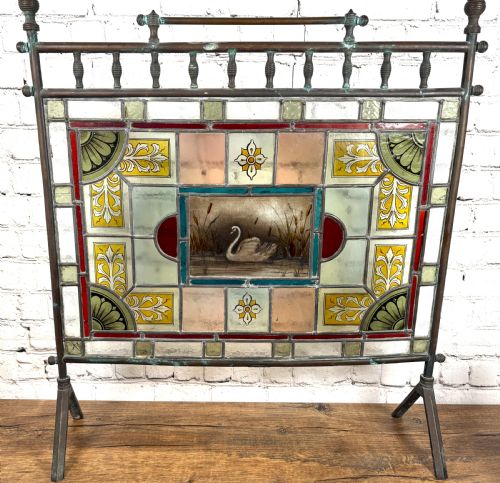
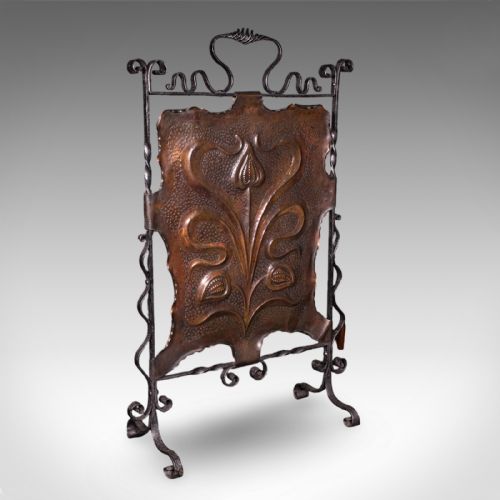
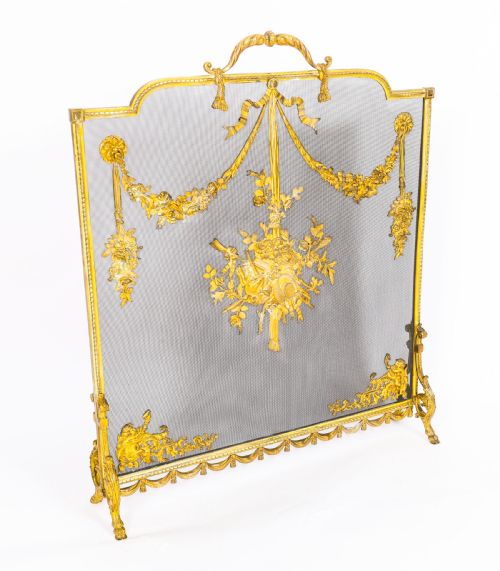
Makers constructed these screens using metals such as brass, gilt bronze, copper, and wrought iron, often combined with wire mesh to serve as spark guards. Frames were cast, beaten or forged, supporting central panels of stained glass, cut glass, mirrors or silk embroidery.
Timber examples feature hardwoods like rosewood or Chinese woods, frequently carved and polished to house tapestry or painted dummy board panels. Structural integrity relied on sturdy iron stands, folding hinges or weighted brass bases to keep the tall frames upright.
Materials span brass, wire mesh, wrought iron, glass, gilt brass, copper, hardwood and lead across the 19th and 20th centuries.
What varies in quality
Quality rests in the crispness of the casting, the weight of the brass or ironwork, and the fineness of decorative details such as floral and musical trophies or hand-beaten Art Nouveau motifs. Finer examples display meticulous chasing on ormolu frames and superior joinery on folding fan mechanisms.
The integrity of the central panel further distinguishes the piece, whether through hand-painted glass, leaded stained glass, or densely stitched tapestry and silk embroidery. Better pieces retain their original glass and matching stands without modern replacement parts.
The Decorative Fireplace Screen Glossary
- Fire guard
- A metal screen placed in front of an open fire to catch sparks and protect the room. These often feature wire mesh or heavy iron construction.
- Peacock fan
- A folding screen composed of radiating metal blades that fan out to resemble a peacock tail. They typically utilise brass or gilt bronze.
- Dummy board
- A flat wooden figure painted to represent a person or animal, popular in period interiors. They sat near hearths to trick the eye.
- Ormolu
- Gilt bronze mounted on decorative objects, prized for its warm golden lustre. It featured heavily in French revival fireplace accessories.
- Reflector
- A polished metal screen placed behind or before a fire to bounce light and heat into the room. Copper and brass were common materials for this purpose.
Decorative Fireplace Screen: Frequently Asked Questions
What is a decorative fireplace screen used for?
These screens served to hide dark, empty grates during summer months and block excess drafts from the chimney. They also acted as spark guards when fires burned low.
Beyond utility, they functioned as decorative centerpieces in Victorian and Edwardian drawing rooms, displaying fine metalwork, stained glass or needlework.
How do I date a brass fire screen?
Dating relies on style markers such as Rococo Revival curves, Arts and Crafts hand-beaten textures, or Art Nouveau flowing lines. Material weight and manufacturing techniques also provide clues to the era.
Nineteenth-century examples often feature heavy cast brass and intricate chasing, while 1920s pieces lean towards sunburst mirrors and simplified geometric frames.
Are peacock fan screens fragile?
The pivoting blades require gentle handling when opening and closing the fan mechanism. Overzealous movement can bend the thin brass slats.
When positioned correctly on a hearth or floor, they remain stable, but owners should avoid placing them in high-traffic walkways where they might get knocked.
Can I use an antique screen with an active fire?
Many iron and mesh variants were built specifically as spark guards for active fires. However, delicate glass, silk embroidery and mirrored panels are best kept to unlit grates.
Checking the material construction tells you whether the piece is a sturdy guard or a delicate ornamental reflector.