




Decorative Etched Glass Mirror
A decorative etched glass mirror brings light and texture into a room, relying on fine engraving and reflective surfaces.
Decorative Etched Glass Mirror
A decorative etched glass mirror combines reflective glass plates with surface engraving, taking forms such as wall mirrors, overmantel mirrors, and fire screens. These pieces span periods from the 18th century through the 19th century, Edwardian era, and into the 19th and 20th century Art Deco styles.
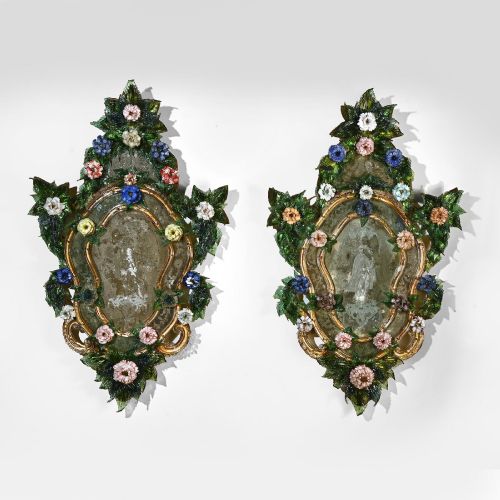
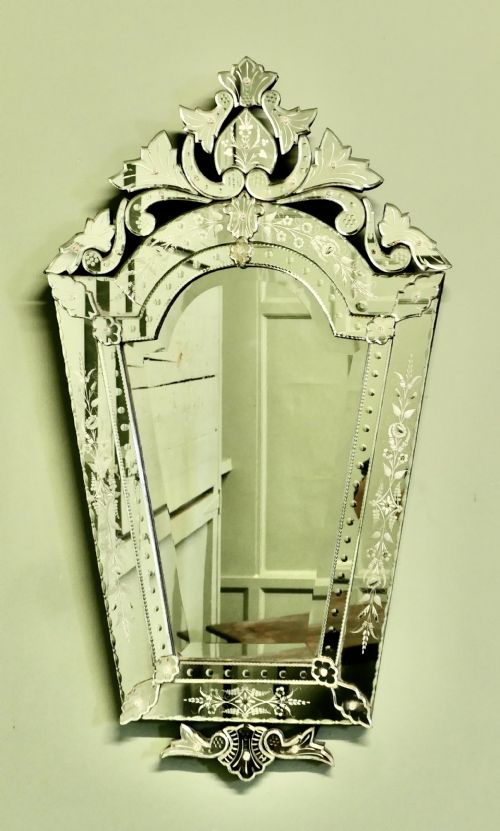
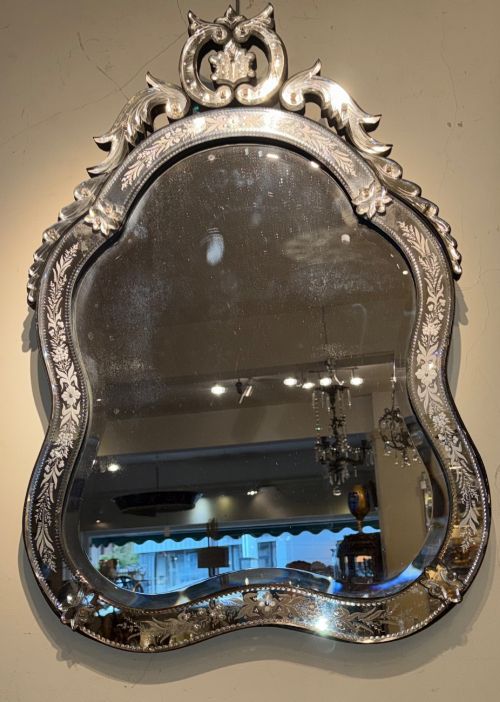
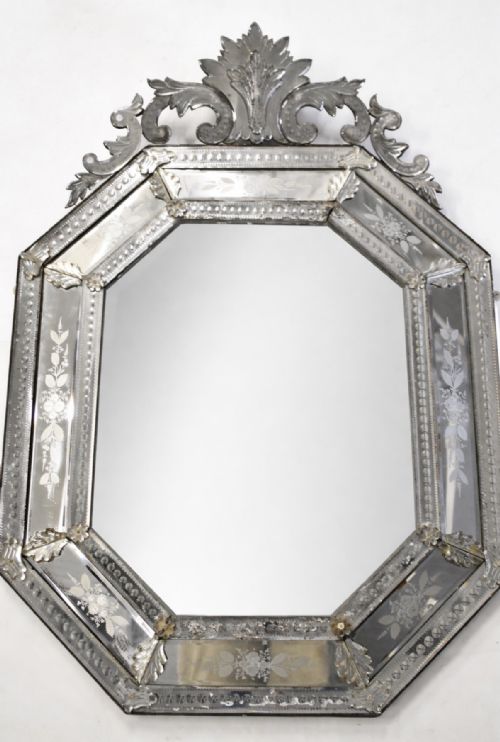
The Venetian and Italian Rococo styles dominate the selection, often appearing as cushion mirrors or carved gilt-wood frames with engraved plates and ruby red borders. Alongside these Italian examples, English and French pieces emerge in Art Deco designs, including peach coloured glass and brass sunburst frames.
Buyers frequently encounter Venetian influences and carved wooden frames, alongside Victorian reverse painted floral designs and ebonised pieces with cut glass pediments. The regional variety ranges from Murano glass production to English overmantels and French wall mirrors.
Materials and construction methods
The primary construction relies on glass, mirrored glass, and silvered glass plates set within wood, brass, or giltwood frames. Artisans utilised cutting and etching techniques directly onto the glass surface to create floral motifs, geometric patterns, and decorative borders.
Carved wood, ebonised timber, and polychrome finishes provide structural support for the glass panels, particularly in Venetian and Baroque influenced pieces. Brass elements appear in frames and fire screens, while specialised glass tints such as peach or ruby red introduce colour variation to the reflective surface.
Materials documented across the inventory include silvered glass, brass, gilt wood, and peach coloured glass.
Distinctions in craftsmanship and design
The refinement of the engraving and the depth of the cut glass work separate standard examples from finer pieces. Crisp lines in floral and geometric etchings indicate superior hand skill by the artisan.
Frame construction also determines quality, with hand-carved gilt-wood, polychrome details, and structured cushion frames representing higher levels of workshop output compared to simpler wooden surrounds.
The Decorative Etched Glass Mirror Glossary
- Etched glass
- Glass treated with acid or abrasive techniques to create frosted designs or patterns on the surface. This method allows intricate floral or geometric motifs to stand out against the clear reflective areas.
- Cushion mirror
- A frame style where the mirror glass or auxiliary glass panels curve outward toward the edges, creating a pillow-like profile. This form is common in Venetian and Baroque influenced designs.
- Overmantel mirror
- A large horizontal mirror designed specifically to hang above a fireplace mantel. These pieces frequently feature arched tops and substantial wooden or gilt frames.
- Giltwood
- Wood that has been coated with a thin layer of gold leaf or gold paint. It provides a bright, reflective border popular in Rococo and Baroque revival frames.
- Reverse painted glass
- A technique where painting and gilding occur on the back side of the glass so the image is viewed through the transparent pane. Victorian examples often utilise this method for floral decorations.
Decorative Etched Glass Mirror: Frequently Asked Questions
How do I hang a heavy overmantel mirror?
These large mirrors require secure wall fixings anchored directly into masonry or substantial wall studs to support the combined weight of the glass and wooden frame.
Professional mirror hangers often utilise heavy-duty brackets or French cleats distributed evenly across the frame structure to ensure stability.
What defines an Art Deco mirror?
Art Deco mirrors display geometric shapes, clean lines, and stylised motifs typical of the period from the 1920s to the 1930s. Materials often include peach coloured glass or brass accents alongside sunburst and diamond configurations.
These pieces break away from ornate historical revivals in favour of streamlined, modern aesthetic appeal.
How do I identify a Venetian mirror?
Venetian mirrors feature engraved glass panels, applied glass scrollwork, and sections of mirrored glass assembled over a wooden substructure. They often incorporate cushion profiles and decorative crests.
Murano glass traditions heavily influence these pieces, resulting in elaborate, light-reflecting constructions.
Where should I place a decorative glass mirror?
Positioning a mirror opposite a window maximises natural light distribution and creates an open sense of space within a room. Overmantels suit traditional fireplace placements, while smaller wall mirrors function well in hallways or living areas.
Care should be taken to avoid direct, harsh moisture sources that might affect the silvered backing over time.