




Decorative Enamel Table Clock
A decorative enamel table clock brings vivid colour and intricate metalwork to a mantelpiece, combining precise timekeeping with high-style nineteenth-century craftsmanship.
Decorative Enamel Table Clock
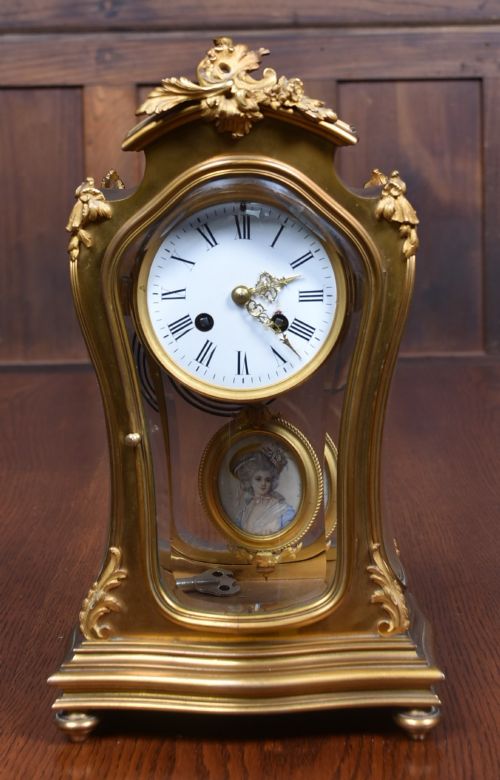
A decorative enamel table clock is a timepiece designed for domestic interiors, predominantly taking the form of mantel clocks, carriage clocks, and desk clocks originating from the nineteenth century.
The pieces you encounter most often on this page are French carriage clocks and mantel clocks dating from the Victorian and Edwardian eras, frequently exhibiting revivalist styles such as French Rococo and Louis XVI.
Makers and retailers such as Tiffany, John Bennett, and Barwise London occasionally appear, grounding these decorative timepieces in historic commercial practice.
How they were made
These clocks rely on heavy brass, gilt bronze, and ormolu for their structural cases and architectural frames.
Enamelwork and champlevé techniques provide vibrant surface decoration, often paired with hand-painted dials, glass panels, and occasionally tortoiseshell veneer.
Some nineteenth-century makers incorporated live goats and palm trees directly into the bronze cast alongside the clock face.
What varies in quality
Quality rests in the crispness of the bronze casting and the depth of the gilding, where finely chased ormolu surpasses plain stamped brass.
The intricacy and preservation of the enamel panels define the artistic merit, alongside signed movements or casework bearing the mark of a known maker.
John Bennett Cheapside London·Barwise London·Tiffany
The Decorative Enamel Table Clock Glossary
- Champleve Enamel
- An enamelling technique where troughs are dug into a metal plate and filled with vitreous enamel before firing. This method creates rich, patterned colour across the brass or bronze body of the clock.
- Ormolu
- Finely ground high-carat gold applied to a bronze base using mercury amalgamation. It yields a brilliant golden finish characteristic of French luxury objects.
- Carriage Clock
- A small, portable spring-driven timepiece developed for travel during the nineteenth century. They usually feature bevelled glass panels and a swinging handle on top.
- Four Glass Clock
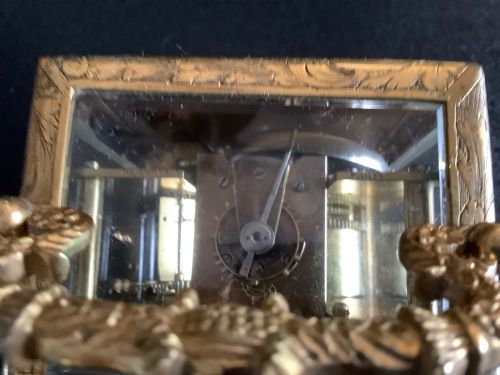
- A mantel clock housed within a brass and glass case that reveals the movement from all sides. This style gained popularity during the late Victorian period.
- Fusee
- A conical pulley used in older clock movements to maintain even force as the mainspring unwinds. It represents a higher standard of mechanical complexity.
Decorative Enamel Table Clock: Frequently Asked Questions
How do I wind a carriage clock?
Use the matching key provided with the clock to turn the arbour squares located on the backplate. Take care not to overwind the mainspring.
Moving the hands should be done gently and strictly in the direction indicated by the maker to avoid damaging the wheel train.
How do I date a Victorian enamel clock?
Dating relies on examining the style of the case, the signature on the dial or movement, and registration marks if present. Victorian examples often span from the 1860s through to the end of the century.
French imports from this period frequently display distinct regional movement stamps and characteristic cast brass ornamentation.
Where should I place a table clock?
Position your clock on a stable, level surface away from direct sunlight and damp conditions to protect the delicate enamel and gilt surfaces.
Wooden mantelpieces and sturdy desks provide an ideal environment where the ticking sound can be enjoyed without excessive vibration.