







Decorative Display Furniture
Decorative display furniture turns interior staging into an art, combining practical surface area with striking architectural presence.
Decorative Display Furniture
Decorative display furniture encompasses a varied selection of functional staging pieces, including display cabinets, etageres, wall shelves, and plant stands designed to showcase prized objects. Buyers seeking decorative display furniture will encounter numerous nineteenth-century examples spanning the Victorian and Edwardian eras, alongside earlier Georgian and seventeenth-century forms.
The selection ranges from tall freestanding bookcases and side cabinets to compact wall-mounted shelving and corner cupboards. Pieces frequently adopt revivalist aesthetics, drawing on Chippendale, French Rococo, Sheraton, and Renaissance styles to create dramatic visual impact within a room.
Freestanding pedestals, torchieres, and console tables offer vertical elevation for sculptures and plants, while multi-tiered etageres provide layered surfaces. These items originate from English, French, Italian, Dutch, and Japanese workshops, reflecting diverse regional cabinet-making traditions.
Materials and construction methods
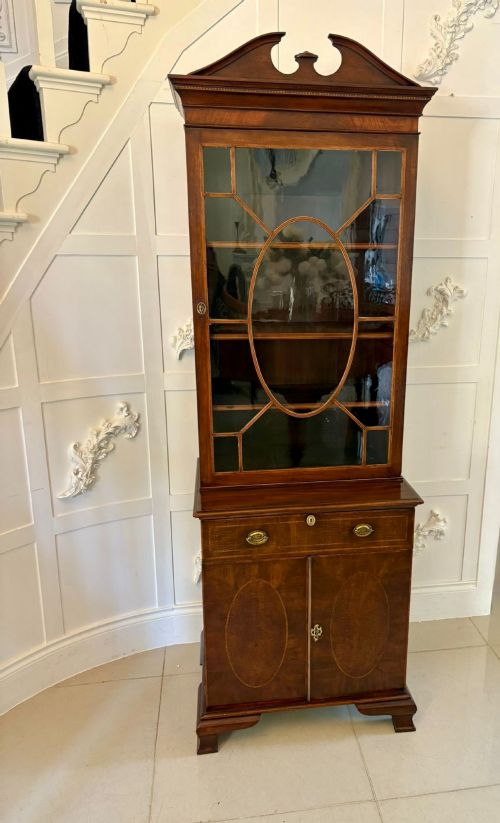
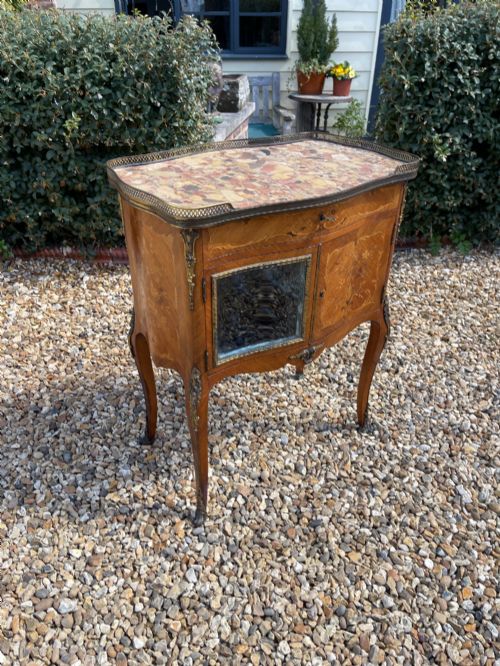
Cabinet makers utilised dense hardwoods such as mahogany, walnut, rosewood, and oak, frequently enhancing surfaces with burr walnut or satinwood veneers and intricate marquetry inlays. Structural elements often incorporate glass door panels, marble tops, and brass mounts or galleries to elevate the decorative refinement.
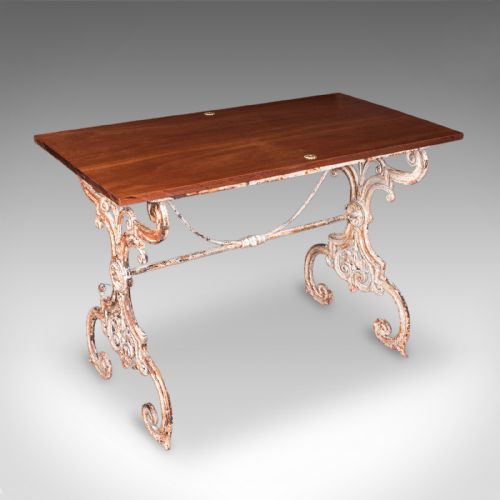
Metalwork played a structural and decorative role, visible in cast iron plant stands, gilt-metal mounts, and brass-framed etageres. Painted finishes, hand-painted details, and giltwood carving further distinguish pieces from this category, reflecting both vernacular folk traditions and formal revivalist cabinet making.
Decorative Display Furniture Retail Price Guide 2026
Typical asking prices for decorative display furniture among the pieces listed under this phrase on Sellingantiques today, from the lower quarter to the upper quarter. They describe what is for sale here now, not the wider market.
Current listings feature pieces spanning the seventeenth century through to the Edwardian era, incorporating walnut, mahogany, cast iron, and glass.
Factors determining quality
Quality rests upon the choice of timber and the precision of its grain matching, particularly visible in burr walnut and mahogany surfaces. Superior pieces demonstrate crispness in carved wooden details, delicate fretwork, and the seamless integration of brass mounts or inlaid veneers.
The sophistication of internal construction, such as dovetailed drawer boxes and original glazed door panels, separates standard production from exceptional examples. Balance and proportion in revivalist pieces, such as Chippendale or Renaissance designs, dictate how successfully the form holds a room.
The Decorative Display Furniture Glossary
- Etagere
- A set of open shelves for displaying small objects or ornaments, popular during the nineteenth century. These multi-tiered pieces often feature slender upright supports.
- Torchere
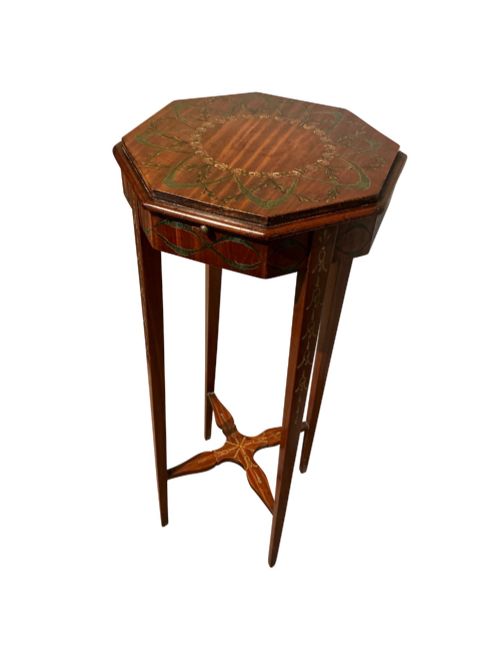
- A tall, slender stand designed to support a candelabrum, lamp, or decorative object. Examples in the evidence date from the Regency and nineteenth-century periods.
- Shodana
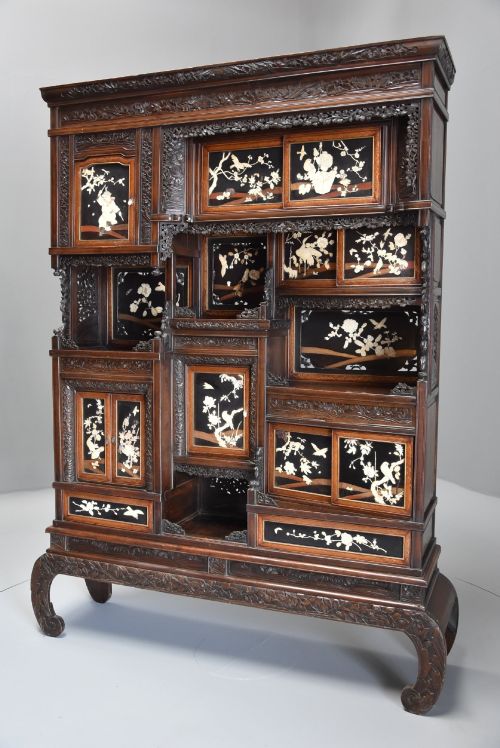
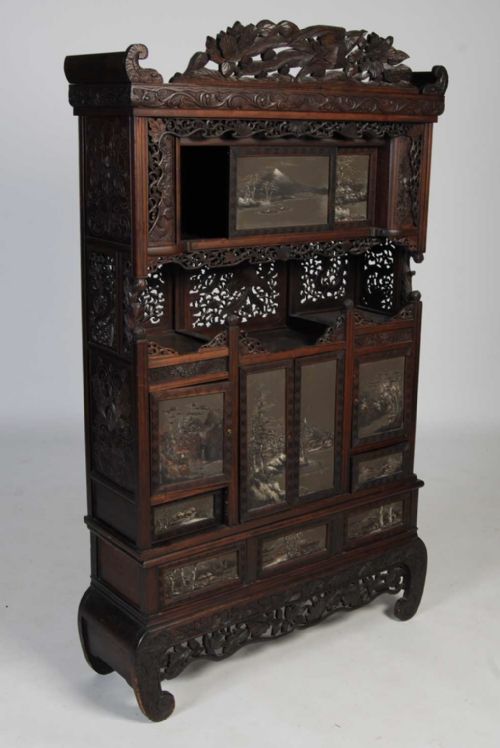
- A Japanese display cabinet featuring asymmetrical shelving and compartments, seen here from the Meiji period. These cabinets showcase intricate woodworking traditions.
- Whatnot
- A piece of furniture consisting of several open shelves above one another, used for displaying curiosities. They appear frequently in walnut, rosewood, and mahogany.
- Marquetry
- The art and craft of applying pieces of veneer to a structure to form decorative designs. Cabinet makers used contrasting timbers like satinwood to achieve pictorial effects.
Decorative Display Furniture: Frequently Asked Questions
What is decorative display furniture used for?
These pieces serve to organise and elevate collections of ceramics, books, plants, and decorative objects within domestic interiors. They combine storage with visual prominence, creating designated focal points in a room.
Historically, items like etageres and wall brackets allowed households to exhibit their refined tastes and acquired curiosities. Today, they perform the same function while adding period character to modern living spaces.
Where should I place a torchere stand?
Torchere stands suit corners, empty wall spaces, or flanking larger items of furniture where their vertical height can add balance to a room. They provide an elevated platform for sculptures, urns, or table lamps.
Because they have a relatively small footprint, they fit well in narrower hallways or reception rooms without obstructing movement. Ensure the base remains stable, particularly with heavier marble or cast iron iterations.
What distinguishes an etagere from a bookcase?
An etagere consists primarily of open, tiered shelving designed specifically for ornamental display rather than heavy book storage. Bookcases typically feature enclosed cupboards or fitted shelving intended for literary collections.
While some smaller wall-mounted items blur this distinction, etageres generally emphasise lightness, slender supports, and decorative fretwork. They offer visibility from multiple angles.