



Decorative Display Cupboard
A decorative display cupboard brings treasured collections into focus, combining timber and glass to show off porcelain and silver.
Decorative Display Cupboard
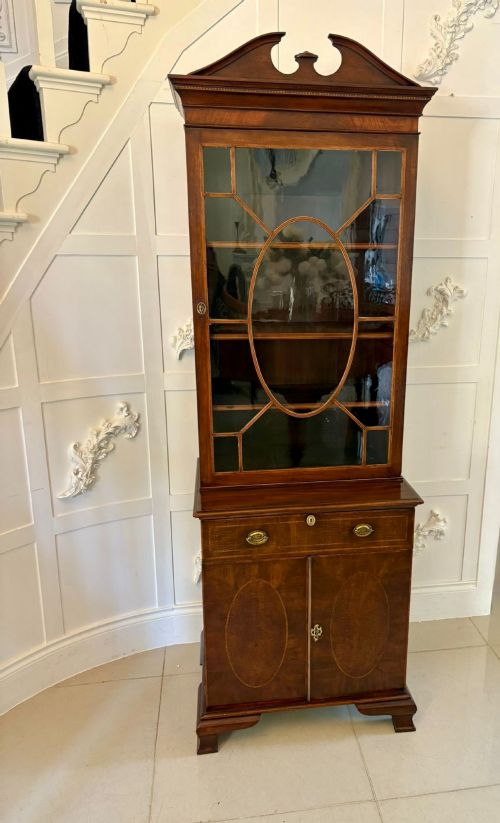
A decorative display cupboard encompasses cabinets, bookcases, corner cupboards and side cabinets designed to exhibit items behind glass panels. These pieces range from compact pier cabinets and pedestals to larger armoires and bookcases.
The selections span the eighteenth century through the Victorian, Edwardian and late nineteenth-century periods. Buyers encounter revivals of Queen Anne, Chippendale, Sheraton, French Rococo and French Provincial styles, alongside Chinoiserie and Aesthetic period designs.
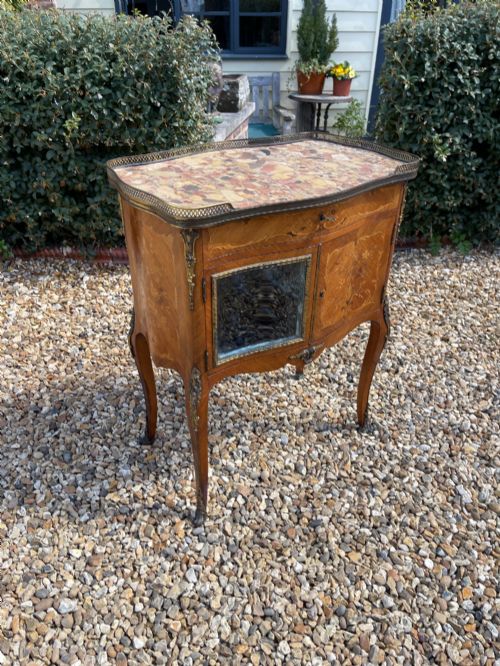
Forms include serpentine display cabinets, corner cabinets and gilt-metal mounted ebonised pier cabinets. Walnut, mahogany, amboyna, thuya wood and lacquered surfaces feature prominently across these varied cabinet types.
How they were made
Cabinet makers utilised choice timbers such as walnut, mahogany and amboyna, frequently incorporating delicate marquetry and inlay work to ornament the surfaces. Carved ebony, gilt-metal mounts and porcelain plaques provide additional decorative contrast on Victorian pieces.
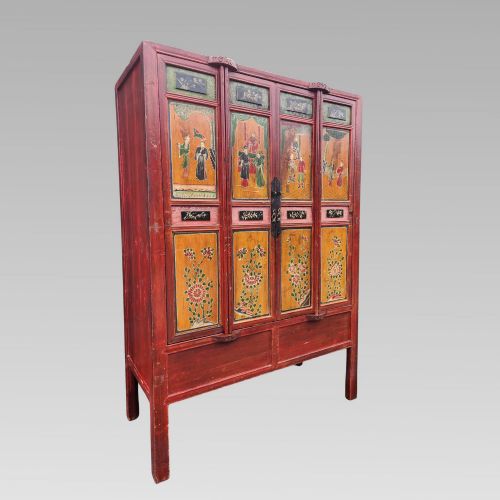
Glazing bars organise the glass panels of doors and sides, allowing light to illuminate the interior shelves. Lacquer techniques define the Chinoiserie storage marriage cabinets, applying layered finishes to wooden foundations.
Decorative Display Cupboard Retail Price Guide 2026
Typical asking prices for decorative display cupboard among the pieces listed under this phrase on Sellingantiques today, from the lower quarter to the upper quarter. They describe what is for sale here now, not the wider market.
Listings feature items spanning from the eighteenth century to the Edwardian era, incorporating walnut, mahogany, amboyna, lacquer and brass.
What varies in quality
The distinction between standard production and exceptional work rests on the choice of timber figure, the precision of the inlay and the crispness of any carved ornamentation. Exhibition pieces and named maker outputs demonstrate superior joinery and more ambitious architectural silhouettes.
Secondary elements like the quality of the gilt-metal mounts, the clarity of the glass and the sophistication of the painted or lacquered decoration elevate certain cabinets well above simpler utilitarian storage.
Edwards & Roberts
The Decorative Display Cupboard Glossary
- Pier cabinet
- A low cabinet designed to stand against the wall space between windows. These pieces often feature glazed doors for displaying small objects.
- Chinoiserie
- European decorative style inspired by Chinese artistic traditions. It employs lacquered surfaces and painted motifs depicting oriental scenes.
- Marquetry
- The art of applying veneer pieces in contrasting timbers to form decorative patterns. Craftsmen use this technique on cabinet doors and friezes.
- Serpentine
- A curved furniture front characterised by a convex centre flanked by concave ends. This undulating shape requires advanced woodworking skill.
- Ebonisation
- The process of treating lighter timber to imitate ebony. This dark finish appears frequently on nineteenth-century display furniture.
Decorative Display Cupboard: Frequently Asked Questions
Where should I place a corner cabinet?
A corner cabinet fits directly into the internal angle of a room, making efficient use of space that often remains empty. They suit dining rooms and drawing rooms alike.
Tall cupboards draw the eye upward, while smaller corner models sit neatly above side tables.
How do I identify a pier cabinet?
A pier cabinet is typically narrow and low, proportioned specifically to fit the wall pier between two windows. They frequently feature glazed single doors and velvet-lined interiors.
Victorian examples often combine ebonised wood with gilt-metal mounts and inset porcelain plaques.
What is a Chinoiserie marriage cabinet?
A Chinoiserie marriage cabinet is a large storage piece decorated with lacquered finishes and oriental motifs, traditionally given to newly married couples. The surface work includes raised painting and metallic detailing.
These cabinets provide enclosed storage behind heavy wooden doors rather than glass display panels.