




Decorative Crystal Ceiling Light
These decorative crystal ceiling light options bring authentic period illumination into a room, combining cut glass with brass, bronze, and gilt metal frameworks.
Decorative Crystal Ceiling Light
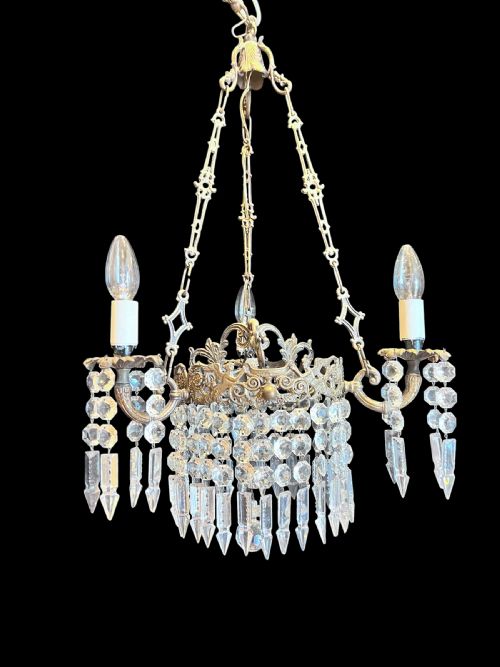
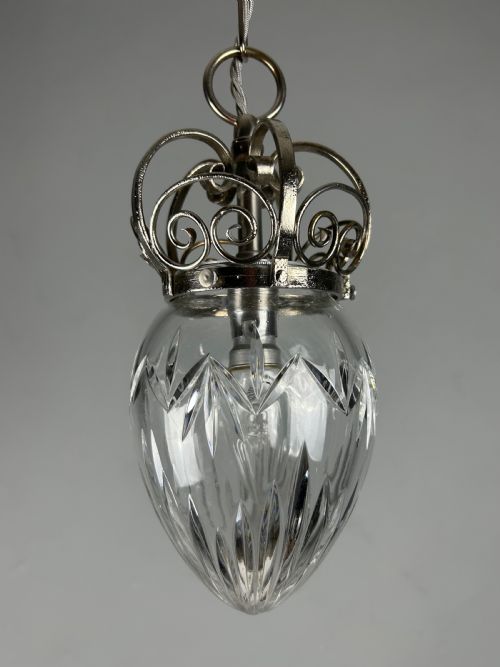
A decorative crystal ceiling light brings together period illumination and glass artistry, taking forms such as chandeliers, bell jar lanterns, bowl chandeliers, and pendant lights. When you search for a decorative crystal ceiling light, you encounter pieces spanning the Victorian and Edwardian eras, alongside 19th-century designs and 1920s or 1930s creations.
The selection includes multi-branch chandeliers fitted with cut glass drops and swags, alongside open-cage bronze configurations and specialised items hung with coloured crystal fruits like grapes, apples, and pears. French influences appear frequently through styles such as Art Nouveau, Neoclassical, and chateau aesthetics, alongside Italian Florentine gilt frames.
Materials range from polished brass and gilt metal to iron, chrome, and bronze, paired with hand-blown and diamond-cut glass elements. These fixtures serve as central overhead fittings that refract light through complex glass drops and polished metal structures.
Distinguishing quality in period lighting
Quality rests in the precision of the metalwork and the clarity of the glass elements. Heavier cast bronze or brass frameworks and sharply faceted diamond-cut crystal create a more brilliant refraction of light than simpler stamped metal and plain pressed glass.
The integrity of the design shows in the completeness and cohesion of the hanging drops, swags, and decorative details. Finer pieces maintain matching sets of hand-formed glass components integrated cleanly into the overall metal structure.
Materials appearing across the inventory include brass, bronze, gilt metal, chrome, iron, cut glass, and standard glass crystal.
The Decorative Crystal Ceiling Light Glossary
- Chandelier
- A branched decorative ceiling light designed to hold multiple lamps or candles. These fixtures suspend from overhead points to distribute illumination across a space.
- Bell jar lantern
- An enclosed glass lantern shaped like a inverted bell, often held within a metal frame. These pieces direct light downwards while protecting the internal burner or bulb.
- Cut glass
- Glass that has been ground and polished on a wheel to create sharp facets. This process enhances the material's ability to refract and sparkle in the light.
- Gallery
- A decorative metal band or ring that holds glass shades or structural elements in place. Galleries often feature pierced or cast ornamentation along their visible edges.
- Drop
- A small piece of cut glass suspended from a chandelier or light fitting. Drops catch and multiply the illumination within a room through their multifaceted surfaces.
Decorative Crystal Ceiling Light: Frequently Asked Questions
How do I hang a heavy antique chandelier?
These fixtures require secure anchoring directly into ceiling joists or structural timber using heavy-duty ceiling hooks. Professional installation is strongly recommended to safely support the combined weight of the metal frame and glass components.
The electrical wiring should be inspected and adapted by a qualified electrician to meet current safety standards. Many period fittings are rewired to ensure safe daily operation in modern homes.
What rooms suit a decorative crystal ceiling light?
These fittings work effectively in hallways, dining rooms, and drawing rooms where overhead illumination serves as a focal point. Their reflective glass elements brighten spaces with limited natural light.
Ceiling height dictates the appropriate scale and drop of the fixture. Taller spaces accommodate multi-branch chandeliers, while more compact rooms benefit from flush mounts or bell jar lanterns.
How do I clean a cut glass chandelier?
Routine maintenance involves dusting the glass drops and metal frame with a soft, dry cloth or feather duster. For a deeper clean, wash individual glass pieces in lukewarm water with a mild detergent before drying them thoroughly.
Avoid spraying cleaning fluids directly onto the fixture, as moisture can damage old metal finishes and electrical components. Removing the drops allows for safe cleaning without straining the structural frame.
How can I tell Victorian lights from 1930s pieces?
Victorian and Edwardian pieces frequently feature heavier cast brass or bronze frames, hand-blown components, and ornate decorative swags. Their stylistic roots often draw from classical revival or early Arts and Crafts traditions.
Twentieth-century designs from the 1920s and 1930s sometimes incorporate chrome, streamlined geometric arrangements, or Italian Florentine gilt finishes. Examining the construction techniques and metal types helps clarify the period of manufacture.