



Decorative Copper Platter
These decorative copper platter pieces bring substantial metalwork and intricate surface decoration to walls and surfaces, offering distinct historical character.
Decorative Copper Platter
A decorative copper platter spans large wall chargers, circular trays, and deep dishes created during the nineteenth and early twentieth centuries. Buyers searching for a decorative copper platter frequently encounter Japanese cloisonne enamel examples alongside British Arts and Crafts and Middle Eastern metalwork.
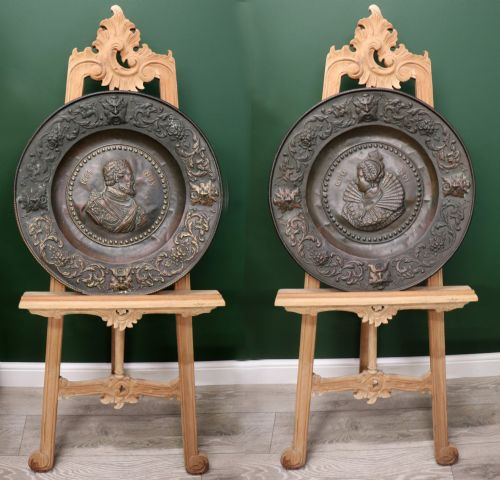
The forms range from heavy repousse wall chargers depicting historical figures to square and circular trays decorated with flora, fauna, and geometric motifs. Many pieces hail from Japanese Meiji and late Edo periods, utilising elaborate enamel and wire techniques on metal bases.
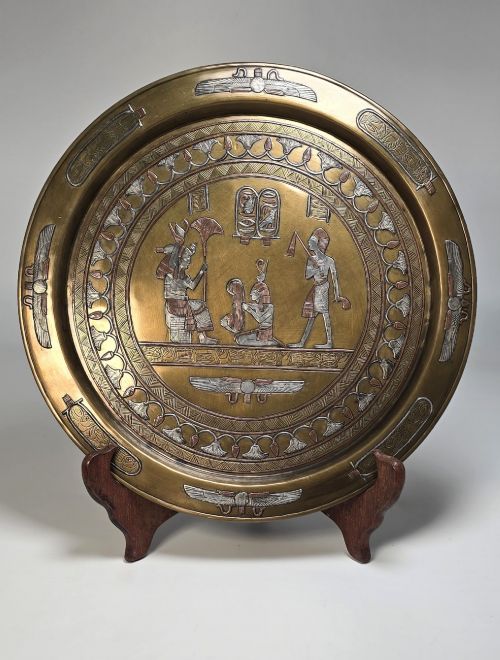
Other common variants include Egyptian Cairo Ware with silver and bronze inlay, alongside Indian Raj period pierced work and European Gothic revival wall plates. Each origin brings specific manufacturing traits that define its visual presence on a wall or table.
Materials and construction
Makers shaped the primary body from hammered or beaten copper, brass, and bronze, frequently applying patinated finishes or silver plating to the metal surface. Repousse and chasing techniques allowed artisans to push and hammer the metal from behind to achieve raised floral and figural relief.
Japanese pieces integrate cloisonne enamel and brass wire to delineate intricate birds, dragons, and landscapes across the copper plate. Middle Eastern and Egyptian Cairo Ware items rely on precise silver and mixed metal inlay set flush into the copper or bronze substrate.
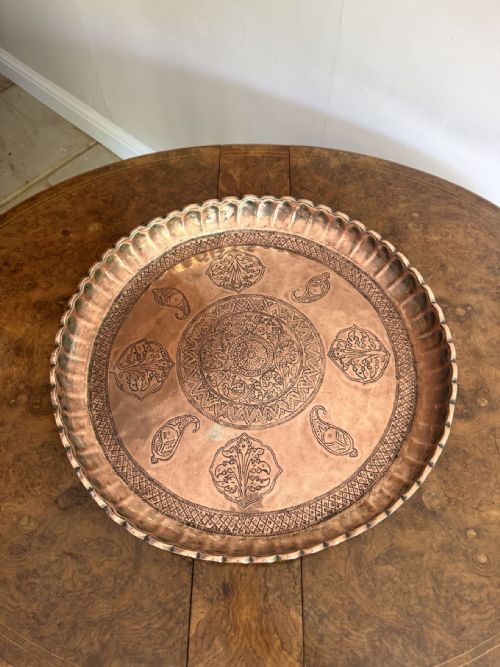
Piercing and engraving provide additional texture, with Indian Raj and Kashmiri examples employing meticulous hand-pierced cutouts and engraved patterns. Edges often receive finishing touches such as pie crust shaping or applied borders.
Listings feature copper wall chargers and trays spanning the mid-nineteenth century through the Arts and Crafts movement.
Judging quality and execution
The distinction between standard production and top tier work rests entirely on the precision and depth of the hand execution. Crisp relief work in beaten copper displays sharp detail in foliage, portraits, and animal motifs without muddy transitions.
In cloisonne enamelling, superior examples demonstrate flawless enamel firing within tight brass wire cells, depicting complex subjects like dragons and phoenixes with clean colour boundaries. Inlaid metalwork achieves distinction through the total integration of silver and bronze elements into the primary copper ground.
Substantial metal gauge and balanced proportions elevate certain trays and chargers above lighter, purely utilitarian items. Maker signatures on Japanese pieces and attribution to established workshops further distinguish superior output.
Faulkner Bronze Company
The Decorative Copper Platter Glossary
- Charger
- A large ornamental plate designed primarily for wall display rather than dining use. These substantial pieces provide a wide surface for detailed metalwork and pictorial scenes.
- Repousse
- A metalworking technique where the artisan hammers the metal from the reverse side to form a raised design in relief. This method creates tactile depth on copper trays and wall plates.
- Cloisonne
- An enamelling method utilising thin metal wires soldered to a base to create compartments filled with coloured paste and fired. Japanese platters frequently employ this technique for intricate pictorial depictions.
- Cairo Ware
- Nineteenth-century metalware produced in Egypt featuring heavy silver and copper inlay upon a brass or bronze body. These items often incorporate Islamic geometric patterns and Arabic script.
- Meiji Period
- The era of Japanese history lasting from eighteen sixty-eight to nineteen twelve, noted for exceptional export metalwork and enamel production. Platters from this time display advanced technical mastery.
Decorative Copper Platter: Frequently Asked Questions
How do I hang a heavy copper charger safely?
Large wall chargers require secure fixings due to their substantial weight and rigid metal construction. Utilise a padded spring-loaded wall hanger designed to distribute the load evenly across the rim without stressing the metal body.
Ensure the mounting hook engages directly into solid masonry or a wall stud rather than relying solely on plaster. Period chargers benefit from protective backing material to prevent the metal from marking the wall surface over time.
What is the difference between Cairo Ware and Persian metalwork?
Cairo Ware typically originates from late nineteenth-century Egypt, featuring dense silver and copper inlay work applied to a bronze or brass-heavy core. The decorative vocabulary draws heavily on Islamic architectural motifs, Calligraphy, and geometric strapwork.
Persian and Syrian metalwork often utilises engraved patinated copper and brass with distinct regional floral cartouches and figural scenes. Understanding the specific inlay metals and background patination helps differentiate between these Middle Eastern traditions.
How should I clean antique copper platters?
Antique copper surfaces require minimal intervention to preserve their historic patination and original finish. Dusting with a soft, dry cloth is usually sufficient for regular maintenance, avoiding abrasive commercial metal polishes that strip away age.
Enamelled and inlaid sections need particular care to prevent moisture from seeping beneath wires or into tiny crevices. Professional advice should be sought if deep cleaning becomes necessary to address active corrosion.
How can I tell a Meiji period Japanese charger from later copies?
Meiji period Japanese cloisonne and copper platters display meticulous wirework and deep, lustrous enamel cells fired without bubbling. Signatures scratched or stamped into the base frequently appear on superior examples from this era.
Later mass-produced tourist pieces often feature uniform machine-applied patterns with simplified wiring and dull enamel colours. Examining the weight, backing finish, and precision of the motifs reveals the period of manufacture.