




Decorative Centre Table
A decorative centre table anchors a room, drawing the eye with rich veneers, marquetry or giltwork designed to be admired from every angle.
Decorative Centre Table
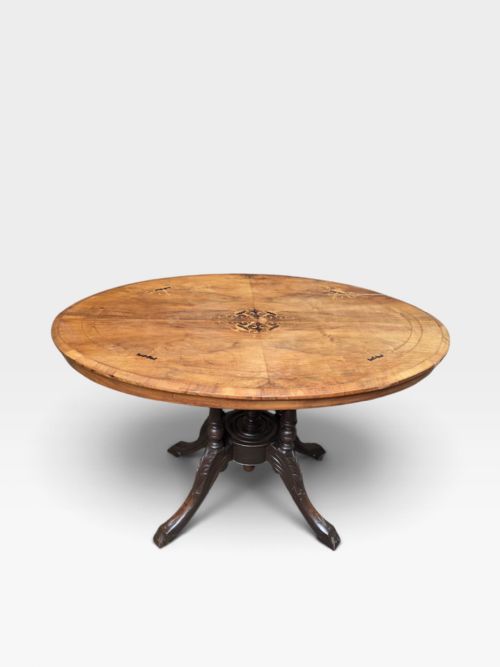
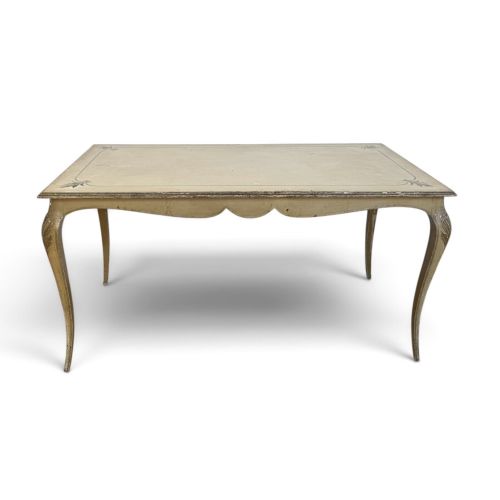
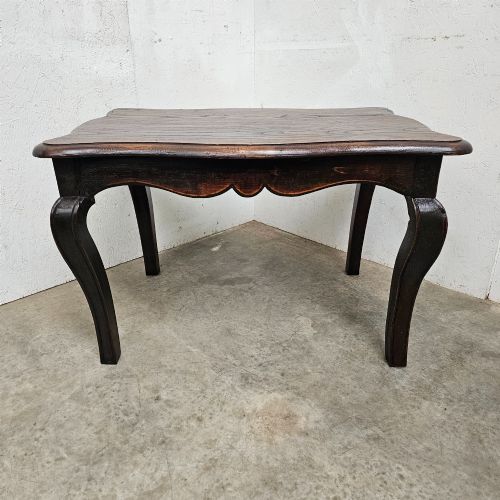
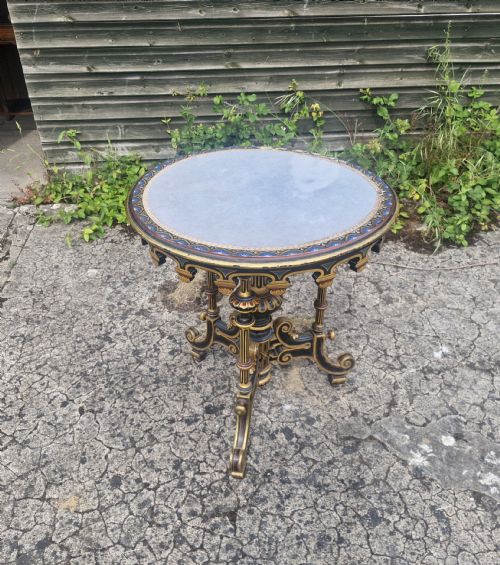
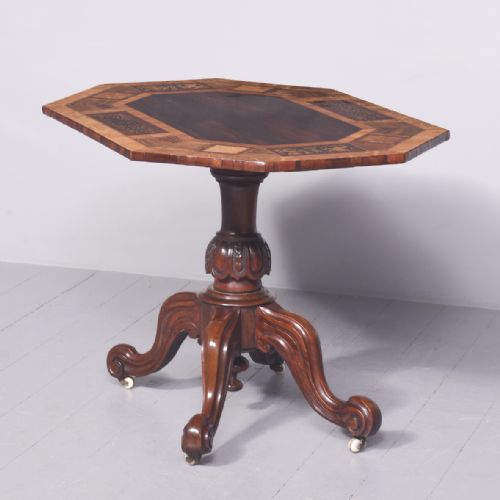
When searching for a decorative centre table, a buyer encounters freestanding pieces intended to stand in the middle of a room rather than against a wall. The selection spans the eighteenth century through to the early twentieth century, taking forms such as circular hardwood tables, low occasional tables, and carved French pieces.
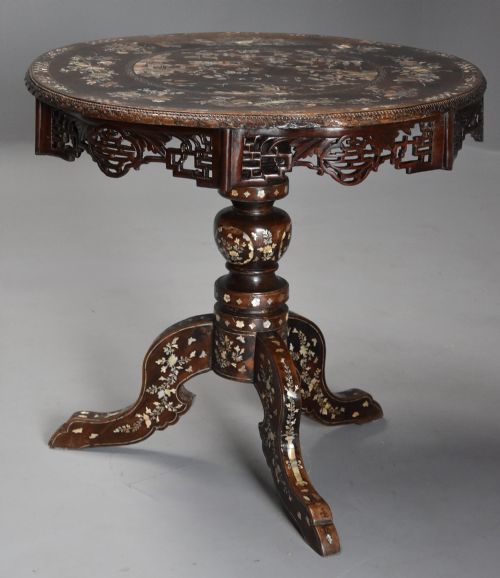
The materials and influences vary widely across the inventory, encompassing Victorian inlaid rosewood, French Louis XV revival giltwood, and Vietnamese hardwood inlaid with mother of pearl. These tables serve practical functions for dining or display while acting as prominent decorative statements within a period interior.
How they were made
Cabinet makers utilised dense timbers like walnut, rosewood, satinwood, and chestnut as the foundational structure for these tables. Surfaces often received elaborate treatment through oyster veneering, hand painting, or intricate mother of pearl inlay.
Gilding with gold leaf highlights carved details on revival pieces, while brass and bronze mounts add structural definition. Master craftsmen combined these decorative techniques to create visually striking surfaces suited to prominent placement.
Listings feature pieces spanning the eighteenth century to the twentieth century, incorporating materials like gold leaf, porcelain, enamel, and cut glass.
What varies in quality
The distinction between ordinary and exceptional pieces lies in the crispness of the carving and the precision of the timber matching. Superior examples display thoughtful grain selection, such as symmetric oyster veneers or meticulously fitted marquetry.
The integrity of the structural joinery and the finesse applied to secondary decorative elements, like gilding or mother of pearl work, separate standard production from master craftsmanship. Balance in proportion remains essential for a piece designed to be viewed entirely in the round.
Royal Dux·B Battioli
The Decorative Centre Table Glossary
- Centre table
- A freestanding table designed to be viewed from all sides, traditionally placed in the middle of a room. These pieces often feature finished backs and detailed underframes.
- Oyster veneering
- A method of cutting branches transversely to produce small, circular or oval sections of wood grain resembling oyster shells. This technique creates complex, repeating patterns across the table top.
- Marquetry
- The art of applying decorative pieces of veneer to a structure to form intricate geometrical patterns or pictorial designs. Craftsmen select various coloured woods to achieve tonal depth.
- Giltwood
- Timber that has been coated with a thin layer of gold leaf or powder. This finish accentuates carved ornamentation on revival furniture.
- Tazza
- A shallow saucer-like ornamental vessel mounted on a stem and foot, frequently utilised as a table centrepiece. It shares design characteristics with decorative plateau items.
Decorative Centre Table: Frequently Asked Questions
Where should a centre table go?
These tables belong in the middle of a spacious room, an entrance hall, or a large library where they can be approached from all sides.
Positioning them away from walls allows the carved details, veneers, and inlays to be fully appreciated as focal points.
How do I care for antique wood?
Protect the polished timber and gilt surfaces by keeping the table away from direct sunlight and sudden temperature changes.
Apply a gentle, appropriate wax polish sparingly and buff with a soft cloth to maintain the natural sheen of the wood.
Are these tables sturdy enough for daily use?
Most pieces are built from hardwoods like walnut and rosewood, providing solid construction suitable for holding decorative objects, books, or tea.
Care should be taken with delicate inlays, painted finishes, and antique joints during regular household activities.
How do I identify the period?
Look closely at the timber selection, construction methods, and stylistic influences such as Victorian Gothic revival or French Louis XV.
Maker stamps, specific brass hardware, and regional woodworking traits also provide clear indications of the era of manufacture.