





Decorative Cast Iron Planters
These decorative cast iron planters bring robust neoclassical and Victorian presence to gardens and terraces, offering enduring structure and weathered character.
Decorative Cast Iron Planters
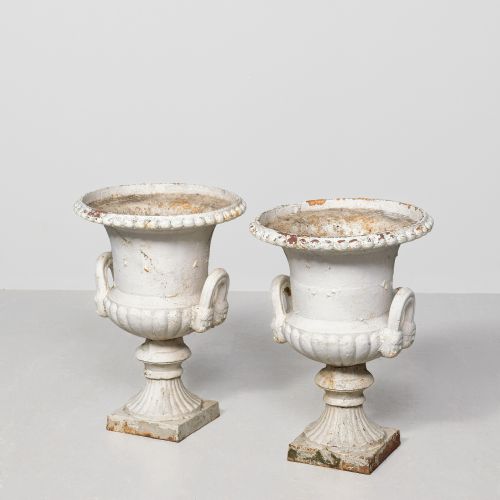
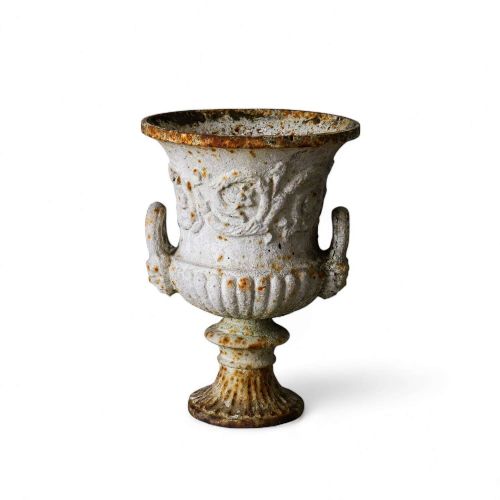
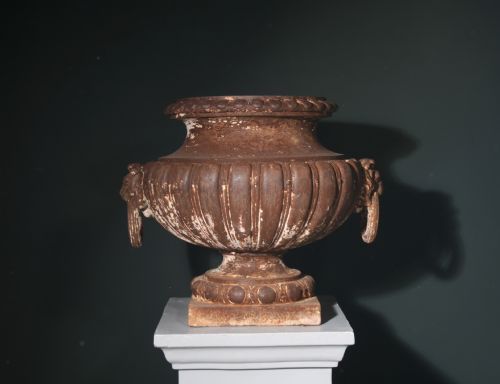
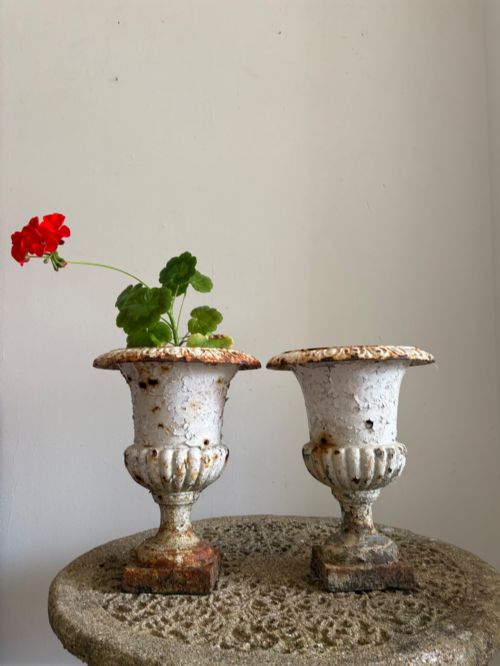
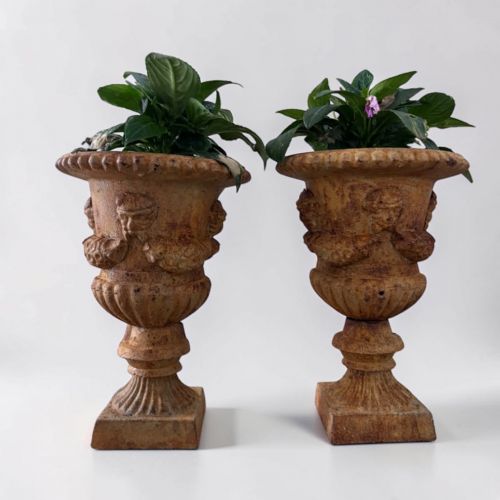
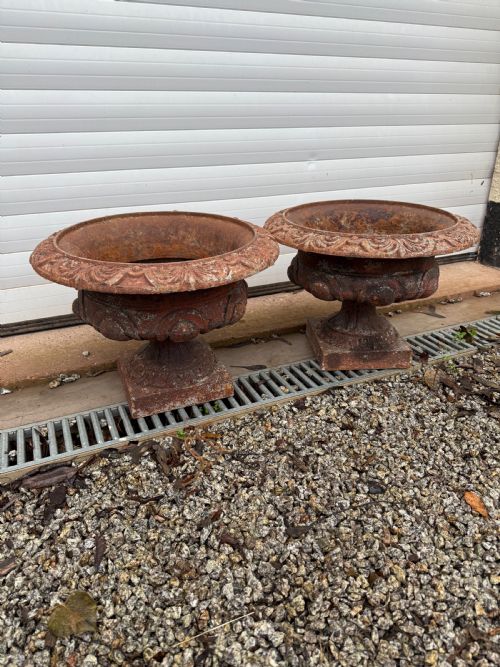
Decorative cast iron planters span garden urns, plant stands, and troughs shaped by nineteenth-century design. You will most frequently encounter pairs of Victorian campana urns, classical pedestals, and tazza forms across this selection.
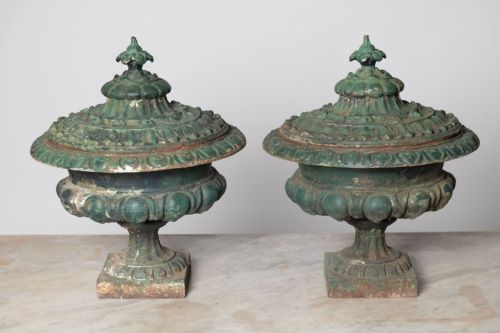
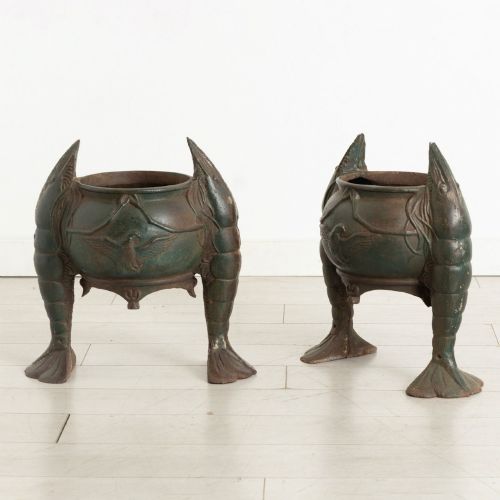
The objects originate from British, French, and Chinese contexts, incorporating styles from Victorian classical revival to novelty pieces like shrimp-formed planters. They function as focal points for planting, resting on plinth bases or standing alone with original distressed paint.
How they were made
Foundries poured molten metal into sand moulds to create heavy, durable bodies complete with acanthus leaf details and fluted bowl profiles. Makers applied protective coats of paint that have weathered over decades into complex, distressed patinas.
Many examples pair separate cast iron bowls with matching pedestals or plinth bases, while specific designs incorporate fitted original lids. Structural weight provides stability against wind and weather in outdoor settings.
Turn your garden path over to a pair of crustacean-themed iron shrimp planters from the turn of the century.
What varies in quality
Quality rests in the crispness of the casting detail, where sharply defined acanthus leaves and clean classical lettering distinguish finer pieces from softer reproductions. Foundry attribution, such as marked Val d'Osne or Andrew Handyside pieces, elevates the standing of an urn.
The integrity of the original paint surface and the presence of matching original lids or sturdy plinth bases alter the desirability of a pair. Weight and thickness of the cast metal further separate standard garden vessels from exceptional sculptural examples.
Andrew Handyside·Val D'Osne Foundry
The Decorative Cast Iron Planters Glossary
- Campana
- A bell-shaped garden urn with a flaring rim and a tapering lower body, often mounted on a square plinth base. This form dominates nineteenth-century classical garden ornamentation.
- Tazza
- A shallow bowl-shaped vessel elevated on a stem and foot, functioning as a garden urn or plant stand. Victorian examples frequently feature classical decorative motifs.
- Plinth Base
- A heavy square or rectangular block supporting an urn or jardinière stand. It lifts the planting vessel off the ground and provides architectural balance.
- Jardinere Stand
- An elevated stand designed to hold a plant container or decorative bowl. These structures display intricate nineteenth-century casting work.
- Distressed Paint
- Original surface coating that has weathered, chipped, and worn away over decades of exposure. Collectors prize this authentic ageing over modern repainting.
Decorative Cast Iron Planters: Frequently Asked Questions
How do I clean decorative cast iron planters?
Gently brush away loose dirt and debris with a soft bristle brush to protect the aged surface. Avoid harsh chemical cleaners that might strip away original distressed paint.
Allow the metal to dry completely after washing. Applying a light coat of neutral oil or wax can help preserve the weathered exterior against further moisture damage.
Can I leave these iron urns outside in winter?
Cast iron withstands outdoor elements well, but trapped freezing water can crack heavy metal vessels. Ensure proper drainage holes remain clear so soil does not retain excess moisture.
Elevate planters slightly off freezing ground using pot feet or plinth bases. In harsh freezing climates, moving smaller urns under shelter prevents ice expansion damage.
How do I date a nineteenth-century cast iron urn?
Examine the casting seams, surface texture, and bolts for signs of period manufacturing techniques. Smoother, thinner walls often point toward later production, while heavy sand-cast pieces suggest earlier origins.
Look for foundry stamps or specific classical revival motifs popular during the Victorian era. Original distressed paint layers also offer clues to the age and history of the piece.
What plants work best in campana urns?
Trailing plants such as ivy or cascading flowers complement the flaring bell shape of campana urns. Their height also suits structural boxwoods or single focal shrubs.
Ensure the planting mix drains efficiently to protect the interior iron surface from prolonged dampness. Potted inserts can also be used inside deep urns to make seasonal replanting easier.