
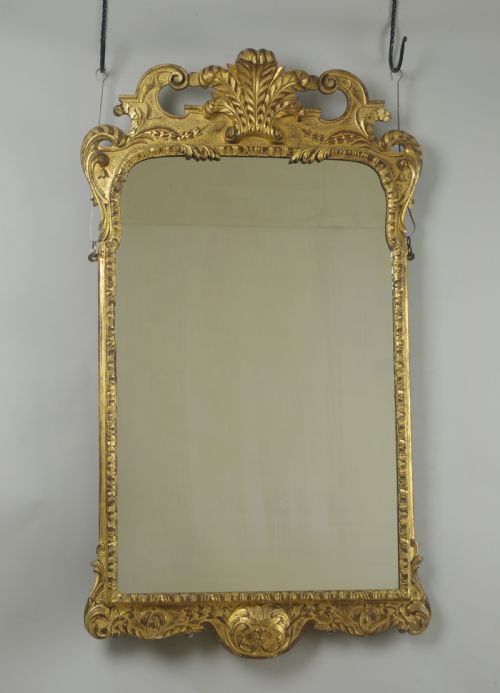
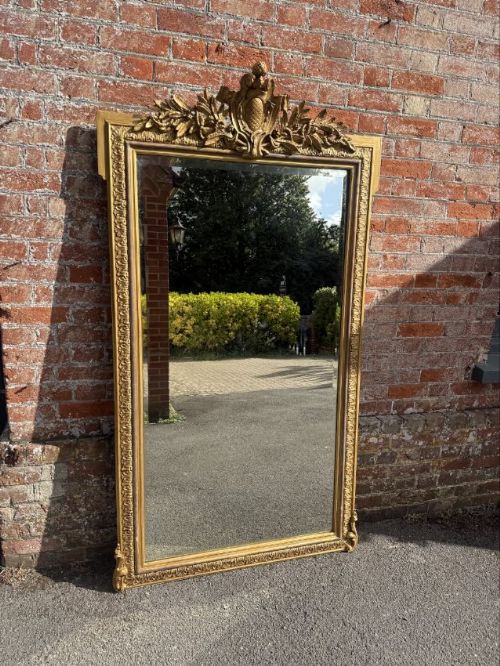
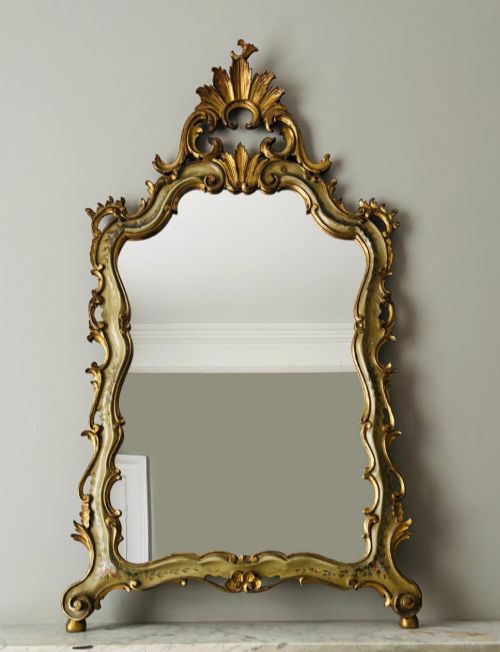
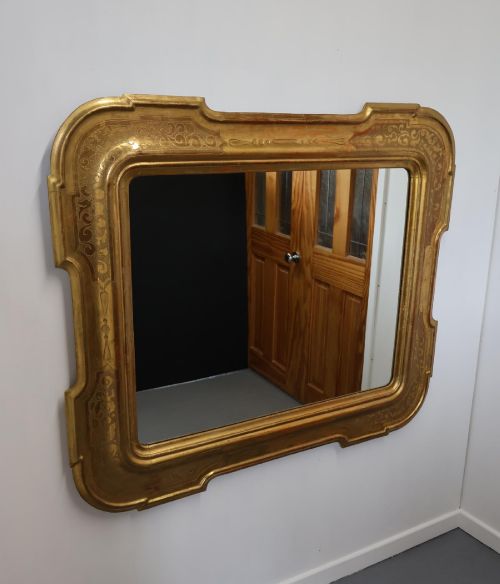
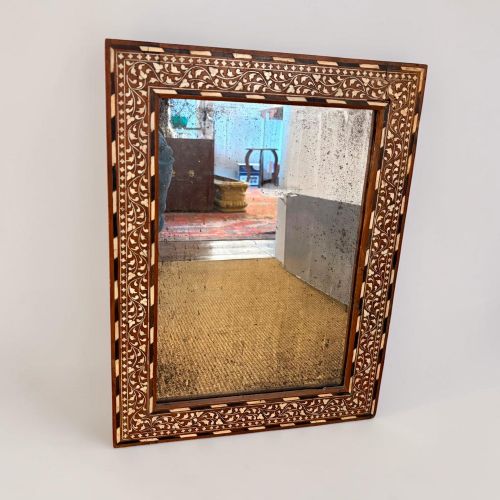
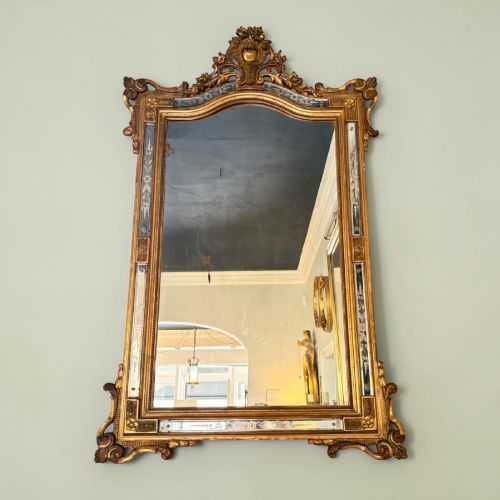
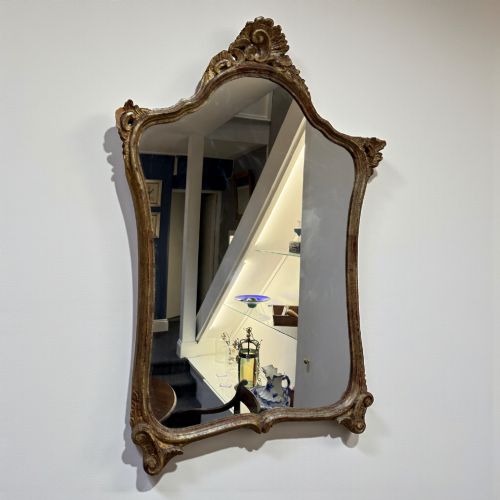
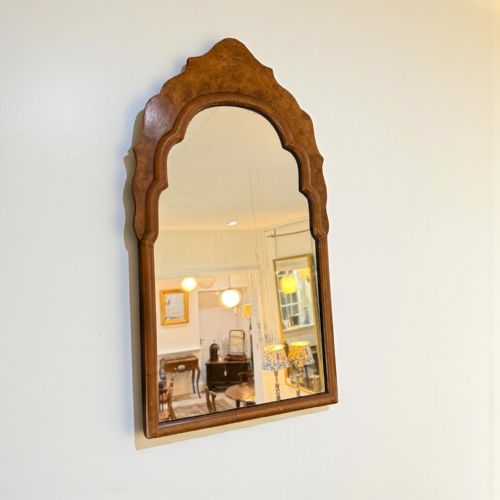
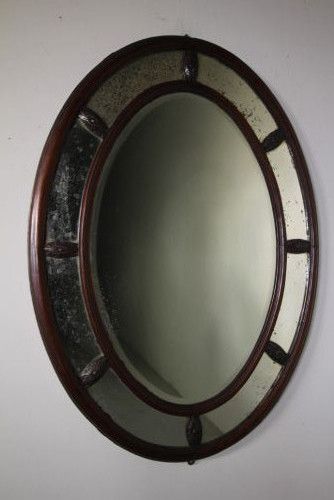

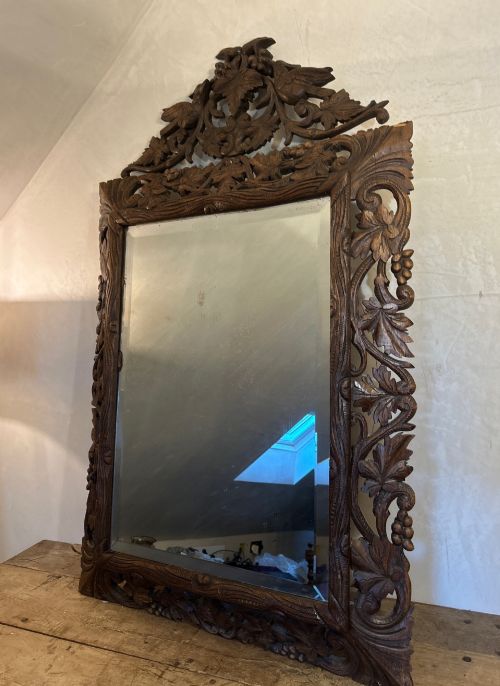
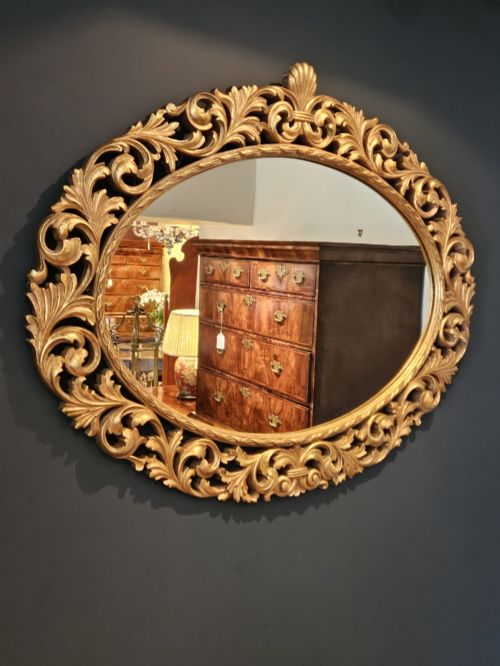
Decorative Carved Frame Mirror
When you search for a decorative carved frame mirror, you encounter ornate nineteenth-century giltwood, Italian Florentine work, and French styles built to catch the light.
Decorative Carved Frame Mirror
A decorative carved frame mirror serves as a prominent focal point in an interior, functioning both as a reflective glass and a sculptural wall object. These pieces span wall mirrors, overmantels, girandoles, and dressing mirrors originating from nineteenth-century England, France, and Italy.
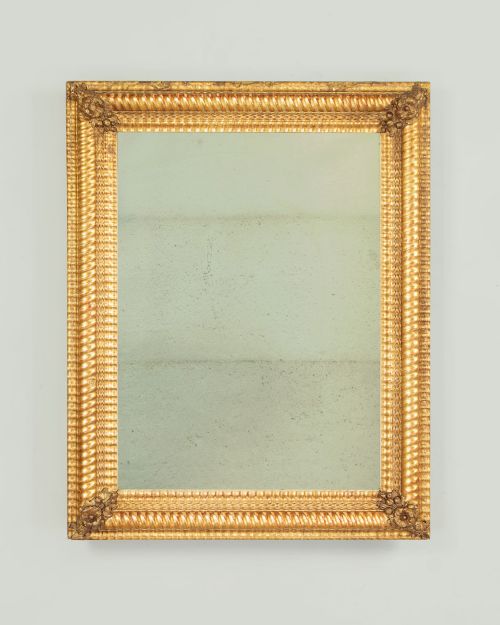
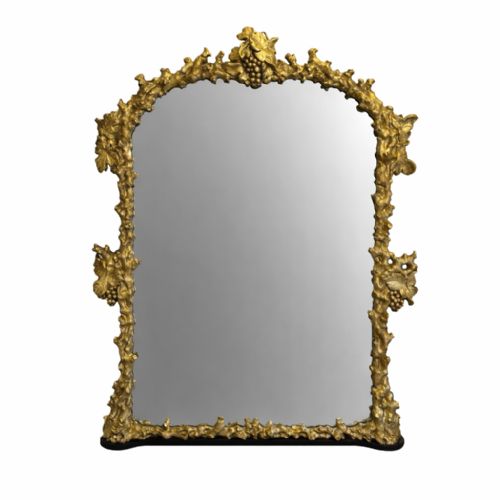
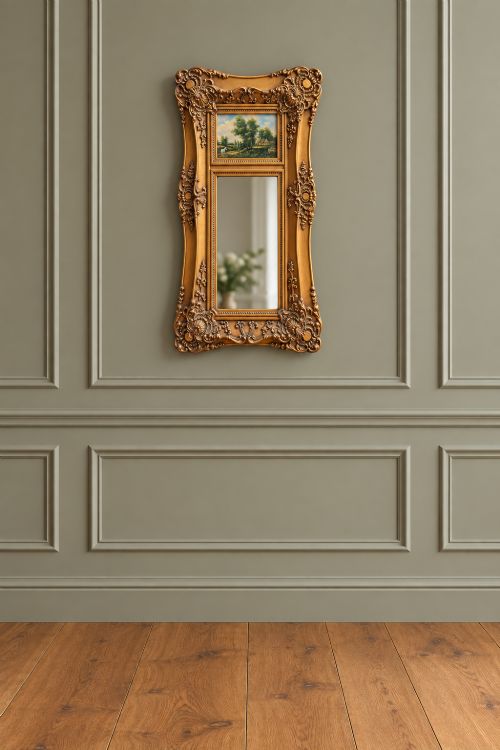
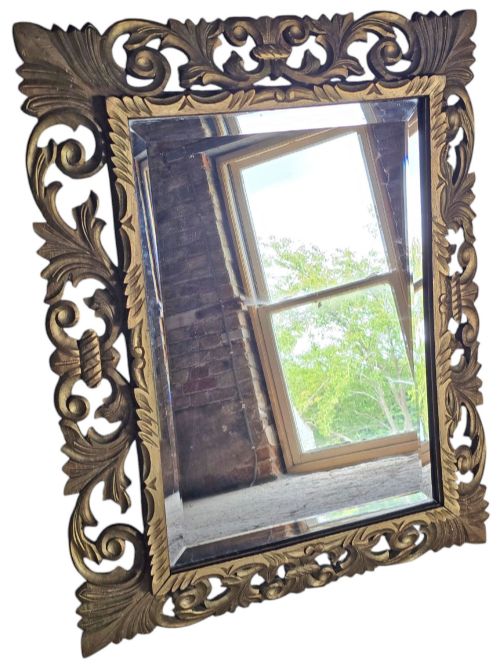
The most common examples on this page are nineteenth-century giltwood and gesso pieces displaying Rococo, French chateau, or Italian influences. They range from grand country house overmantels to smaller oval and cushion frames carved with floral motifs, rope twists, and classical details.
How they were made
Carvers shaped timber bases from oak, walnut, and mahogany, or built up intricate relief ornamentation using gesso over wood. Gesso allowed artisans to model crisp scrollwork, flowers, and architectural columns before applying gold leaf, silver, or paint.
Finishes relied on traditional gilding techniques using gold leaf on bole, alongside painted, ebonised, and lacquered surfaces. Many frames combined carved wooden structures with applied composition details to achieve deep relief work.
Listings feature eighteenth-century pieces alongside nineteenth-century Victorian works, utilising materials such as giltwood, gesso, oak, walnut, and mirror glass.
What varies in quality
Quality rests in the depth, crispness, and hand of the carving itself. Superior examples show undercut relief work where leaves, scrolls, and masks stand free from the backplate rather than appearing flat or cast in simple composition.
The integrity of the original surface finish distinguishes finer pieces. Depth of gilding, the preservation of original bole beneath leaf, and authentic patination on wood and gesso separate untouched workshop execution from later restoration.
The Decorative Carved Frame Mirror Glossary
- Giltwood
- Wood that has been coated with gold leaf. This finish was widely applied to nineteenth-century decorative frames to reflect candlelight and daylight.
- Gesso
- A plaster-like mixture applied to wooden frame bases and carved or moulded into relief designs. It provides a smooth white ground for subsequent gilding.
- Overmantel mirror
- A large wall glass designed to be hung specifically above a fireplace mantelpiece. These pieces often feature wide proportions to balance the hearth below.
- Girandole
- A decorative wall mirror featuring attached candle sconces or arms. The reflective glass serves to multiply the light cast by the candles.
- Cushion frame
- A frame profile with a rounded, convex slope that swells outward from the wall towards the glass. This style was favoured for creating a bold, sculptural border.
Decorative Carved Frame Mirror: Frequently Asked Questions
How do I hang a heavy overmantel mirror?
Heavy overmantel mirrors require secure fixing directly into wall studs or masonry using appropriate heavy-duty brackets. Professional installation is recommended due to the substantial weight of timber, gesso, and glass.
Ensure the hanging wire or D-rings on the reverse match the load capacity of the chosen wall fixings to support the frame safely.
Are the mirror plates original?
Many nineteenth-century frames retain their original mercury or early silvered glass plates, which often display characteristic light foxing, speckling, and age spots. These natural imperfections confirm the antique status of the glass.
Some pieces have received new glass replacement over time to ensure clearer reflection while preserving the historic carved frame.
How do I clean a giltwood frame?
Dust giltwood and gesso frames gently using a very soft dry brush or ostrich feather duster. Avoid applying moisture, modern cleaning sprays, or abrasive cloths, as water and chemicals can lift fragile gold leaf.
Maintenance should be restricted to removing surface dust in order to protect the underlying gesso and historical gilding from accidental damage.
What is the difference between Rococo and Regency styles?
Rococo frames feature asymmetric scrolls, C-scrolls, naturalistic foliage, and shell motifs executed in deep, exuberant relief work. They date predominantly from nineteenth-century revivals of eighteenth-century French taste.
Regency frames lean toward classical restraint, often incorporating convex plates, reeded mouldings, ball-bearing friezes, and architectural giltwood structures derived from earlier neoclassical designs.