






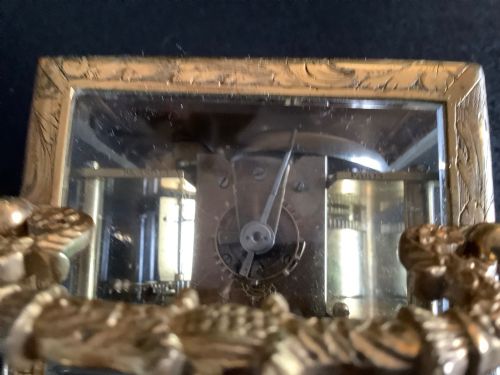
Decorative Carriage Clock
A decorative carriage clock brings refined brass and glass timekeeping to the mantel, offering the portable elegance favoured by nineteenth-century travellers.
Decorative Carriage Clock
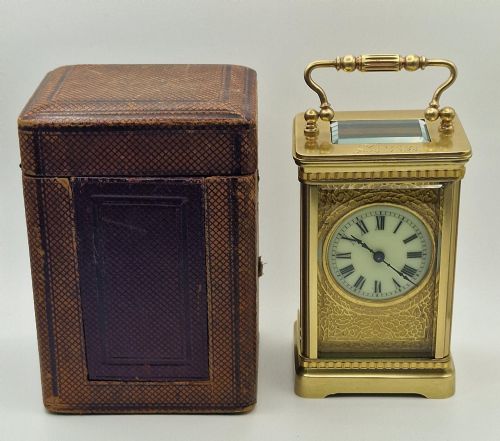
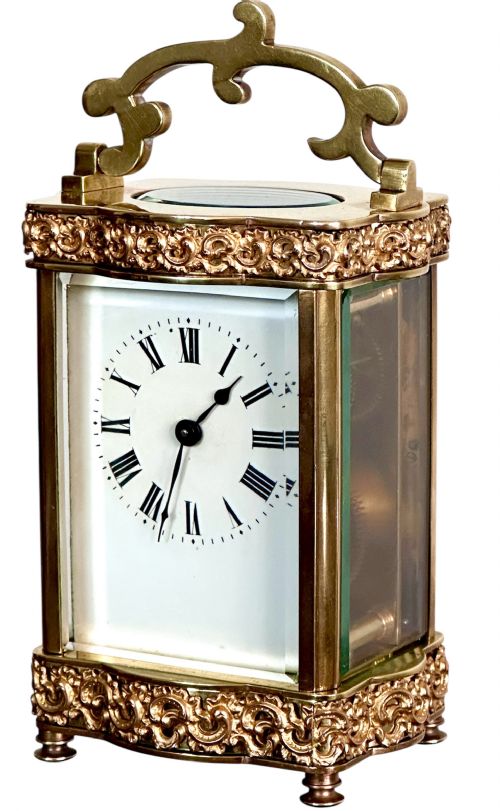
A decorative carriage clock is a portable timepiece housed in a brass or gilt frame with bevelled glass panels, designed for travel and domestic use. These pieces primarily date from the nineteenth century, including Victorian and Edwardian examples alongside French nineteenth-century variants.
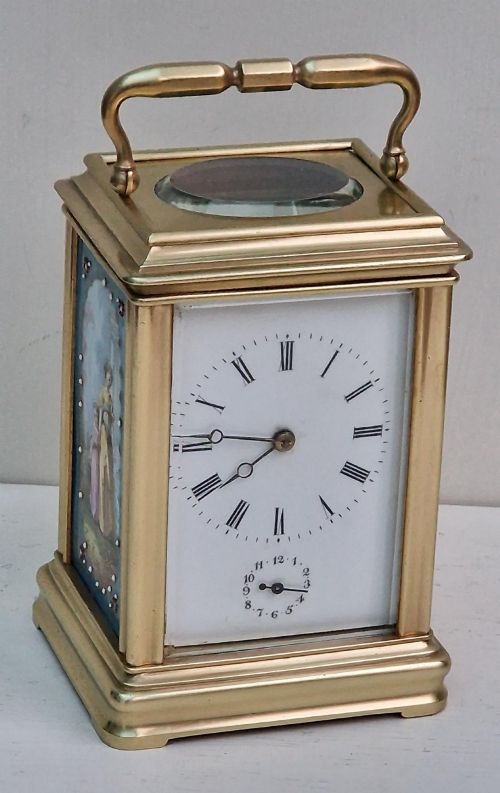
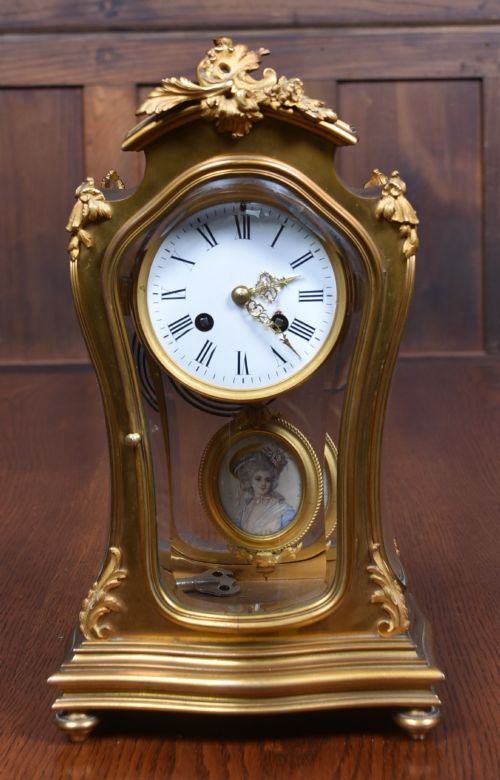
The most common form encountered here is the French carriage clock, often featuring detailed brass casting, gilt bronze, or enamel dialwork. Variations range from simple pillared cases to elaborate models with repeaters, champlevé enamel, and painted porcelain panels.
Originating as practical timekeepers for officers on the move, these clocks evolved into domestic ornaments placed on mantels and desks. The selection includes specific regional styles such as the Capucine and the Pendule d'Officier, alongside standard carriage clock configurations.
Materials and construction methods
The primary structural material is brass, frequently finished in gilt bronze or gilded brass to create a rich, reflective surface. Bevelled glass panels are fitted into the frames to allow a clear view of the mechanical movement within.
Enamel and porcelain are utilised for dials and decorative side panels, often hand-painted with floral motifs or figural scenes. Case ornamentation relies on techniques such as engraving, filigree work, and the addition of cast frets and columns.
Decorative Carriage Clock Retail Price Guide 2026
Typical asking prices for decorative carriage clock among the pieces listed under this phrase on Sellingantiques today, from the lower quarter to the upper quarter. They describe what is for sale here now, not the wider market.
Some nineteenth-century travellers relied on a repeater clock simply to hear the hour strike beneath heavy bedclothes.
Distinctions in quality and execution
Quality in a decorative carriage clock is determined by the crispness of the brass casting and the depth of the engraving across the case. Heavily engraved gilt bronze or champlevé enamel panels indicate a higher grade of craftsmanship than plain brass housings.
The sophistication of the internal movement further separates standard examples from superior pieces, particularly those featuring repeater mechanisms or signed miniatures. The presence of painted enamel work and intact porcelain panels adds significantly to the refinement of the object.
Duverdrey & Bloquel·Tiffany·Paul Garnier
The Decorative Carriage Clock Glossary
- Repeater
- A mechanism that strikes the hours and quarters on demand when a lever is pressed. This complication was particularly useful for checking the time in the dark during travel.
- Champlevé
- An enamelling technique where troughs are dug into a metal surface and filled with vitreous enamel before firing. The resulting coloured patterns sit flush with the surrounding metal frame.
- Capucine
- An early style of French carriage clock often featuring a bell mounted on top and carrying handles reminiscent of monastic timekeepers. They represent an important transitional form in portable clockmaking.
- Pendule d'Officier
- A military-style desk or carriage clock from the late eighteenth or nineteenth century. These pieces typically exhibit robust brass cases built for active service.
- Fret
- An ornamental pattern cut out of metal plates, often used on the panels or top grilles of carriage clocks to allow sound and air to pass through.
Decorative Carriage Clock: Frequently Asked Questions
What is a repeater mechanism?
A repeater allows the clock to sound the last hour and quarters audibly when a button or cord on the case is activated. This served a practical purpose before reliable electric lighting.
Such complications require precise gear trains and add considerable complexity to the interior layout.
Where should I place a carriage clock?
These clocks suit stable surfaces like mantelpieces, desks, or wooden tables away from direct sunlight and draughts. A level surface ensures the pendulum or escapement beats evenly.
Because they were originally designed for travel, their robust cases handle domestic placement well, provided they are kept clear of high humidity.
How do I distinguish French and British carriage clocks?
French makers produced the vast majority of decorative carriage clocks, often utilising platform escapements and ornate gilt brass cases. British examples are less common and frequently employ fusee movements.
Examining the backplate and escapement style generally reveals the origin of the piece.