


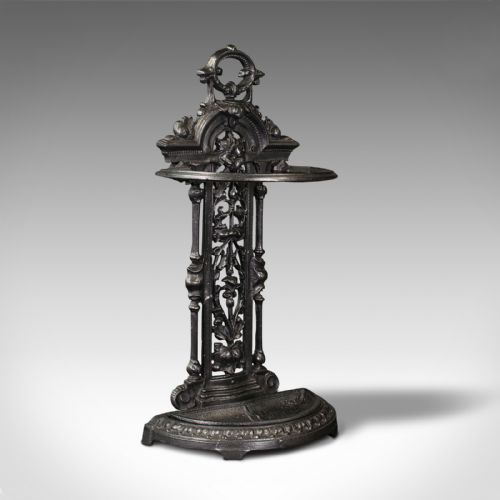


Decorative Cane Stand
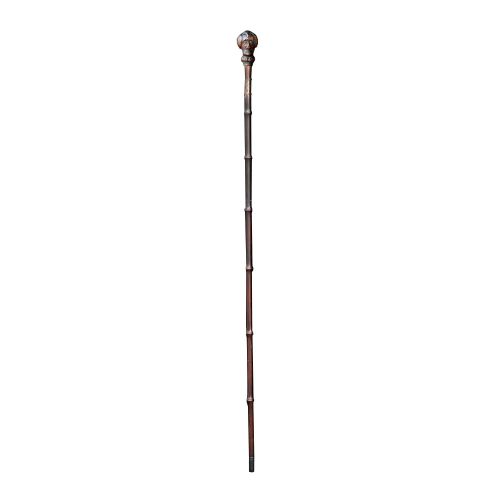
A decorative cane stand is a hall furnishing designed to hold walking sticks and umbrellas, combining everyday utility with striking hallway style.
Decorative Cane Stand
When you search for a decorative cane stand, you encounter hall furniture that organises walking sticks and umbrellas. These items emerge from periods spanning the Victorian era through to the mid-twentieth century.
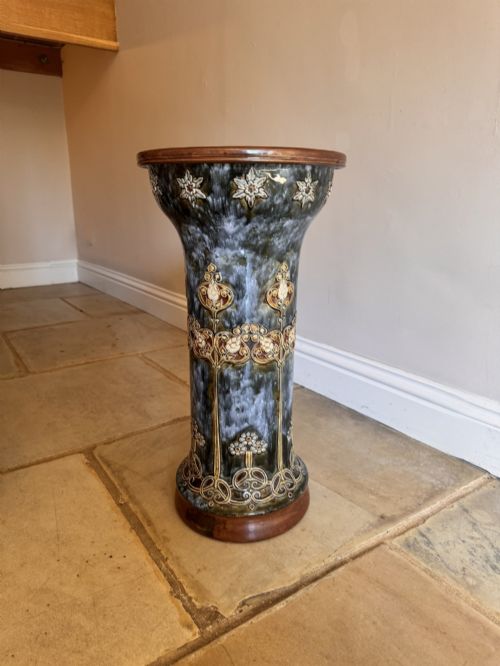
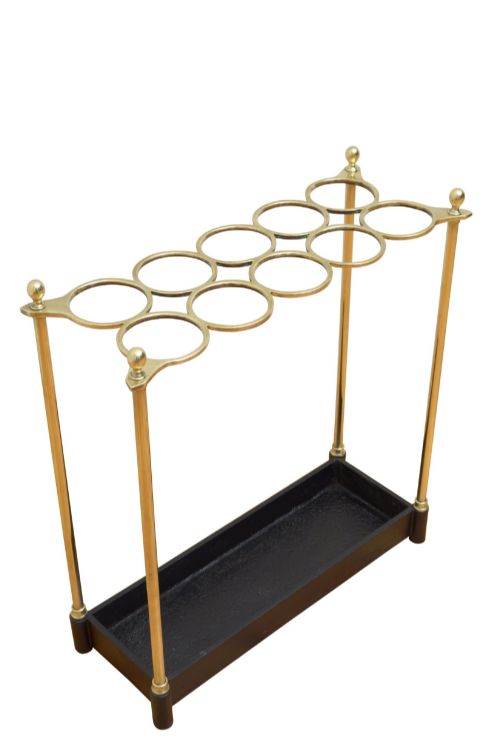
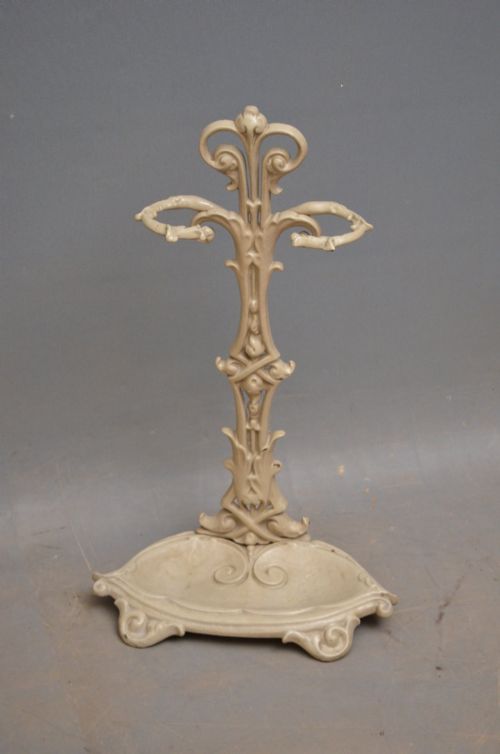
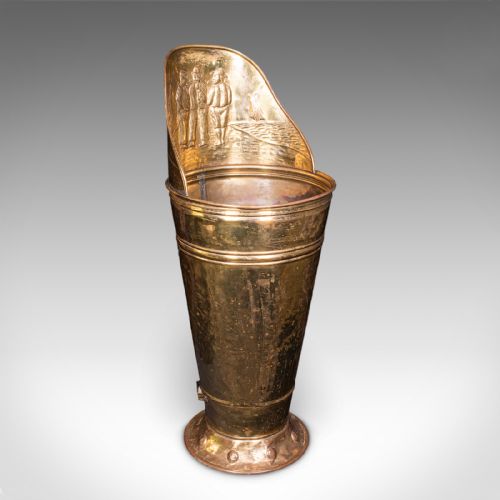
The versions you meet most frequently on this page include cast iron frames, often associated with Coalbrookdale, alongside brass and earthenware pottery designs. Forms range from dedicated umbrella and stick stands to broader umbrella shaped brass vessels.
Makers and designers drew upon stylistic movements such as Victorian Gothic Revival, Aesthetic Movement, Art Nouveau, and Arts and Crafts. Pieces often served multiple hall functions, acting as companion stands for fire irons or aligning with country house aesthetics.
Materials and construction
Foundries shaped heavy cast iron into intricate scrollwork and structural frameworks, frequently utilising sand casting methods to achieve durable hall furniture. These metal frames often incorporated removable drip trays beneath the base to catch rainwater from wet umbrellas.
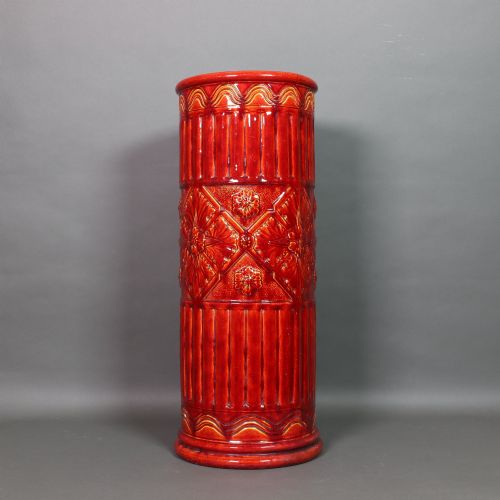
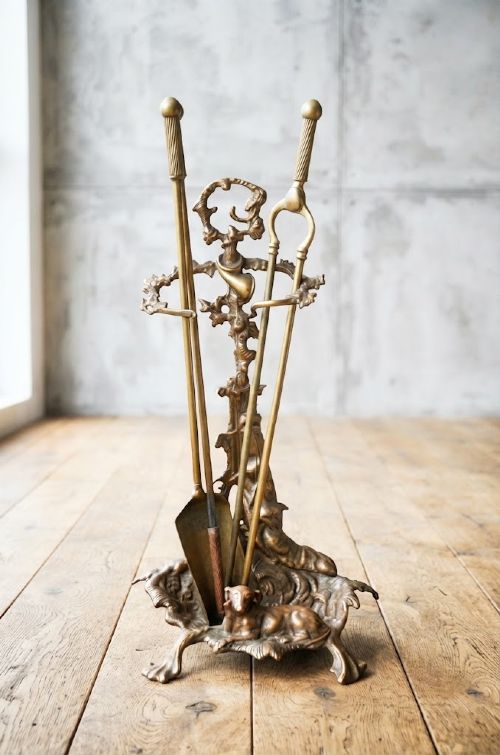
Pottery examples relied on earthenware bodies finished with coloured glazes, notably seen in faience productions from workshops like Burmantofts. Brass items employed sheet and cast components, sometimes featuring embossed hunting scenes, decorative ball finials, or structural handles.
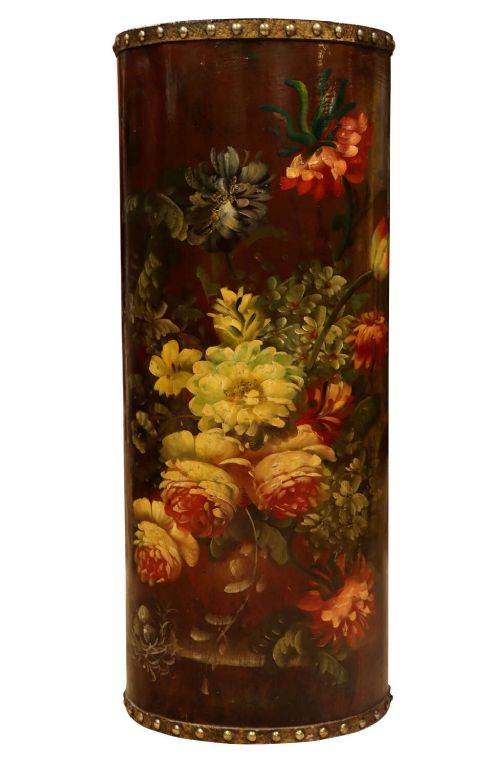
Cabinet makers also utilised hardwood for carved elements, whilst alternative hall vessels incorporated leather or basketry construction to hold sticks.
Decorative Cane Stand Retail Price Guide 2026
Typical asking prices for decorative cane stand among the pieces listed under this phrase on Sellingantiques today, from the lower quarter to the upper quarter. They describe what is for sale here now, not the wider market.
Distinguishing quality in hall stands
The distinction between standard utility items and finer examples rests upon the crispness of the casting and the depth of the modelled detail. Cast iron stands displaying sharp relief work and refined finishing represent superior foundry output compared to softer, later reproductions.
In ceramic and brass pieces, quality shows in the richness of the glaze application and the weight of the metal utilised. Artisanal pottery pieces exhibit deliberate stylistic expression, whereas simpler brass vessels rely on straightforward sheet fabrication and surface decoration.
Coalbrookdale·Burmantofts Faience
The Decorative Cane Stand Glossary
- Coalbrookdale
- A renowned ironfounder known for producing ornate cast iron metalwork during the nineteenth century. Their umbrella and stick stands feature complex openwork patterns.
- Burmantofts Faience
- A Yorkshire pottery known for artistic ceramic production during the late nineteenth century. Their glazed earthenware stick stands display distinct aesthetic movement and arts and crafts influence.
- Companion stand
- A dual-purpose metal stand designed to hold both fire irons for a hearth and walking sticks or umbrellas near an entrance. These items merge domestic fire sidekeeping with hallway storage.
- Finial
- A decorative ornamental terminal piece mounted at the top of upright posts or handles. Brass stands often utilise decorative ball finials to cap their structural corners.
Decorative Cane Stand: Frequently Asked Questions
What is a decorative cane stand used for?
These furnishings hold walking sticks, canes, and wet umbrellas within entrance halls and corridors. They keep entryways tidy by containing dripping water and grouping upright items.
Historically, they also signaled household gentility to arriving visitors through their artistic materials and regional styles.
How do I care for a cast iron stand?
Cast iron requires minimal upkeep, benefiting from gentle dusting and occasional light waxing to protect the painted or bare metal surface. Keeping the base drip tray dry prevents rust accumulation.
Avoid abrasive cleaners that might strip historical paint layers or patinated finishes.
Where should I place my stand?
Position the piece near your primary entrance hallway or porch where walking sticks and umbrellas are deposited upon arrival. Ensure adequate clearance so the stand does not obstruct narrow thoroughfares.
Ceramic and earthenware versions require placement away from heavy foot traffic to prevent accidental impacts.
How do I distinguish Victorian from Edwardian stands?
Victorian examples frequently display heavier cast iron construction with gothic or exuberant floral motifs, reflecting industrial confidence. Edwardian items often lighten in form, showing refined lines influenced by arts and crafts ideals.
Stylistic cues such as aesthetic movement glazes or art nouveau whiplash lines help narrow down the period of manufacture.