




Decorative Brass Mantel Clock
A decorative brass mantel clock brings the weight and mechanical rhythm of the nineteenth century straight to your shelf.
Decorative Brass Mantel Clock
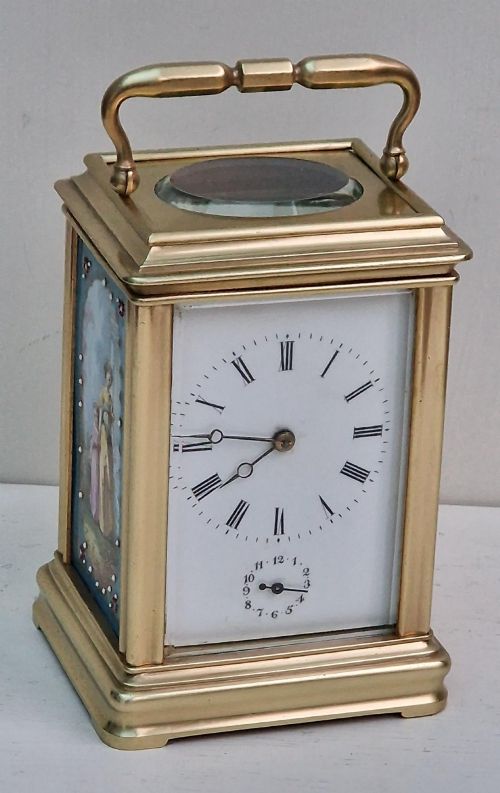
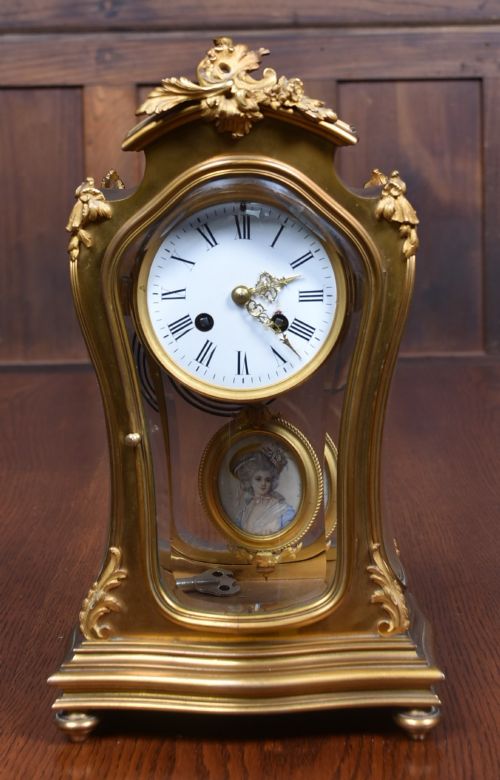
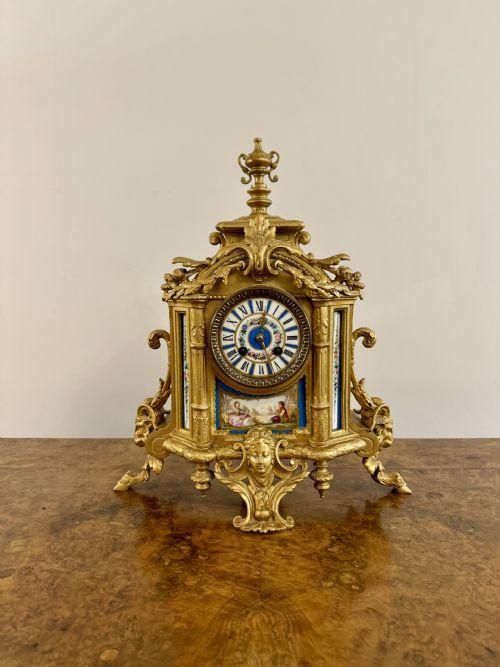
A decorative brass mantel clock sits upon the surfaces of nineteenth-century parlours and studies, combining heavy cast metals with functional timekeeping. These pieces range from substantial architectural cases to smaller portable timepieces designed for desks and travels.
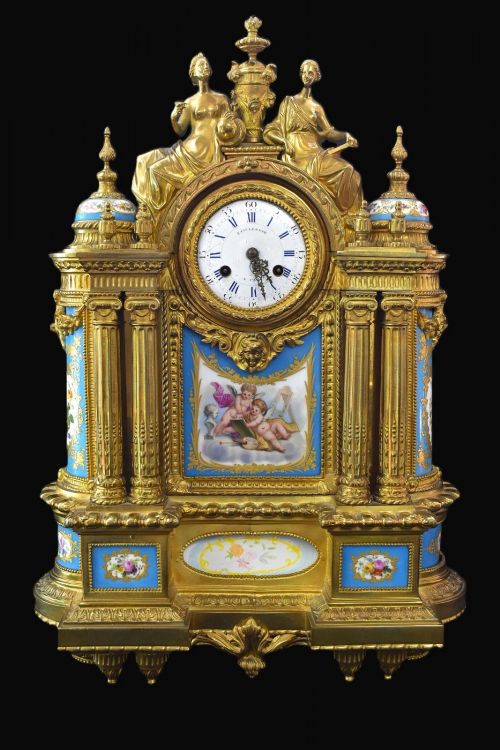
The most common examples encountered on this page originate from nineteenth-century France, spanning the Victorian period and various revival styles. They often incorporate glass panels, porcelain dials, and gilt surfaces alongside traditional brass frameworks.
Makers and workshops across France and Britain produced these items in diverse forms, including carriage clocks, four-glass mantel designs, and ornate baroque or rococo configurations. Each variety reflects the prevailing taste for domestic ornamentation during the eighteen-eighties and nineties.
Materials and technique
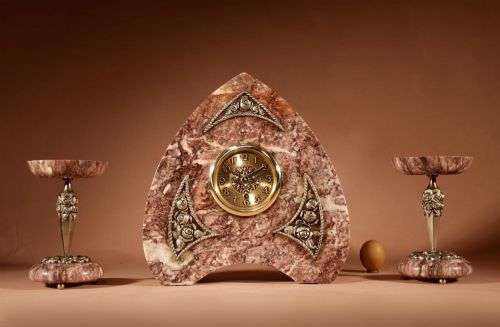
Craftsmen utilised cast brass, ormolu, and gilt bronze to build the structural cases, frequently mounting them on marble plinths or ebonised wood bases. These metallic components were often chased, engraved, or gilded to catch the light within dimly lit rooms.
Dials and decorative panels relied upon fired enamel, hand-painted porcelain, and inset glass to add colour and texture to the metallic bodies. Movement gears and escapements required precise hand-fitting by specialised horologists to ensure reliable daily operation.
Listings feature nineteenth-century French and Victorian designs utilising brass, gilt bronze, porcelain, and enamel.
What varies in quality
The distinction between tiers rests upon the depth of hand-chasing in the metal and the presence of signed movements from notable makers. Superior examples exhibit crisp casting details in the brass and bronze work without soft edges or blurriness.
Etienne Lenoir·Le Roy Paris·Tiffany·Delépine Barrois·Paul Garnier·Henri Jacot·Japy Freres·E Portelance
The Decorative Brass Mantel Clock Glossary
- Ormolu
- A technique of applying finely ground high-carat gold to an object of bronze. This mercurial gilding creates a rich, lasting surface finish found on many nineteenth-century French cases.
- Carriage clock
- A small, portable spring-driven timepiece designed for travel. They typically feature a glass-panelled brass case and a folding handle on top.
- Champleve
- An enamelling technique where troughs or cells are sunk into the surface of the metal and filled with vitreous enamel before firing. It creates vibrant patterns across bezels and pillars.
- Boulle
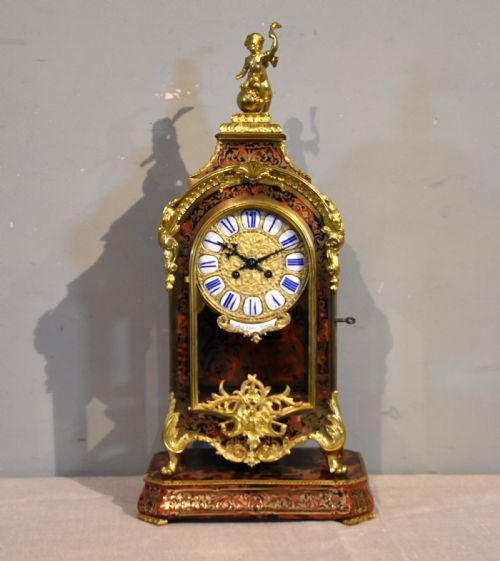
- A method of marquetry using brass and tortoiseshell inlaid in contrasting patterns. Named after a French cabinetmaker, it decorates several elaborate mantel and bracket clock cases.
- Repeater
- A clock mechanism that chimes the hours and quarters upon demand when a lever or cord is pulled. This complication allowed owners to tell the time in darkness.
Decorative Brass Mantel Clock: Frequently Asked Questions
Why does my clock run fast or slow?
Changes in temperature and the settling of the surface beneath the clock can alter the pendulum's swing. Regulation is typically achieved by adjusting a small nut on the pendulum rod.
Moving the nut up shortens the effective pendulum length to make the clock run faster, while lowering it slows the beat down. Patience is required to dial in exact accuracy.
Where should I place a brass clock?
Mantelpieces, sideboards, and heavy wooden desks provide sturdy, level foundations that keep the escapement beating evenly. Avoid placement near drafty windows or direct heat sources.
Level surfaces are particularly vital for pendulum models to ensure the "tick-tock" rhythm remains even. A slight tilt will cause the movement to stop entirely.
How do I identify a French movement?
French movements of the nineteenth century frequently feature circular brass plates stamped with maker medallions and serial numbers. Many utilise a silk-suspension thread or a small spring-held pendulum.
Stamps often reveal the workshop responsible for the casting or escapement assembly, helping date the piece alongside style clues in the case.