
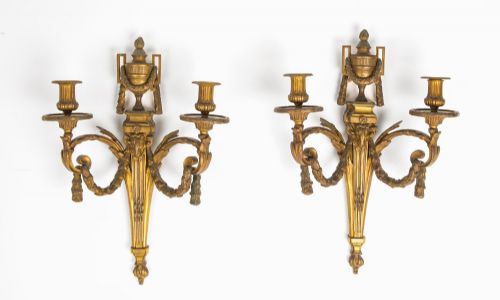


Decorative Brass Candle Sconce
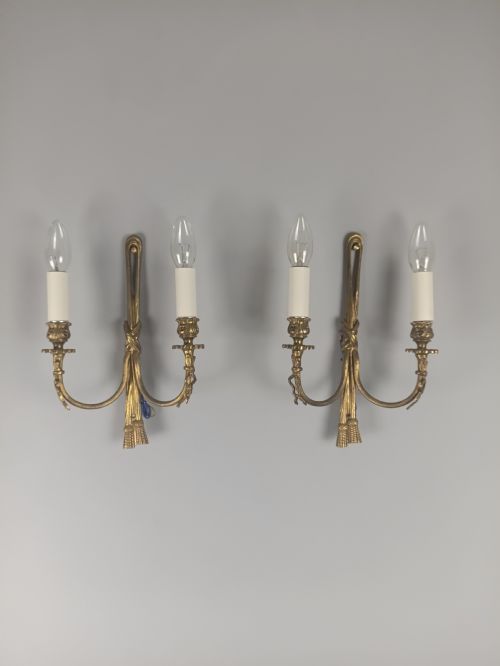
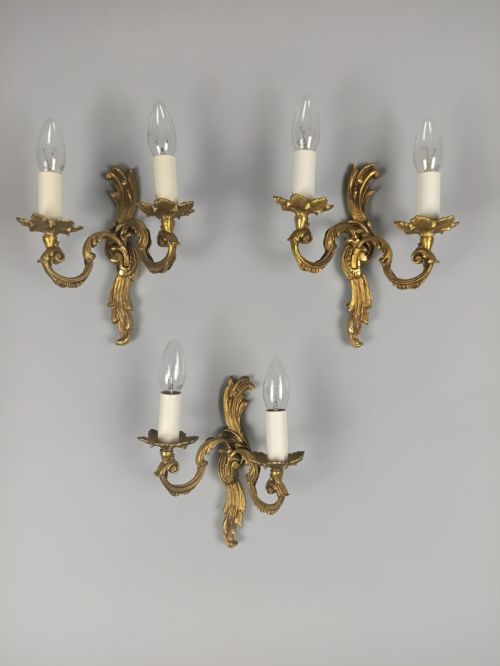
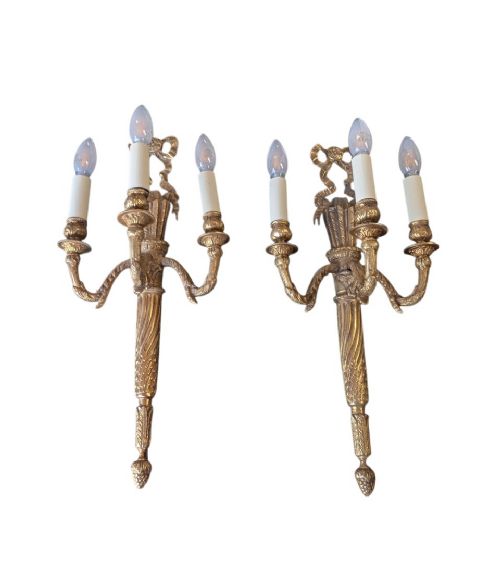
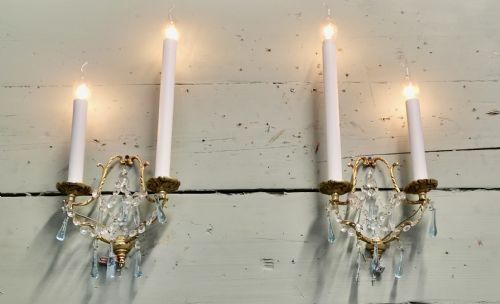
These decorative brass candle sconces bring warmth and reflective metalwork to vertical wall spaces, drawing the eye upwards with period flair.
Decorative Brass Candle Sconce
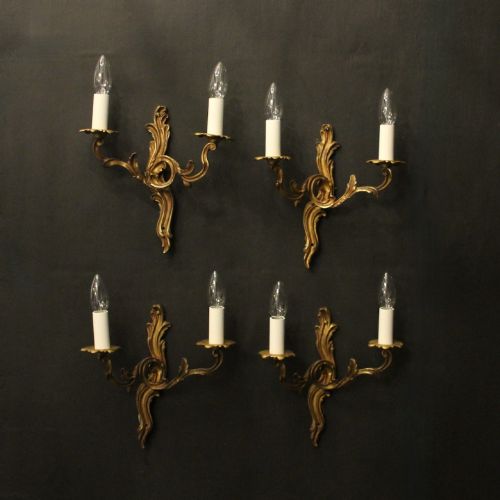
A decorative brass candle sconce is a wall-mounted lighting fixture designed to hold candles, combining functional illumination with sculptural metalwork. When searching for this phrase, buyers encounter wall lights, wall sconces, girandoles, and candle holders originating from periods spanning the nineteenth century through the 1930s.
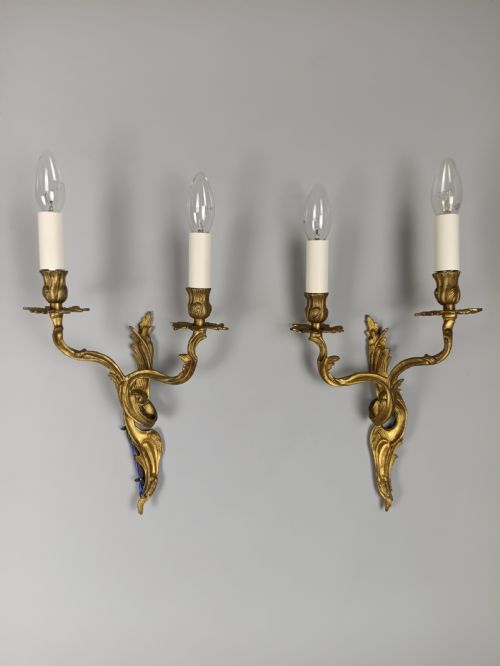
The pieces appearing on this page lean heavily towards French origins, particularly incorporating styles such as French Rococo, French Neoclassical, and French Chateau designs. Alongside these continental forms, items emerge from Edwardian, Adam Revival, Aesthetic Movement, and Japonisme traditions.
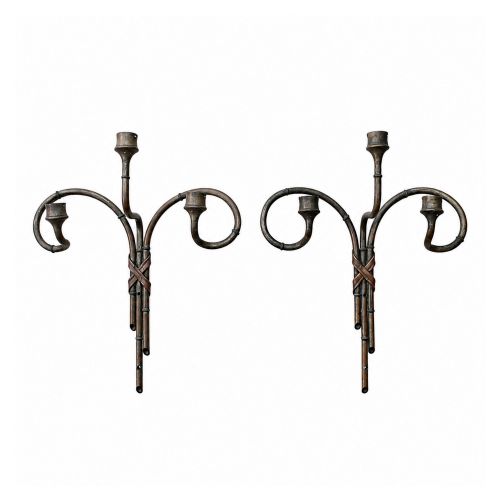
Most examples survive as matched pairs or larger sets, featuring single, twin, or triple arms designed to project light across a room. Forms range from simple chambersticks and candlesticks adapted for walls to elaborate wall lanterns and mirrored sconces.
Materials and construction
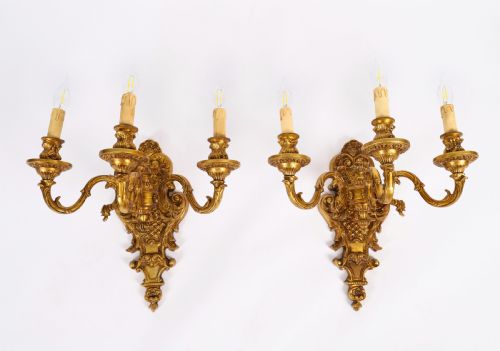
Makers primarily utilised brass, gilt bronze, gilded brass, and ormolu, applying gold finishes over metal bases to catch and multiply the flickering candlelight. Copper, glass, and bronze also appear frequently within the construction of arms, backplates, and decorative mounts.
Casting and gilding techniques define the manufacture of these wall lights, allowing for intricate relief work such as ram's head masks, putti, ribbons, and lion heads. Many pieces integrate mirrors or bamboo elements, reflecting the diverse stylistic influences of the nineteenth and early twentieth centuries.
The inventory spans the nineteenth century, Edwardian era, and the 1920s to 1930s.
Assessing craftsmanship and design
Quality in these sconces depends on the crispness of the metal casting and the depth of the chased detail in motifs like acanthus leaves, masks, or rococo scrolls. Finer examples display hand-finishing that preserves sharp edges and intentional contrasts between burnished and matte gilded surfaces.
The integrity of the construction distinguishes superior pieces, notably in how securely the candle arms attach to the backplate and whether original gilding remains intact. Scale and balance also dictate distinction, with well-proportioned multi-arm chandeliers and heavy cast brass models holding greater visual presence.
Maison Baguès
The Decorative Brass Candle Sconce Glossary
- Ormolu
- A method of applying finely ground high-carat gold to a bronze base using mercury, creating a rich golden surface found on many French wall lights. This technique was widely employed during the eighteenth and nineteenth centuries.
- Girandole
- An ornamental branched candlestick or light fixture, often featuring a mirrored backplate to multiply the ambient light in a room. These fixtures frequently showcase elaborate gilt metal frames.
- Chamberstick
- A short portable candlestick fitted with a pan to catch dripping wax and a loop handle for carrying from room to room. Some period variants were designed to mount onto walls.
- Aesthetic Movement
- A late nineteenth-century design style that emphasised visual beauty over narrative or moral function, drawing inspiration from Japanese art and natural forms. Pieces from this period often incorporate mixed metals like brass and copper.
- Adam Revival
- An eighteenth-century neoclassical style revived in later centuries, characterised by symmetrical motifs, urns, swags, and classical architectural details. This style appears on several listed wall lights.
Decorative Brass Candle Sconce: Frequently Asked Questions
How do I clean antique brass sconces?
Dust the metal gently with a soft, dry cloth to remove surface particles without disturbing the underlying surface. Avoid harsh chemical polishes, particularly on gilt bronze or ormolu items, as abrasive cleaning can strip the historic finish.
Preserving the natural patina maintains the visual character and historical integrity of older metalwork. Professional advice is recommended if deeper cleaning is required for tarnished or delicate surfaces.
Were these sconces electrified later?
Many wall sconces from the nineteenth and early twentieth centuries retain their original candle-only setup, while others were adapted for electricity during subsequent decades. Examining the interior of the nozzle or backplate usually reveals whether wiring has been added.
Buyers can choose between utilising them with traditional wax candles for authentic ambiance or having a qualified electrician safely wire them for modern lighting. Original drip pans and candle cups often remain unaltered regardless of electrification.
How can I date a brass wall light?
Dating relies on stylistic clues, manufacturing methods, and the specific materials used in the construction. Pieces from the Georgian and Regency eras display different casting characteristics compared to Edwardian or 1930s revival items.
Comparing the decorative motifs, such as rococo scrolls versus aesthetic movement geometry, helps narrow down the period of manufacture. Archive records and historical design markers provide further context for specific aesthetic styles.
How should I hang heavy wall sconces?
Heavy brass and bronze sconces require secure wall anchors suited to the specific wall material, such as brick, lath, or drywall. Using appropriate fixings ensures the weight of multi-arm fixtures and backplates is supported safely.
Consulting a professional installer is advisable for larger pieces or mirrored wall lights to prevent strain on the mounting brackets. Proper placement at eye level maximises both structural security and visual impact.