

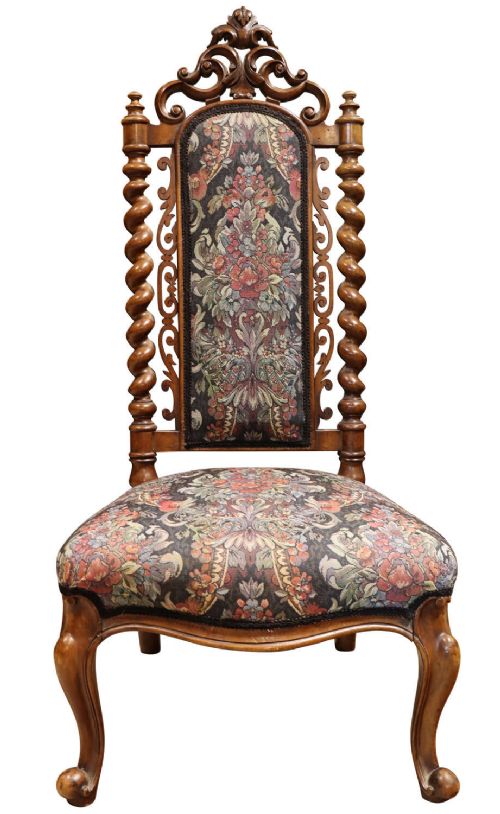
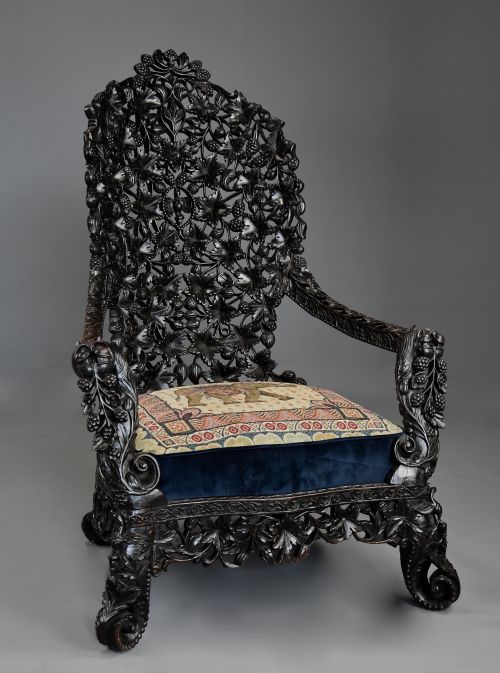


Decorative Back Chairs
These decorative back chairs bring varied regional carvings, painted finishes, and period upholstery straight into a room.
Decorative Back Chairs
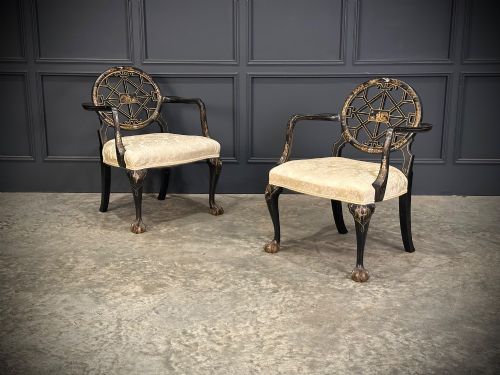
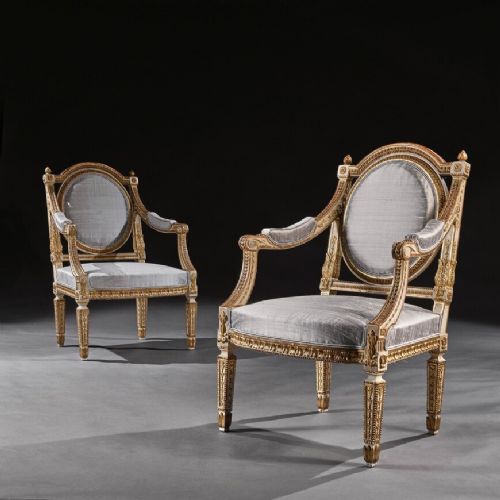
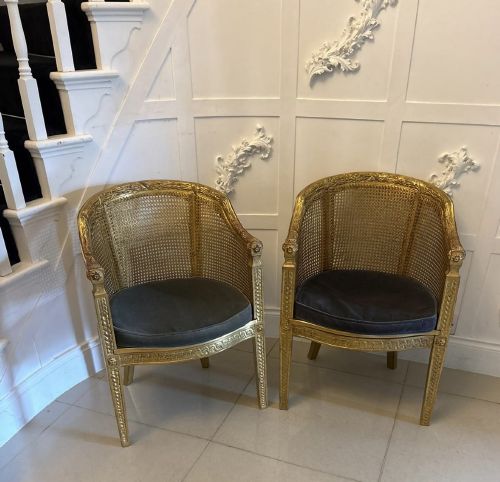
Decorative back chairs encompass diverse seating forms from the nineteenth century onward, ranging from parlour side chairs to large gilded armchairs and settees. When searching for decorative back chairs, buyers encounter varied global interpretations such as Chinese Chippendale, Anglo-Indian, Moroccan, and classical French styles.
How they were made
Carpenters and joiners utilised dense timbers like mahogany, walnut, oak, and rosewood, shaping structural frames with hand carving and joinery. Surface treatments involved intricate giltwood, parcel gilding, and painted finishes applied over wood.
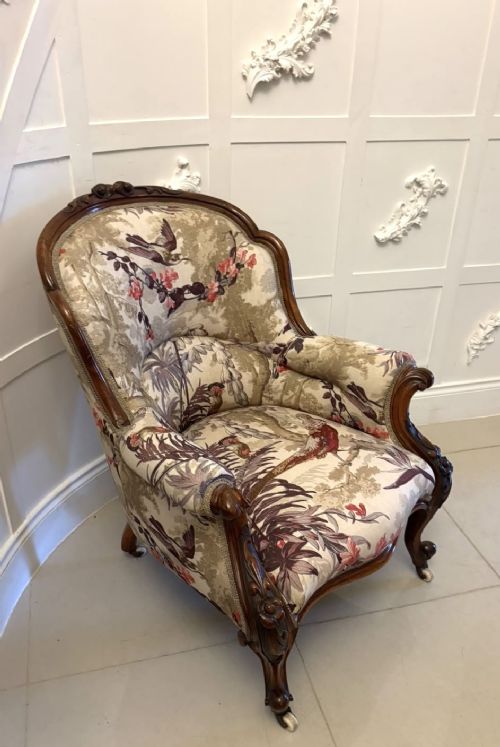
Upholstered versions relied on traditional stuffing methods, covered in velvet, tapestry, fabric, and silk cotton. Brass inlay and detailed woodwork further defined the decorative execution across different revival periods.
Decorative Back Chairs Retail Price Guide 2026
Typical asking prices for decorative back chairs among the pieces listed under this phrase on Sellingantiques today, from the lower quarter to the upper quarter. They describe what is for sale here now, not the wider market.
Spinning chairs feature low seats designed to let the spinner work comfortably near the hearth.
What varies in quality
The standard of carving and surface gilding dictates the visual weight and refinement of each piece. Crispness in hand-carved woodwork and the preservation of original paint or gilt layers separate finer examples from simpler workshops.
The choice of primary timber and the complexity of the back design influence the overall presence of the chair. Retaining period upholstery materials and intact inlay work contributes significantly to the integrity of the piece.
The Decorative Back Chairs Glossary
- Giltwood
- Timber coated with gold leaf or a gold-coloured finish for decorative effect. It appears frequently on nineteenth-century French seating.
- Splat
- The vertical central strip of wood in the middle of a chair back. Painted or carved versions define the style of many period chairs.
- Parcel Gilt
- A decorative technique where only specific portions of a carved wooden surface are gilded, leaving the underlying wood visible.
- Chippendale
- A style originating from eighteenth-century designs, revived later with elaborate fretwork and carved details on chairs.
Decorative Back Chairs: Frequently Asked Questions
How do I clean an antique painted chair?
Dust the surface gently with a soft, dry cloth to prevent accumulation. Avoid commercial liquid polishes that might damage aged paint layers.
Keep the chair away from direct sunlight and moisture to preserve the finish. Professional conservation advice is recommended for delicate painted or gilded surfaces.
Are these chairs suitable for daily dining?
Dining chairs and sturdy side chairs from the collection can handle regular seating use. Larger armchairs and delicate salon pieces suit occasional seating.
Check the stability of the frame joints before placing them into heavy service. Lighter bedroom and spinning chairs function best in low-traffic areas.
What distinguishes Victorian chairs from Edwardian ones?
Victorian pieces often display heavier carved walnut frames and rich upholstery like tapestry or velvet. They lean towards ornate and solid proportions.
Edwardian examples tend to feature lighter inlaid mahogany or painted finishes with more restrained ornamentation. The overall aesthetic shifts toward airier salon and bedroom forms.
How can I identify a revival style?
Revival pieces incorporate design elements from earlier eras, such as Queen Anne splats or Neo-classical motifs, executed with later nineteenth or early twentieth-century construction methods. Wood patination and secondary timbers help indicate the actual period of manufacture.
Details like machine-assisted cuts or specific hardware often reveal whether a piece is an original period item or a later revival interpretation.