




Decorative Armchairs Pair
These decorative armchairs pair selections bring together matched seating spanning from the nineteenth century to the twentieth.
Decorative Armchairs Pair
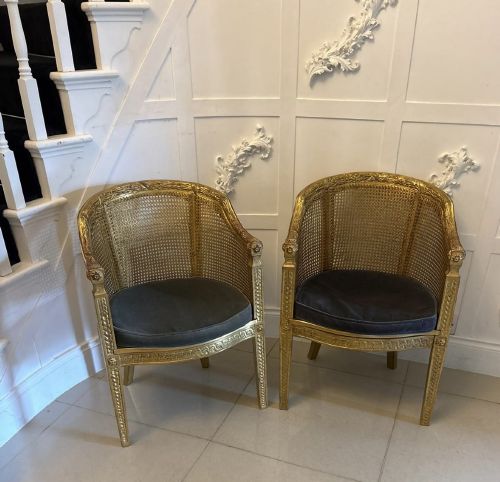
When searching for a decorative armchairs pair, buyers encounter matched seating designed to sit together in a formal room, salon or garden. The listings show a strong presence of French and Italian pieces alongside English examples, ranging from grand giltwood throne chairs to lighter salon chairs and garden rocking chairs.
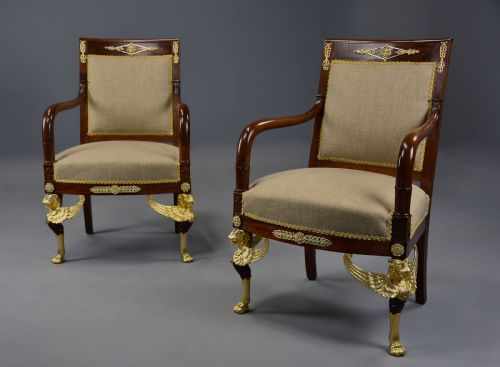
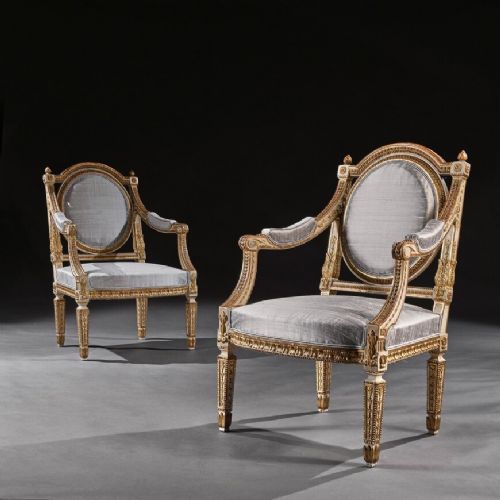
The styles recorded across these pairs cover multiple periods of revival and design, including Empire, Neo-classical, Carolean, Art Nouveau, and Gothic Revival. Mahogany and giltwood dominate the formal indoor categories, while wrought iron and bamboo serve for lighter or outdoor settings.
Most examples date from the nineteenth and early twentieth centuries, offering traditional frames that often retain their original painted surfaces, parcel gilding, or polished finishes. Buyers find everything from substantial open armchairs to smaller children's salon chairs.
Materials and construction
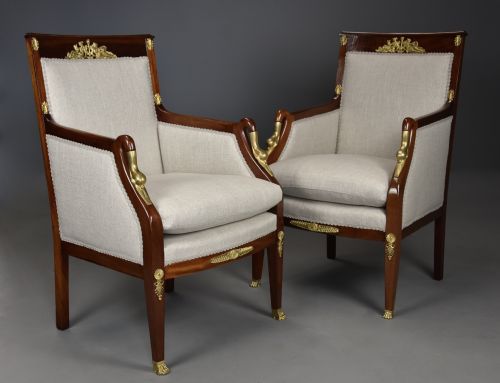
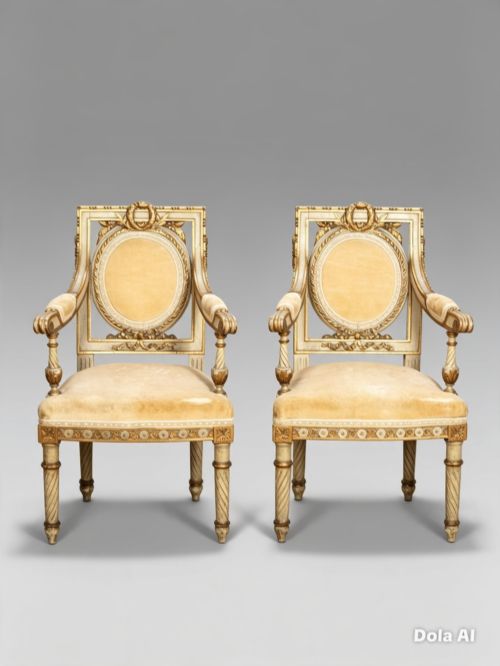
Timber frames form the backbone of these pieces, utilising hardwoods such as mahogany, oak, walnut, and bamboo, frequently shaped and carved to reflect specific historical styles. Giltwood, ormolu, and parcel gilt finishes add surface brilliance to French and Italian frames.
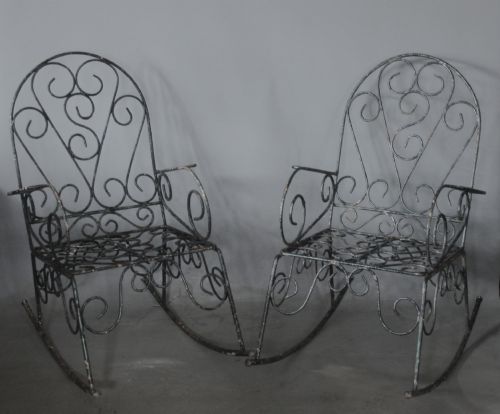
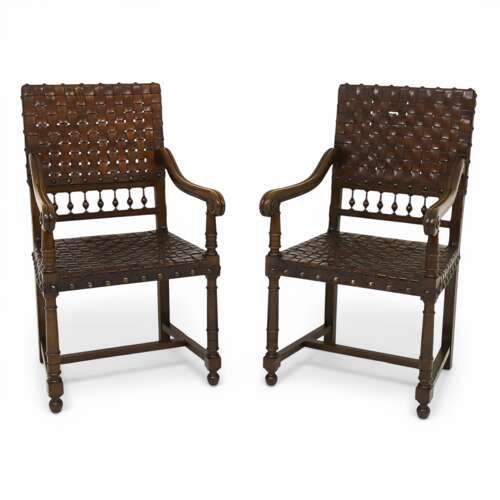
Alternative materials appear where the design demands outdoor or lighter domestic use, specifically wrought iron and metal incorporating brass elements. Upholstery and seating surfaces rely on linen, leather, and woven leather straps.
Joinery and decorative techniques match the period of origin, combining traditional cabinet-making with surface painting, lacquer, and metalwork detailing such as paw feet.
The recorded inventory encompasses pieces from the nineteenth century up to the 1930s, utilising mahogany, giltwood, ormolu, linen, wrought iron, leather, oak, and brass.
Separating the finest examples
Quality rests in the crispness of the carving, the integrity of the timber framing, and the preservation of original surfaces such as gilding or hand-painted details. Pairs that retain their matching proportions and uniform finish without heavy alteration command stronger interest.
The complexity of the design also separates standard seating from exceptional works, visible in elaborate Empire styling, detailed neoclassical motifs, or intricate Art Nouveau flowing lines. The success of the pairing depends on how well the two chairs match in wear, scale, and patination over time.
The Decorative Armchairs Pair Glossary
- Fauteuil
- An open-framed armchair with upholstered armrests, typical of French domestic seating from the seventeenth century onwards.
- Giltwood
- Timber that has been coated with a thin layer of gold leaf or powder, frequently found on formal nineteenth-century salon chairs.
- Parcel Gilt
- A surface finish where only specific carved details or raised elements are highlighted in gold, leaving the painted or wood ground visible underneath.
- Ormolu
- Cast bronze mounted details finished in high-grade gold gilding, used to adorn the frames of formal French chairs.
- Glastonbury Chair
- A traditional folding chair design with an X-shaped frame and a sloping back, often associated with Gothic Revival forms.
- Carolean Style
- A seventeenth-century aesthetic revived in later centuries, characterised by rich wood carving, scrolling motifs, and woven leather or cane.
Decorative Armchairs Pair: Frequently Asked Questions
How are these chairs matched?
Pairs are assembled based on matching frame design, timber type, scale, and decorative finish, ensuring they present a unified appearance when placed symmetrically in a room.
Slight variations in wear or patination naturally occur over decades, but the underlying dimensions and stylistic details remain identical.
Can wrought iron chairs be used outdoors?
Wrought iron and metal examples are historically suited for garden or conservatory placement, weathering external environments while maintaining structural integrity.
Proper placement prevents moisture damage to any linked metal fittings or surrounding surfaces.
What distinguishes Empire style chairs?
Empire style seating draws on neoclassical military and classical Roman motifs, featuring dark mahogany frames often accented with gilt metal mounts.
The lines remain formal and symmetrical, reflecting the dominant aesthetic of the early nineteenth century.
How do salon chairs differ from armchairs?
Salon chairs are typically lighter, more compact seating designed for entertaining in reception rooms rather than heavy everyday lounging.
They frequently feature decorative painted finishes, parcel gilding, or delicate woodwork suited to formal parlour settings.