

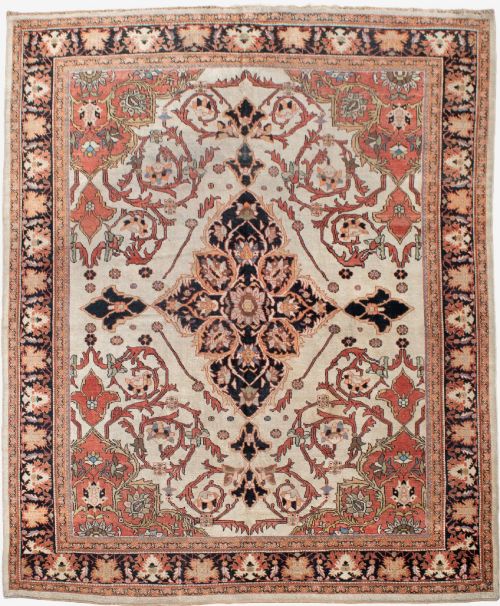
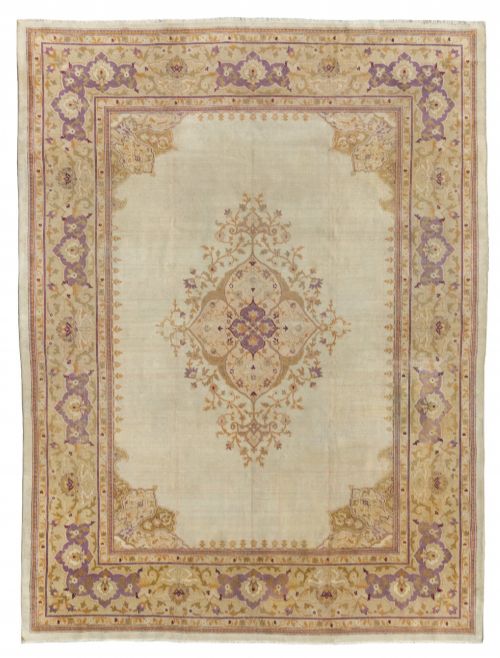
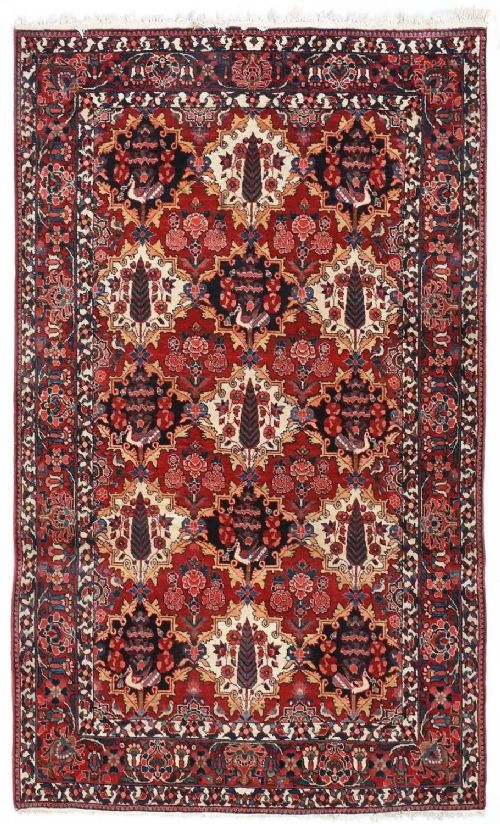


Decorative Area Rug
These decorative area rug pieces span Persian, Ottoman, and traditional styles, offering warmth and historical texture for floor spaces.
Decorative Area Rug
A decorative area rug brings floor coverings of significant age and woven artistry into interior spaces, drawing on periods from the eighteenth century through the early twentieth century.
The selections available here lean heavily into traditional Persian designs, including Heriz, Mahal, Bakhtiari, Ushak, and Sarouk carpets, alongside Bessarabian kilims and Turkmen tribal weaves.
Buyers will encounter formats ranging from smaller mats and runner sizes up to large room-size carpets and fragments originating from centres of production like Amritsar and Isfahan.
How They Were Made
Weavers utilised natural materials such as wool, cotton, and hand-spun wool to construct these floor coverings, forming durable foundations and pile surfaces.
Techniques varied from knotted-pile carpet construction in workshop and tribal settings to flat-woven kilim methods, resulting in diverse structural profiles across the eras.
Listings incorporate Persian, Ottoman, and tribal styles spanning the eighteenth, nineteenth, and early twentieth centuries, made from wool and cotton.
What Varies In Quality
The fineness of the weave and the complexity of the design dictate the structural integrity and visual depth of each floor covering.
Condition plays a part, distinguishing pieces with robust pile from those showing heavy wear, distress, or fragment status.
Bakhtiari·Heriz·Mahal·Ushak·Sarouk
The Decorative Area Rug Glossary
- Kilim
- A flat-woven carpet or rug made without a pile, traditionally produced in regions such as Bessarabia and Turkmenistan.
- Kelleh
- A long, rectangular format of carpet traditionally suited to specific room dimensions.
- Prayer rug
- A small rug featuring a mihrab design element, historically used for individual devotion.
- Fragment
- A surviving portion of a larger historic carpet or textile, mounted or preserved as an independent piece.
Decorative Area Rug: Frequently Asked Questions
How are antique carpets cleaned?
Maintenance requires gentle specialist cleaning suited to wool and cotton pile fabrics.
Regular careful vacuuming without a rotating brush helps prevent dust accumulation in the fibres.
Where should I place a large carpet?
Large room-size carpets suit principal reception spaces and living rooms with open floor areas.
Positioning them centrally allows the traditional patterns to define the room layout.
What is the difference between a rug and a kilim?
Rugs possess a knotted pile built upon a cotton or wool foundation.
Kilims utilise a flat-weave technique without pile, creating a thinner textile.
How do I identify a Heriz carpet?
Heriz carpets typically display bold geometric medallion designs with strong structural framing.
They originate from the northwest region of Persia and utilise durable wool.