


Decorative Oil Lighting
Decorative antique oil lighting brings Victorian and Edwardian warmth into a modern room through brass, porcelain, and coloured glass.
Decorative Oil Lighting
When you search for decorative antique oil lighting, you look at domestic lamps designed to burn paraffin or colza oil for illumination during the nineteenth and early twentieth centuries. These pieces survive in forms such as table lamps and column lamps, shaped by Victorian, Edwardian, and Art Nouveau design movements.
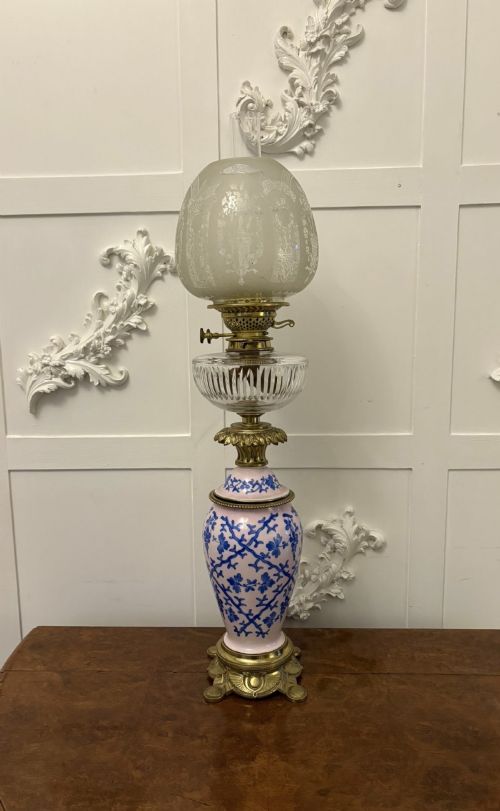
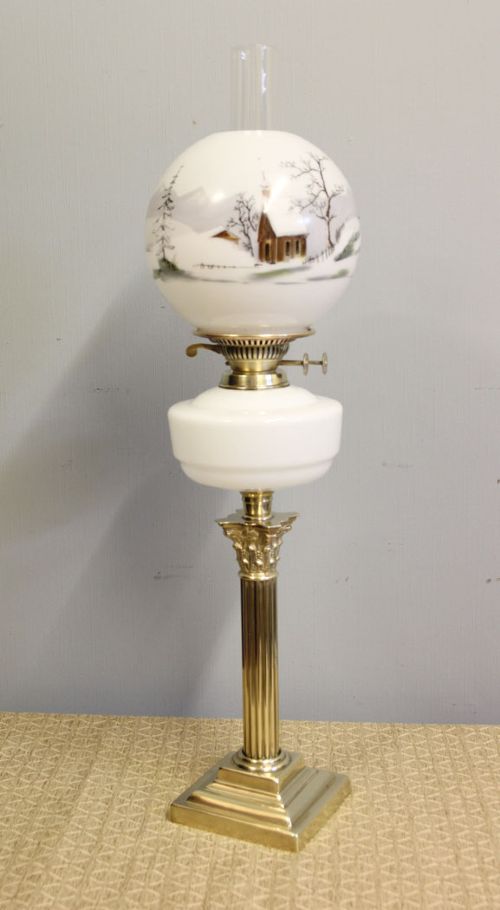
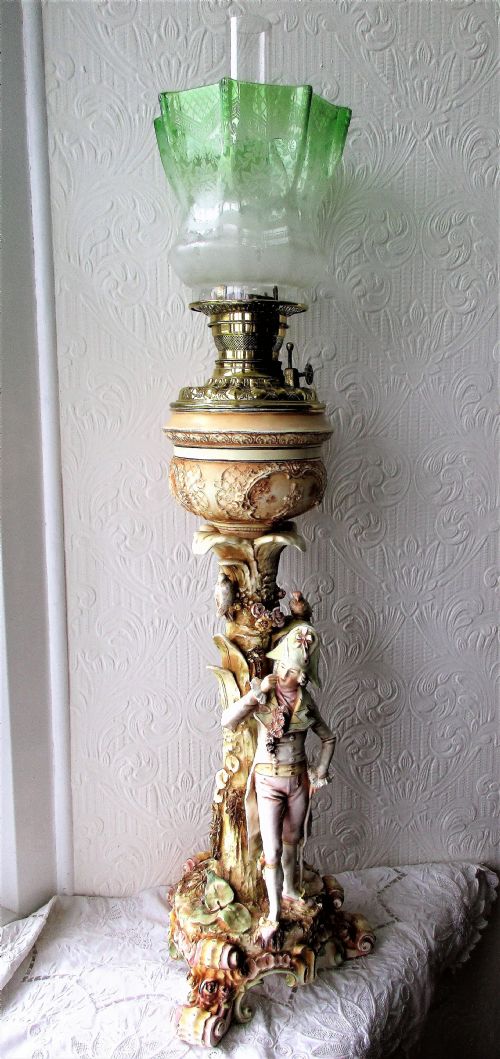
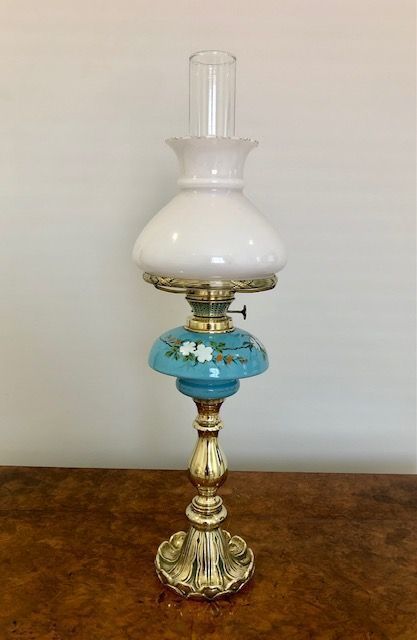
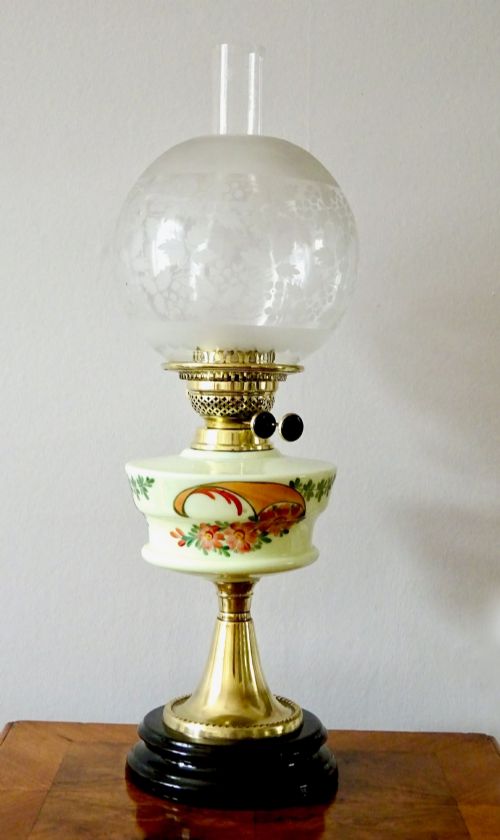
The version you are most likely to meet on this page is a Victorian table lamp, often pairing a ceramic or porcelain font with a brass or bronze base. Many retain their original glass shades, ranging from opaline and milk glass to examples painted with winter scenes or floral motifs.
How they were made
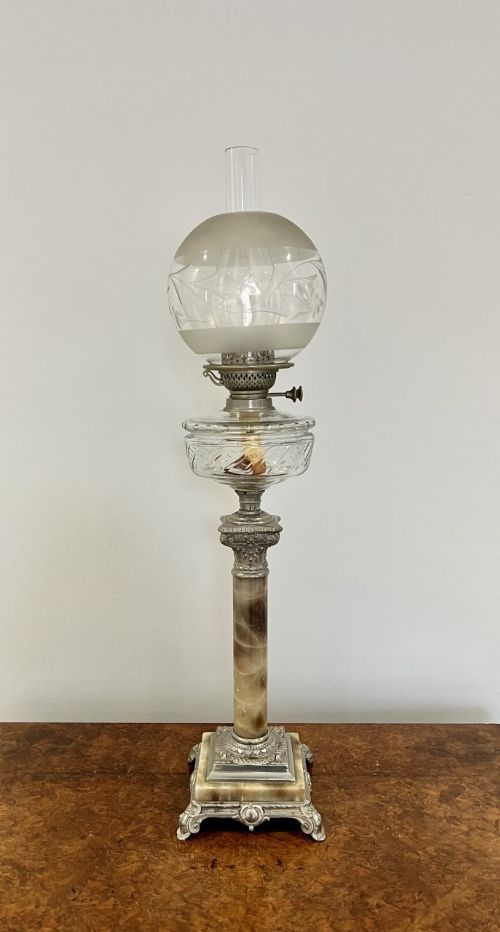
These lamps rely on combinations of cast brass, bronze, copper, and onyx to form stable columns and bases. Metal components are frequently paired with fired bodies of porcelain, faience, and ceramic, sometimes finished with cold painting or gilt highlights.
Fonts and shades utilise blown and moulded glass, including milk glass and opaline, shaped to diffuse light effectively. Etched and painted decoration on the glass elements adds colour and pattern to the completed pieces.
Some Victorian lamps feature painted winter scenes on their shades, bringing perpetual snowstorms into warm nineteenth-century parlours.
What varies in quality
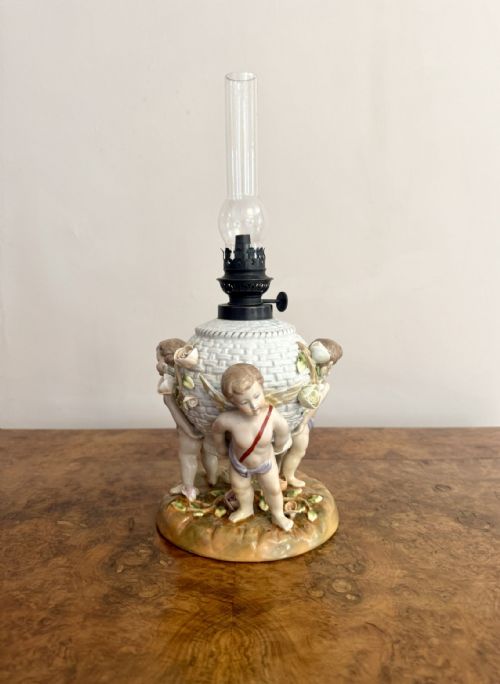
Quality in these pieces rests upon the ambition of the modelling and the weight of the materials used in the base and font. Heavier cast brass columns and finely painted porcelain figures or floral bowls separate ordinary utility lamps from decorative examples.
The integrity and artistry of the matching shade also determine value, as hand-etched glass and detailed cold painting require high levels of artisan skill. Pieces combining multiple materials like bronze, onyx, and enamelled faience generally represent more elaborate manufacturing efforts.
Sitzendorf porcelain
The Decorative Oil Lighting Glossary
- Font
- The oil reservoir of the lamp, typically made of glass, porcelain, brass, or ceramic. It sits atop the column or base and holds the fuel.
- Column lamp
- A lighting form modelled on classical architectural orders, frequently utilising brass or bronze shafts. These often feature Corinthian capitals.
- Opaline glass
- An opaque or translucent glass, often pale in colour, used to create soft light diffusion in shades and fonts. It was widely utilised during the Victorian period.
- Faience
- Tin-glazed earthenware decorated with coloured enamels, often found in Art Nouveau examples. This ceramic technique provides a vibrant surface for floral and abstract designs.
- Cold painted bronze
- Bronze sculpture finished with oil-based paint applied after casting rather than fired in a kiln. This method allows for detailed polychrome decoration.
Decorative Oil Lighting: Frequently Asked Questions
Can antique oil lamps still burn oil?
Most decorative lamps listed here have been converted for modern electrical use or retain their internal mechanisms in varied states. Burning oil in original antique hardware requires careful inspection of the burner and wick assembly.
Collectors generally preserve them as decorative objects or arrange safe electrical conversions to display them in living spaces without risk to fragile glass and painted fonts.
How do I identify a Victorian oil lamp?
Victorian examples typically display heavy brass bases, floral porcelain fonts, or classical column designs produced during the nineteenth century. Stylistic markers include gilt porcelain, etched glass shades, and figural bronze elements.
Examining the weight of the metal and the manufacturing style of any ceramic components helps distinguish Victorian production from later twentieth-century reproductions.
What is an opaline glass shade?
Opaline glass is a translucent, milky glass designed to soften the glare of an oil flame while casting a gentle glow across a room. These shades come in various pastel tones and shapes.
They form an integral part of the lamp's decorative impact, often matching the colour palette of the ceramic font below.
Where should I place an antique table lamp?
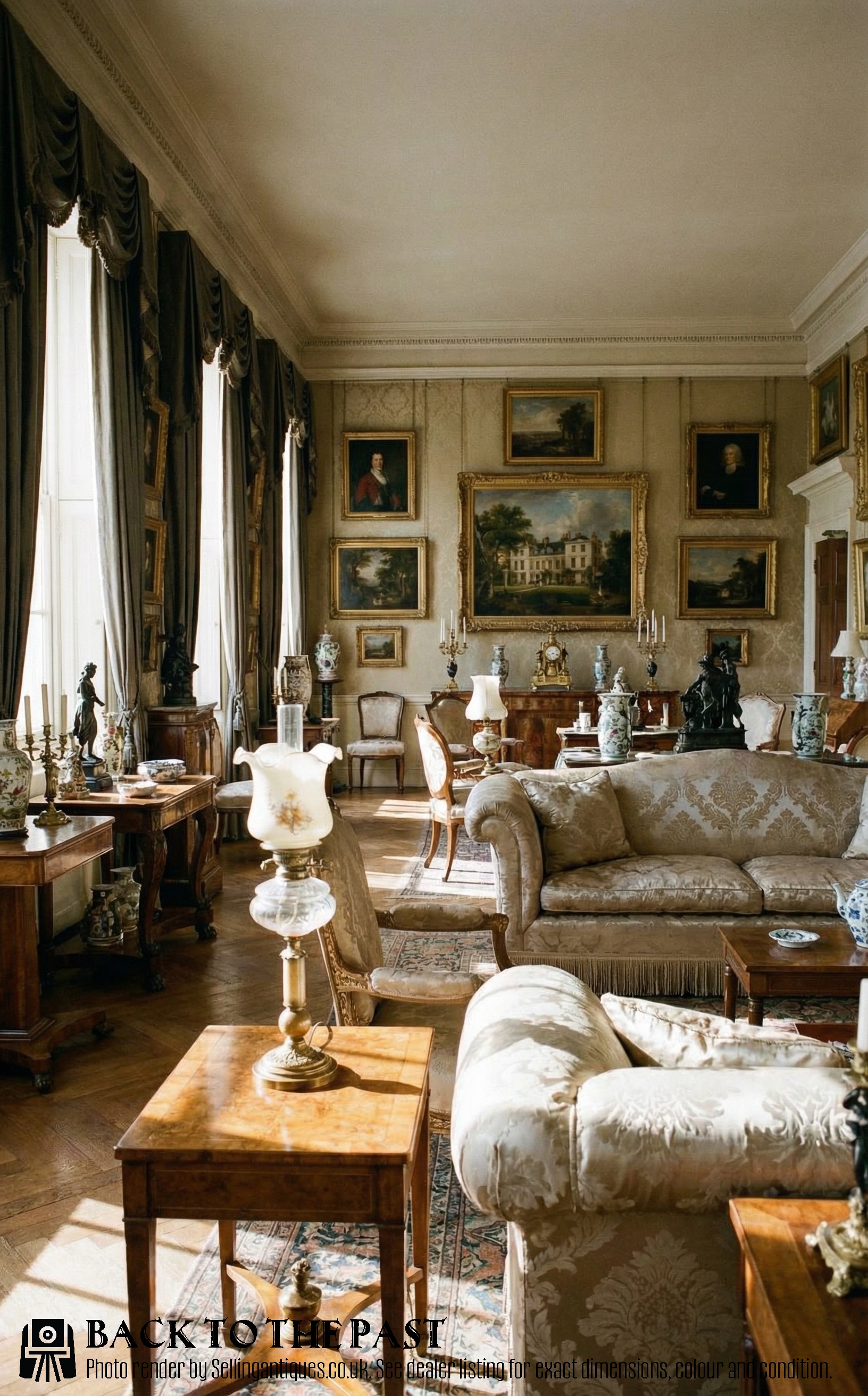
These lamps suit side tables, sideboards, or desks where their height and decorative materials can be appreciated at close range. Placing them away from heavy household traffic protects delicate glass shades and painted porcelain.
Ensure the surface is stable and level, as the combination of heavy metal bases and glass components makes balanced placement essential.