



Vintage Duplex Burner Lamp
A vintage duplex burner lamp brings the warm, twin-wick illumination of the nineteenth and early twentieth centuries into a modern room.
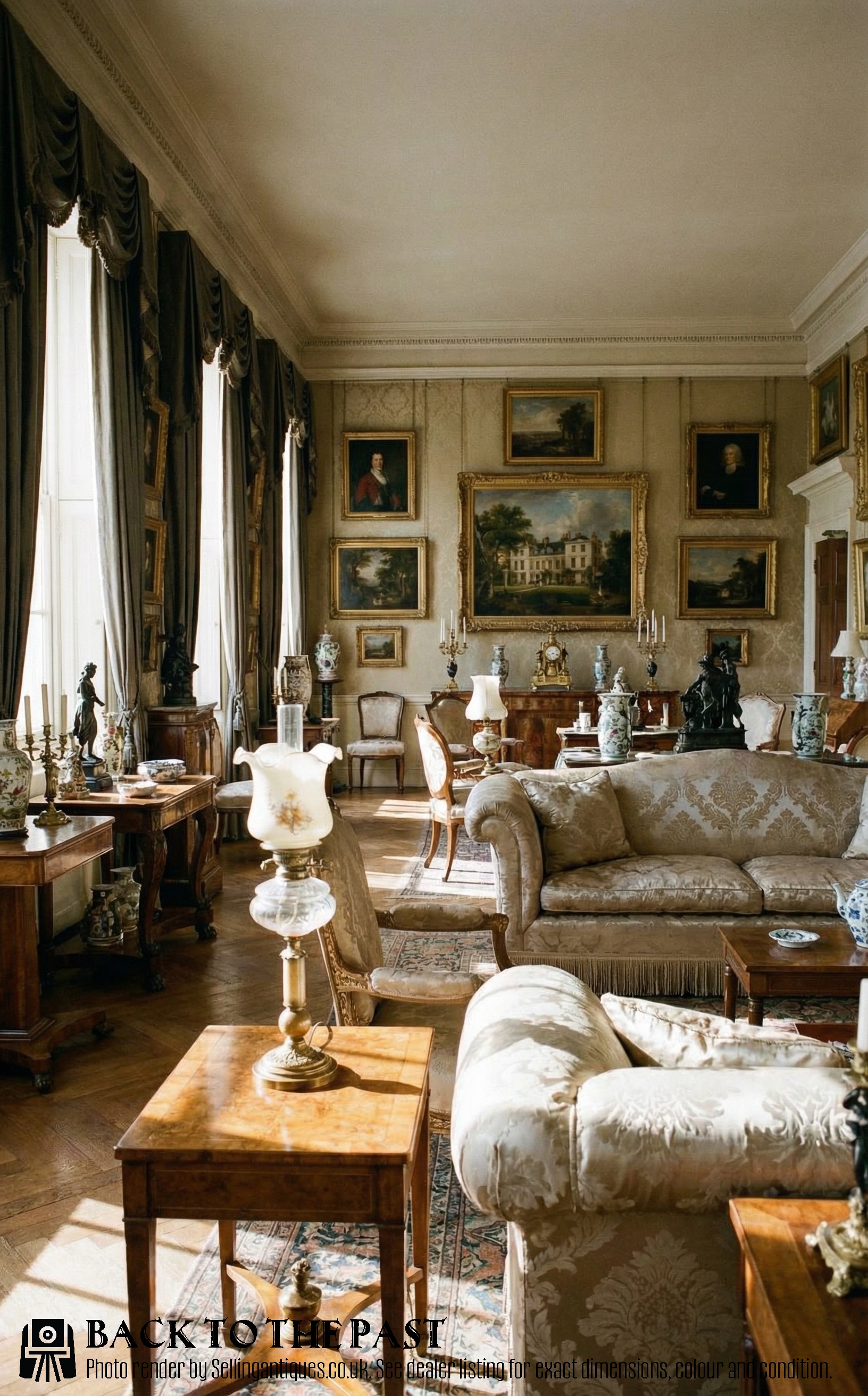
Vintage Duplex Burner Lamp
When you search for a vintage duplex burner lamp, you encounter tall domestic lighting fixtures designed to burn paraffin or oil through two flat wicks, doubling the brightness of traditional single-burner designs. The selections on this page span the Victorian and Edwardian eras, reaching from the mid-nineteenth century into the early twentieth century.
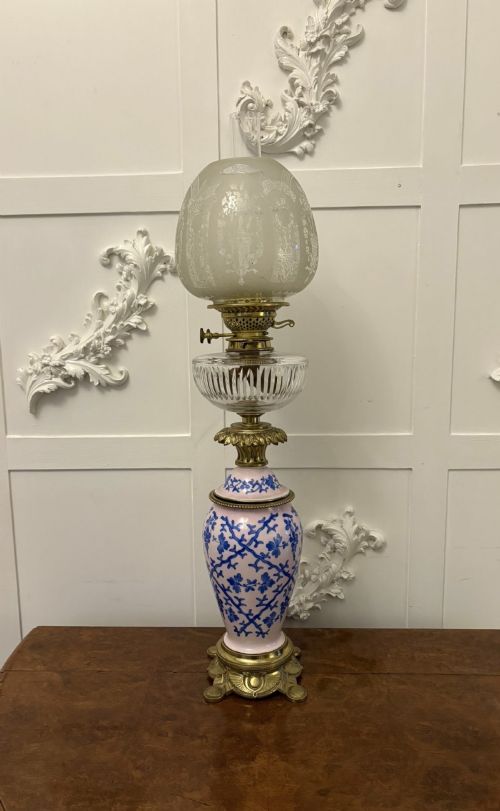
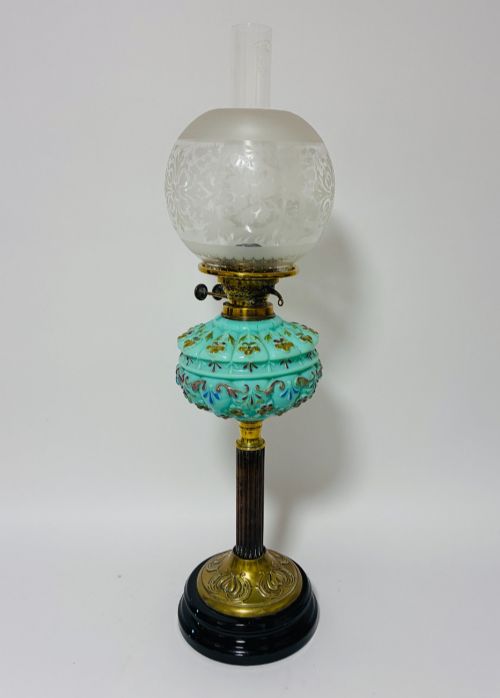
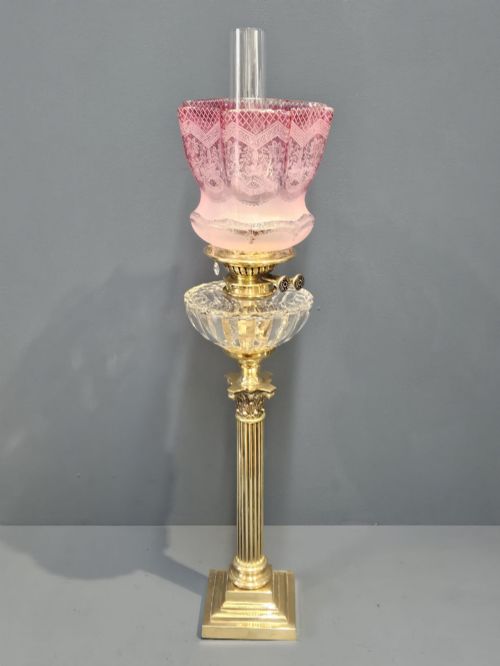
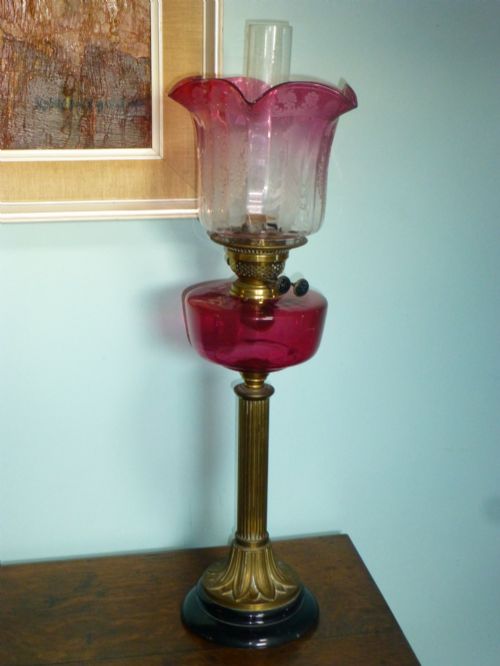
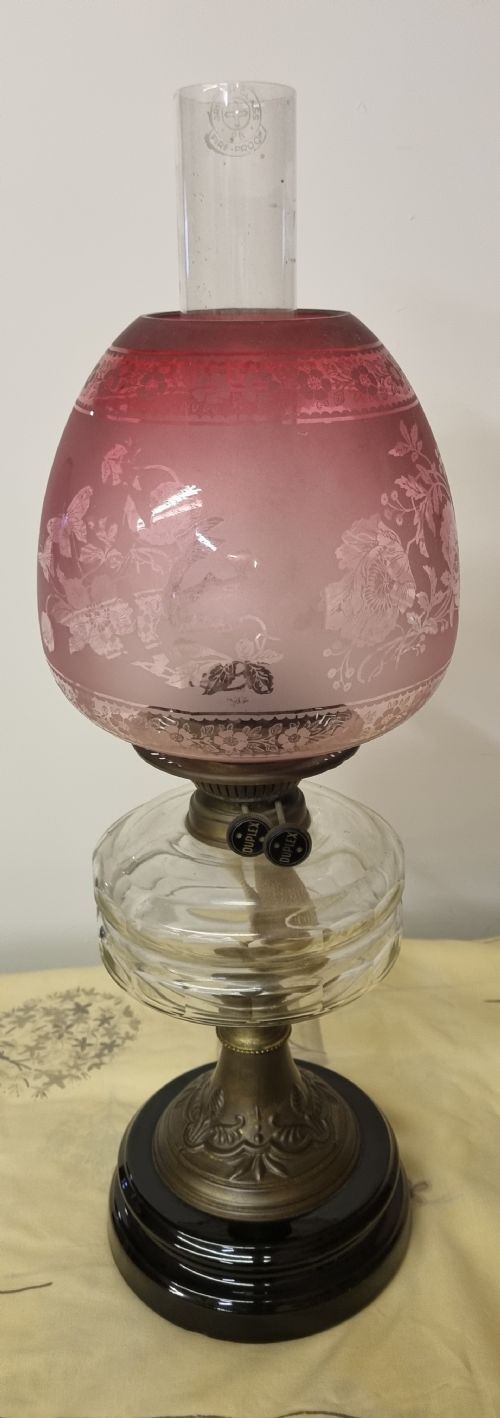
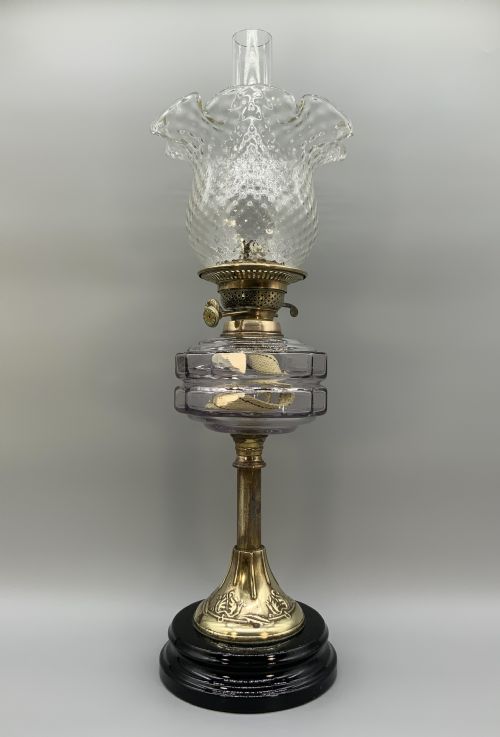
The most frequent examples combine heavy metal columns with colourful glass fonts and shades, often featuring tall brass stands or Corinthian columns. These objects survive in various forms, from simple brass table models to telescopic designs and elaborate botanical cranberry glass constructions.
How they were made
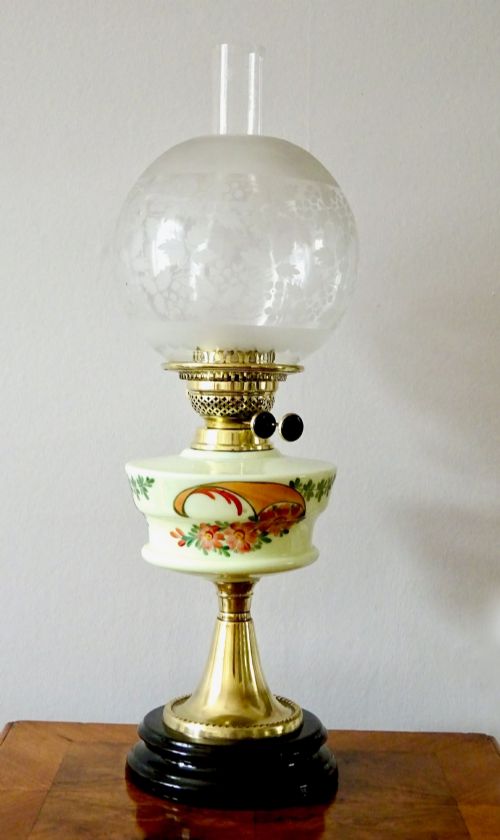
Maker workshops built these lamps using substantial brass structures, often paired with heavy ceramic or crystal bases to ensure stability beneath the tall glass shades. Metal components were cast or spun, while columns frequently incorporated classical architectural details like fluted shafts.
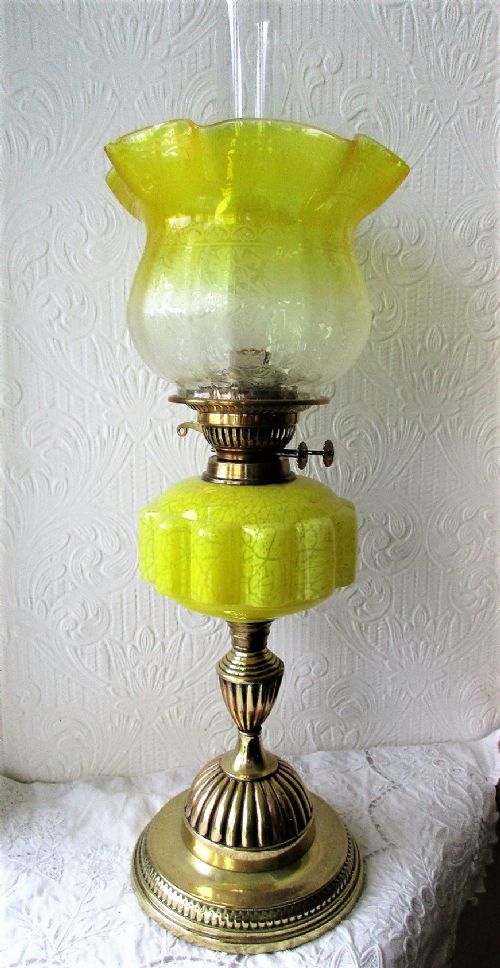
The reservoirs and shades showcase diverse glassworking techniques, including hand-blown forms, etched decoration, and vibrant coloration in cranberry, pink, blue, and green hues.
Some Victorian burners feature tiny wheel stamps bearing maker names, ensuring that even lighting a room required a touch of industrial pride.
What varies in quality
Quality rests in the weight and substance of the materials, particularly the gauge of the brass and the clarity and depth of the coloured glass fonts and shades. Superior examples feature crisp casting in the metal columns and intricate hand-etching on the glass.
Design complexity also separates standard pieces from finer specimens, with telescopic stands, Corinthian capitals, and double-burning twin mechanisms marking the upper tier of production.
Messenger·Young
The Vintage Duplex Burner Lamp Glossary
- Duplex burner
- A lighting mechanism utilising two flat wicks placed side by side to produce a significantly brighter flame than a single wick. This twin arrangement requires a specific double-slot burner gallery.
- Font
- The oil or paraffin reservoir of the lamp, commonly fashioned from coloured glass, porcelain, or brass. It sits atop the column and supports the burner assembly.
- Telescopic
- A descriptor for an adjustable stand that allows the height of the lamp to be raised or lowered. This mechanical feature is found on superior quality nineteenth-century examples.
- Corinthian column
- An architectural column style featuring an ornate capital decorated with acanthus leaves, frequently adopted for the brass shafts of Victorian lighting. It provides a formal classical appearance.
- Cranberry glass
- A rich pinkish-red glass produced by adding gold chloride to the molten metal. It appears frequently in the shades and fonts of this period.
Vintage Duplex Burner Lamp: Frequently Asked Questions
How do duplex burners work?
A duplex burner uses two parallel flat wicks fed from a shared fuel reservoir. Turning the thumbwheel raises both wicks simultaneously to produce a wide, bright flame.
A twin-pronged gallery holds a glass chimney above the flame to steady the draft and ensure a clean, smoke-free burn.
Are these lamps safe to use with oil?
These historical lamps were designed for paraffin or lamp oil, but contemporary safety standards require careful inspection of the metal founts and internal mechanisms before use.
Many collectors choose to wire them for electricity or display them strictly as decorative objects rather than burning fuel.
How do I date a brass oil lamp?
Dating relies on stylistic details, such as the architectural form of the column, the weight of the brass casting, and the manufacturing marks stamped on the burner turning knobs.
Victorian pieces often display heavier cast components and classical revival motifs, while Edwardian examples tend toward slender lines and simpler collars.
What is the purpose of the glass shade?
The large glass shade diffuses the intense light of the double wick and shields the eye from the bright flame. Coloured varieties also cast a warm hue across the room.
Matching shades often feature hand-etched botanical patterns or ruffled rims characteristic of late nineteenth-century glasshouses.