



Deco Standing Lamp
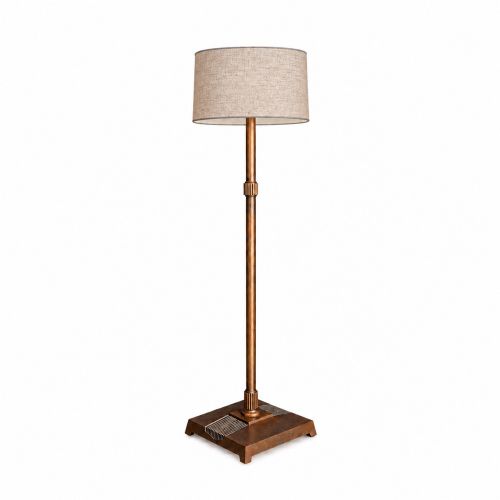
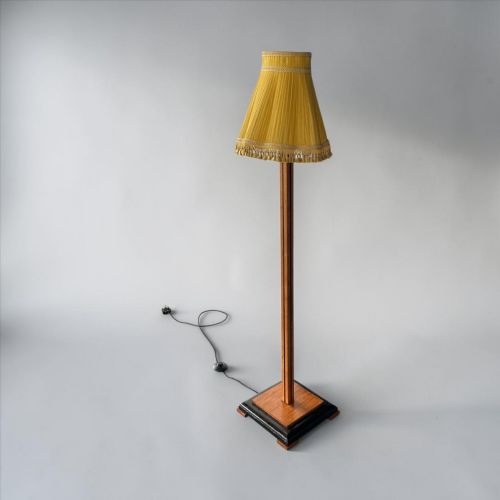
A deco standing lamp brings architectural presence and distinct geometric form to a room.
Deco Standing Lamp
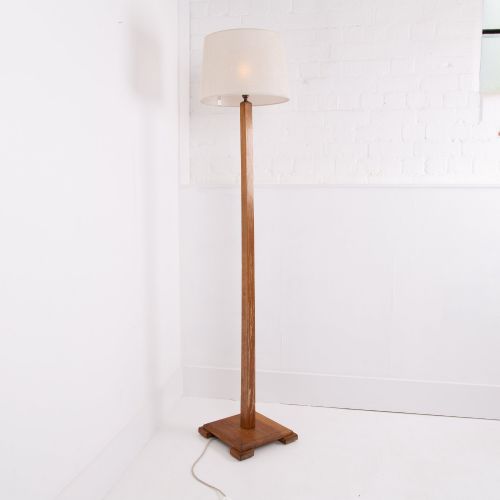
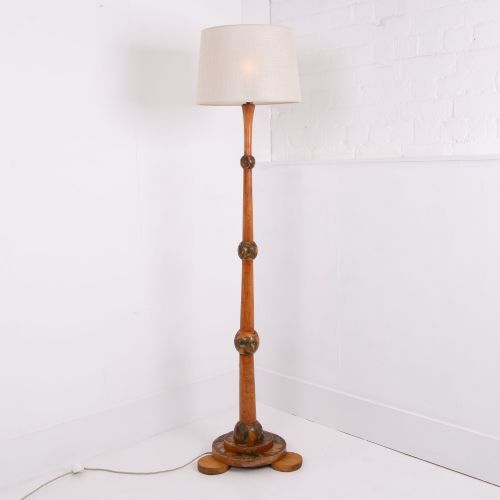
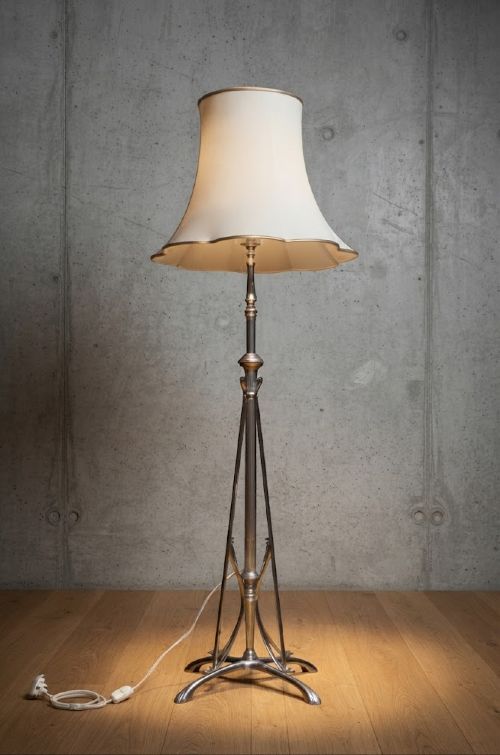
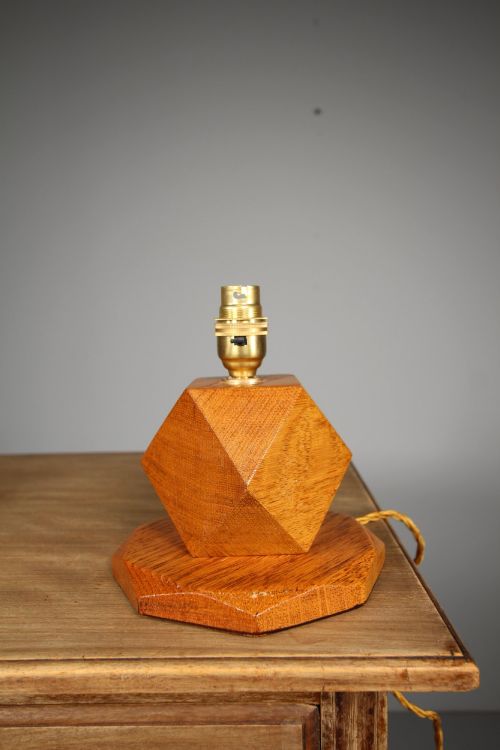
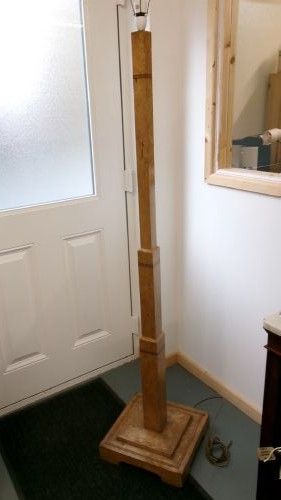
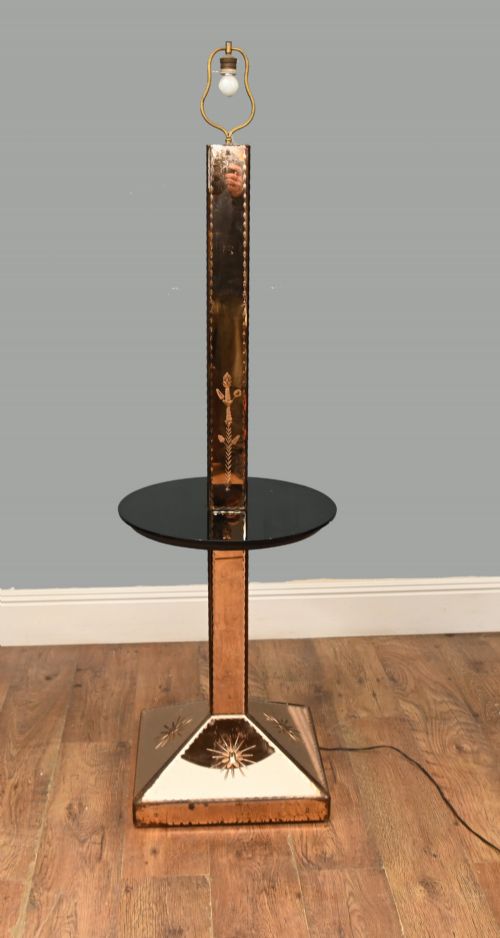
When searching for a deco standing lamp, buyers encounter tall lighting fixtures designed to anchor a room with period character. The selection on this page largely spans the 1920s and 1930s, featuring standard lamps and torcheres alongside occasional furniture.
Makers and designers of the period utilised woods like walnut, oak, and mahogany, often pairing them with metal or marble bases. The forms range from strict geometric shafts to figural designs incorporating standing ladies and nude figures on balls.
Materials and construction
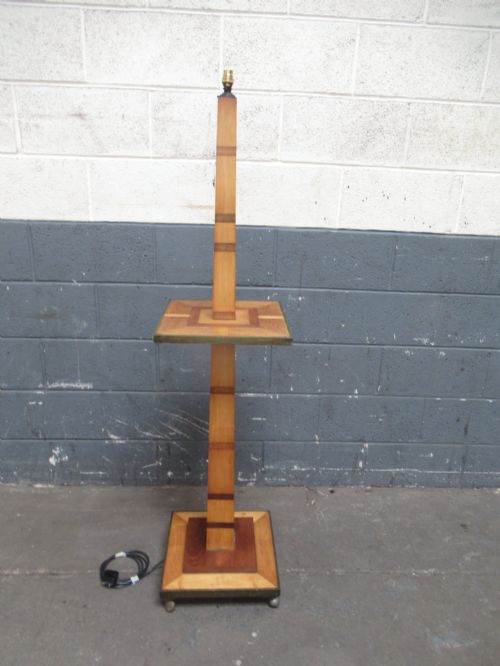
Construction relies on a mix of solid timbers and applied veneers, including blond walnut, golden walnut, burr walnut, and rosewood. Metals such as brass, copper, chrome, and spelter provide structural integrity and distinct contrasting details.
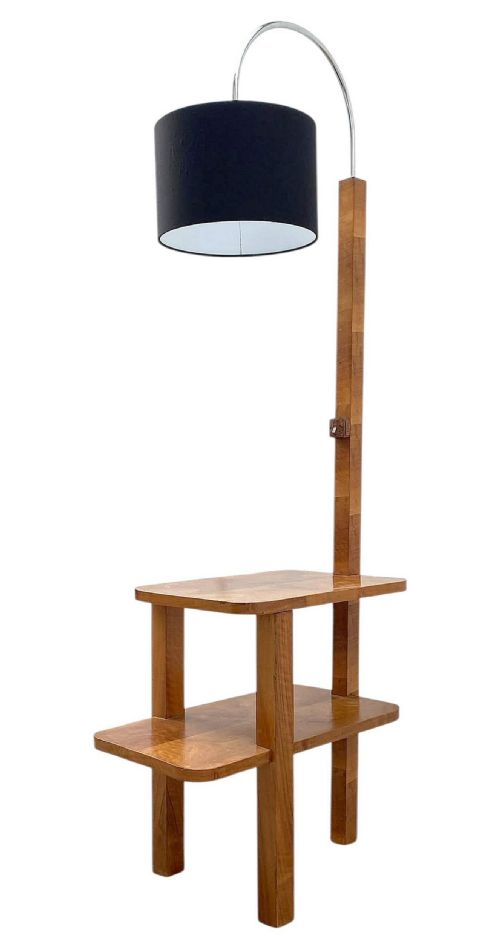
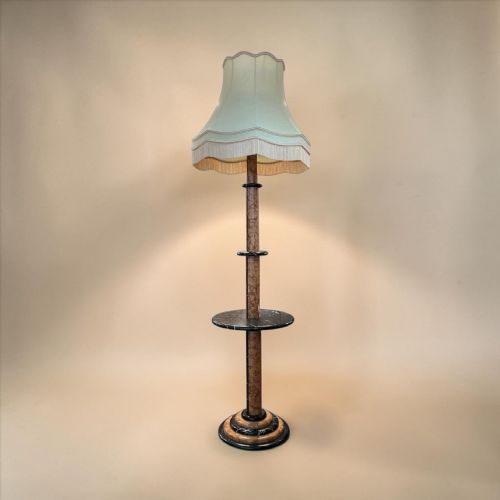
Many examples integrate functional surfaces like glass cocktail tables, marble tiers, or onyx shelves directly into the lamp stand. Wiring and electrical components are updated during rewiring, while original figures combine cast spelter or metal with glass elements.
Deco Standing Lamp Retail Price Guide 2026
Typical asking prices for deco standing lamp among the pieces listed under this phrase on Sellingantiques today, from the lower quarter to the upper quarter. They describe what is for sale here now, not the wider market.
Listings feature standard lamps, torcheres, and uplighters spanning the nineteenth century through the 1940s.
Assessing quality
Quality in these pieces rests upon the choice of timber veneer, the precision of the geometric marquetry, and the weight of the metal or marble base. Finer examples display carefully matched grain patterns in walnut or oak, alongside solid structural joints.
The integration of secondary functions, such as attached glass trays or multi-tiered surfaces, distinguishes standard production from more ambitious workshop pieces. Artistry in figural components, particularly cast metal figures and uplighter shades, determines the upper tier of the range.
Heals·Harry and Lou Epstein·Hille·Majorelle
The Deco Standing Lamp Glossary
- Torchiere
- A tall floor lamp designed to direct light upwards towards the ceiling. These fixtures often feature prominent shafts of wood or metal.
- Standard lamp
- A traditional British term for a floor-standing lamp base. They support a lampshade and frequently stand beside armchairs or sofas.
- Spelter
- An alloy of zinc and other metals used as a substitute for bronze. It takes patination well and forms detailed figural bases.
- Odeon style
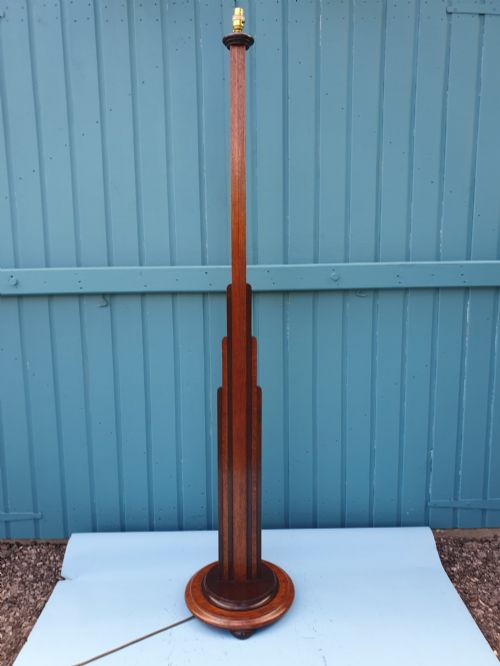
- An architectural and decorative style inspired by cinema design of the era. It relies on stepped, skyscraper-like profiles and curved tiers.
- Uplighter
- A lighting fixture that casts illumination upwards. They create ambient room lighting through exposed or semi-shaded bulbs.
Deco Standing Lamp: Frequently Asked Questions
How do I place a floor lamp in a room?
Floor lamps sit naturally beside seating areas, reading chairs, or in dark corners that require vertical height and ambient light. Models with integrated tables work well beside armchairs to hold books or drinks.
Matching pairs can frame a sideboard or fireplace, creating symmetry in a reception room. Their vertical profile draws the eye upward, complementing period architectural details.
Are these lamps rewired for modern use?
Many period examples are sold with updated wiring to meet current electrical standards. Buyers should check individual descriptions regarding rewiring status.
Professional testing ensures safety while preserving the original switches, holders, and structural integrity of the lamp.
What materials were used in the 1920s and 1930s?
Maker workshops utilised a wide array of materials, from traditional hardwoods like oak, mahogany, and walnut to exotic veneers such as rosewood and birds eye maple. Metals including brass, copper, chrome, and spelter provided structure and contrast.
Accents of marble, onyx, and glass frequently appeared in bases, tiers, and decorative figures, reflecting the luxury and industrial progress of the era.