

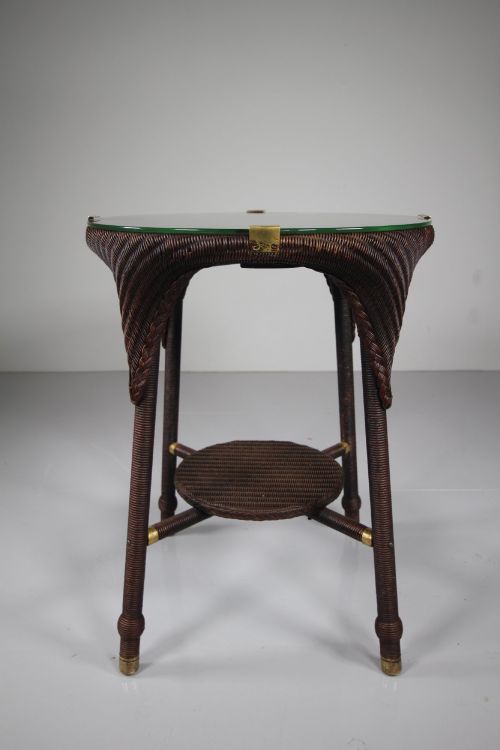
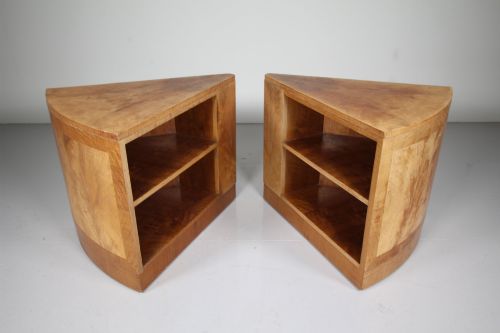
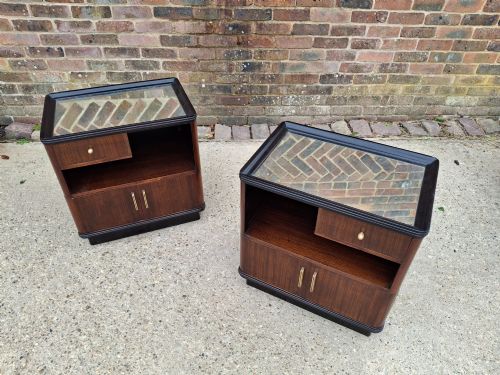

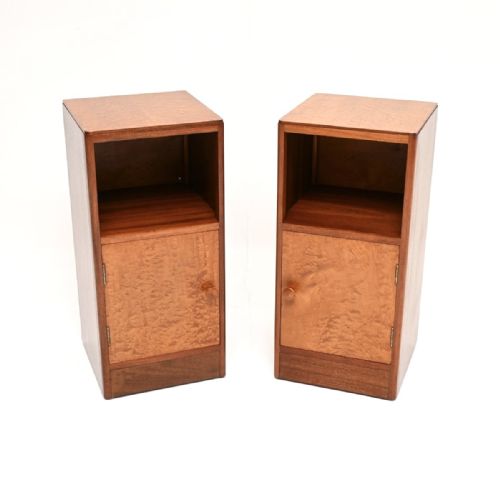
Deco Side Table
A deco side table brings geometric clarity and rich timber grain to a room, functioning as a practical surface with distinct period character.
Deco Side Table
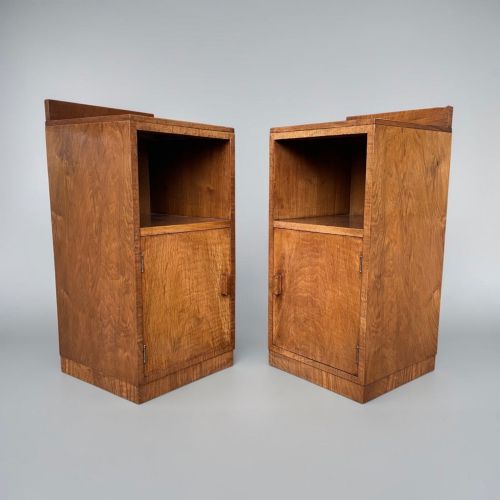
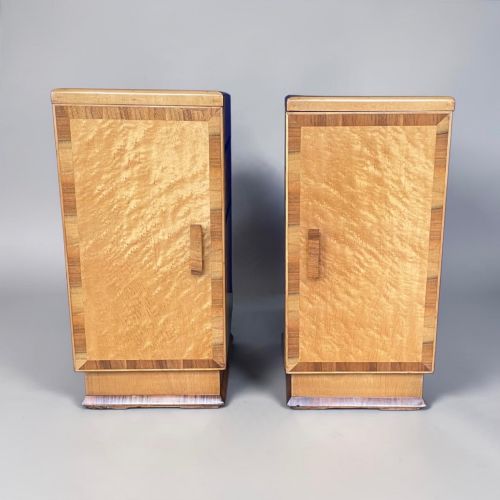
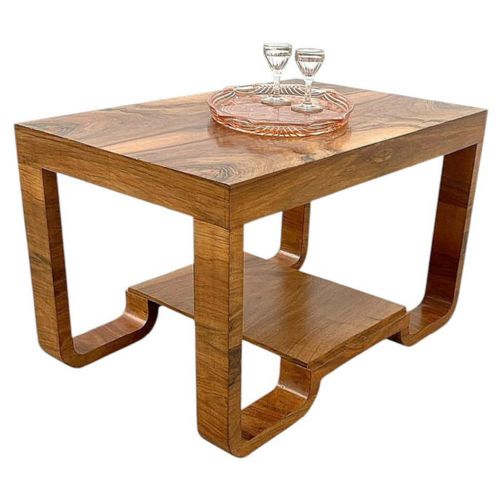
A deco side table encompasses low occasional pieces, coffee tables, nesting sets, and bedside cabinets produced during the interwar period. These utilitarian forms serve daily needs while displaying the characteristic stepped profiles and clean architectural lines of the era.
The versions most commonly met on this page date predominantly from the nineteen thirties, drawing on English, French, and Swedish design traditions. They appear alongside related forms such as console tables, two-tier trolleys, and book tables.
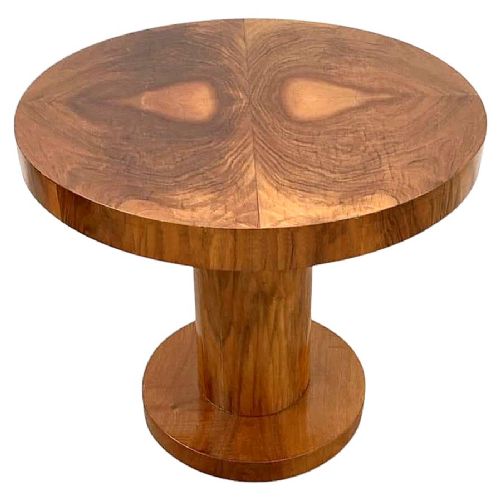
Makers and designers working in this idiom utilised both domestic hardwoods and exotic veneers to create functional furniture for contemporary interiors. The resulting objects range from simple oak bedside units to highly figured walnut nesting tables.
How they were made
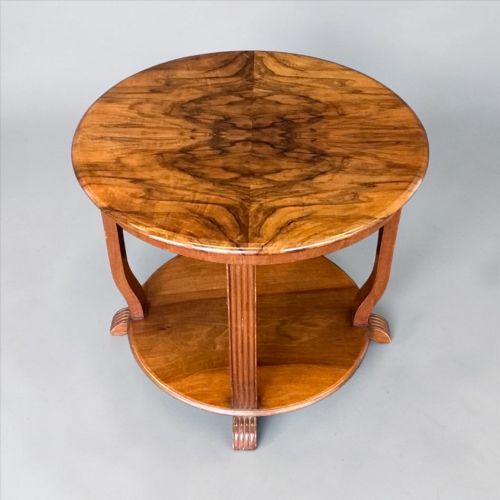
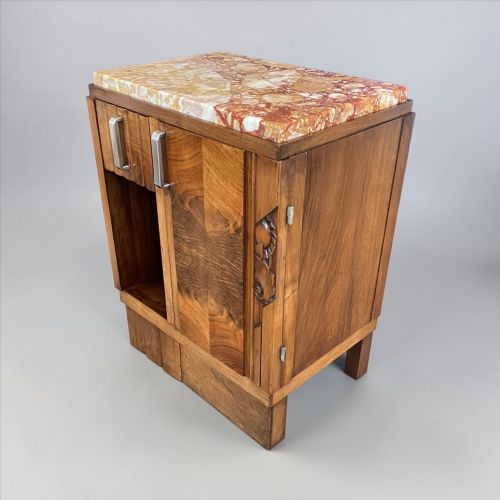
Cabinet makers applied figured veneers like walnut, burr walnut, rosewood, and birds eye maple over solid carcases to achieve striking geometric grain patterns. This technique allowed workshops to showcase decorative natural figures across flat tops and curved fronts.
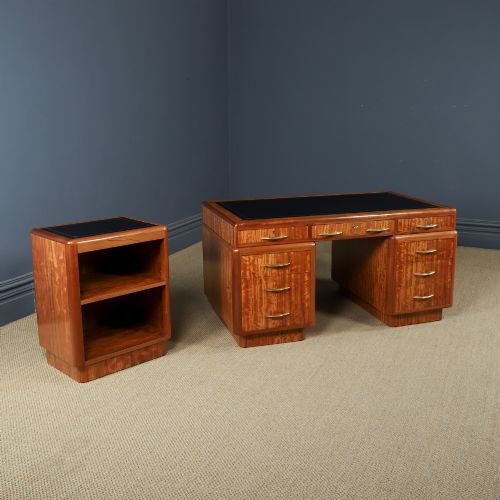
Metal components such as brass and chrome provide structural contrast and bright linear trim on frames, supports, and table edges. Timber and metal combine with materials like solid marble to form durable surfaces suited to domestic living.
Deco Side Table Retail Price Guide 2026
Typical asking prices for deco side table among the pieces listed under this phrase on Sellingantiques today, from the lower quarter to the upper quarter. They describe what is for sale here now, not the wider market.
Listings feature walnut, oak, and exotic veneers combined with chrome and brass across coffee and bedside formats.
What varies in quality
The grade of timber selection and the precision of veneer matching distinguish finer examples from standard production pieces. Workshops that invested care in book-matching burr walnut or satin birch achieved a visual harmony that elevates the piece.
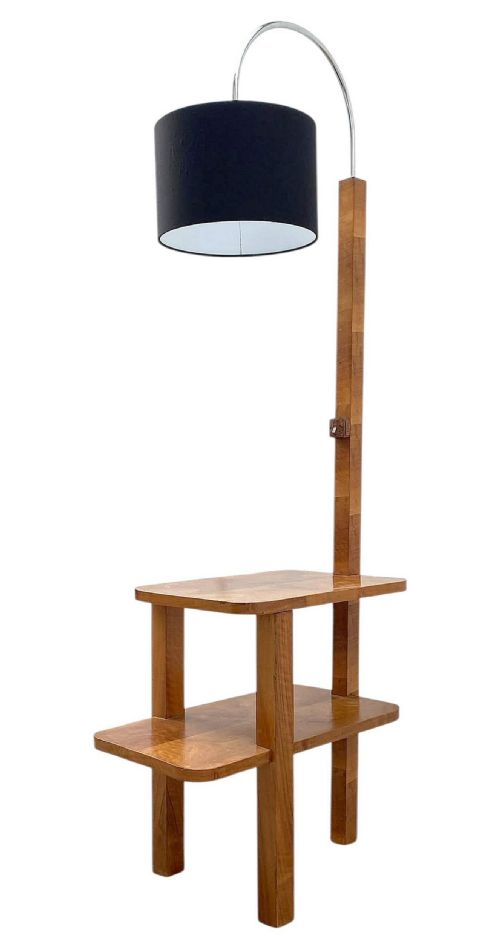
Construction methods and hardware integration separate mass-market items from high-end commissions. Solid secondary woods, robust multi-tier framing, and well-finished metal elements indicate deliberate craftsmanship.
Walter Carter Harrods·Oliver Percy Bernard
The Deco Side Table Glossary
- Art Deco
- A design style dominant in the nineteen twenties and thirties characterised by streamlined forms, geometric motifs, and modern industrial materials. It influenced architecture, furniture, and decorative arts globally.
- Veneer
- A thin slice of decorative wood applied over a stable base timber to create patterned surfaces without heavy timber costs. Figured veneers display swirling grain patterns.
- Nesting table
- A set of graduated tables designed to fit neatly beneath one another when not in use. They offer flexible surface space in compact rooms.
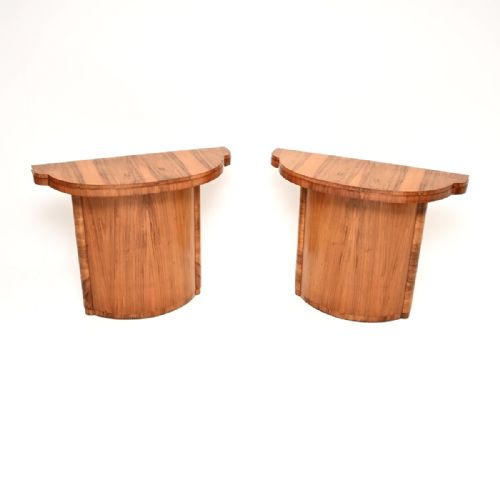
- Demi lune
- A half-moon shape used for console and side tables placed flat against a wall. This profile saves floor space in narrow hallways and living rooms.
- Satin birch
- A pale timber with a lustrous sheen utilised extensively in Swedish modern design of the period. It provides a bright alternative to darker walnut.
Deco Side Table: Frequently Asked Questions
What is a deco side table used for?
These tables provide a convenient surface for lamps, books, and drinks beside seating or beds.
Their compact footprints make them adaptable for placement in hallways, corners, and tight spaces.
How do I identify a nineteen thirties table?
Look for characteristic geometric lines, stepped tiers, and contrasting wood veneers such as walnut and maple.
Construction details and period materials like chrome or brass help confirm the decade of manufacture.
Where were these tables made?
Production occurred across England, France, and Sweden, with each region displaying distinct stylistic tendencies.
English pieces often feature figured walnut, while Swedish examples favour pale satin birch.
How do I care for a veneered table?
Protect the polished wood surface from direct heat, moisture, and prolonged sunlight.
Regular dusting with a soft cloth maintains the natural lustre of the timber grain.