






Deco Makeup Table
A deco makeup table brings geometric line and mirrored glass to the bedroom, offering a functional surface designed for morning routines.
Deco Makeup Table
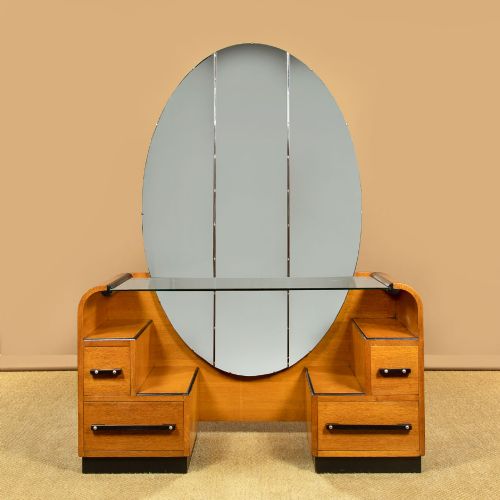
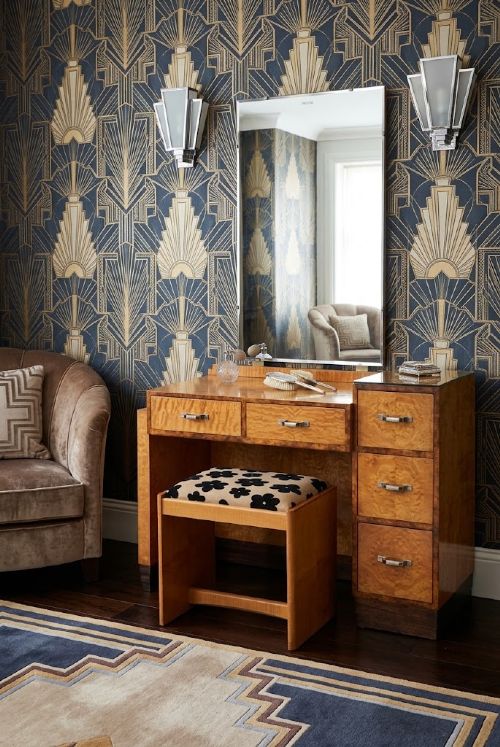
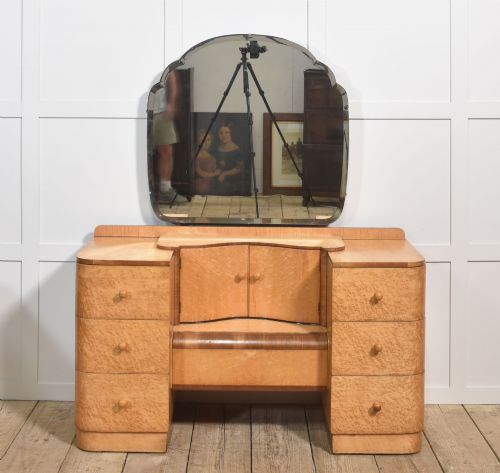
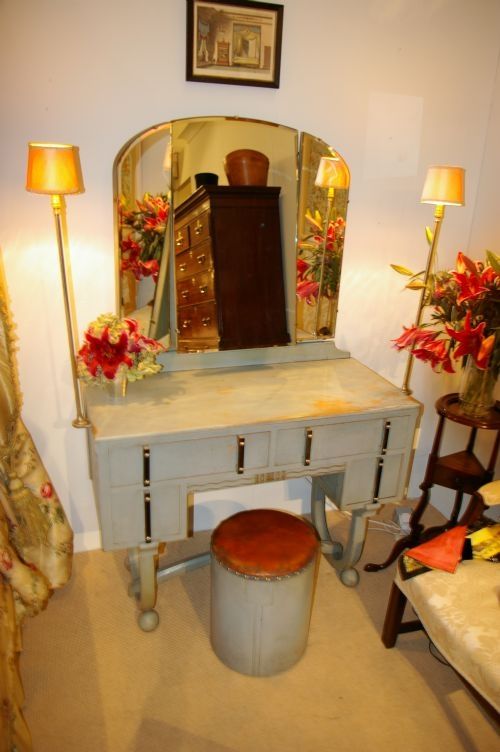
A deco makeup table is primarily encountered as a dressing table or vanity table dating from the 1920s and 1930s. These pieces often arrive paired with matching stools, dressing chests, or integrated mirrors.
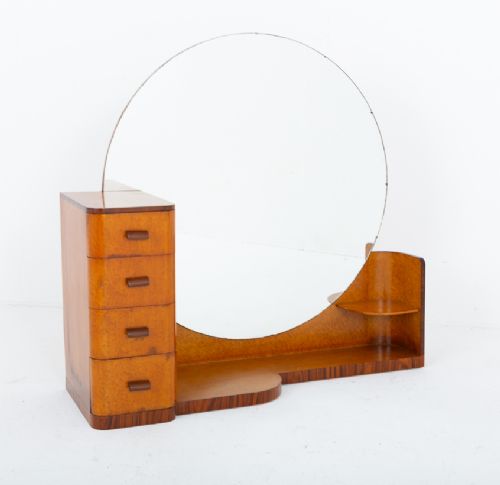
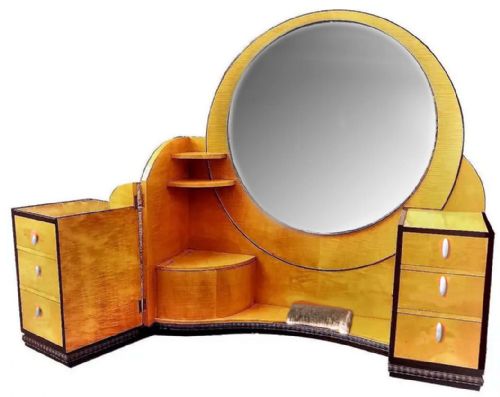
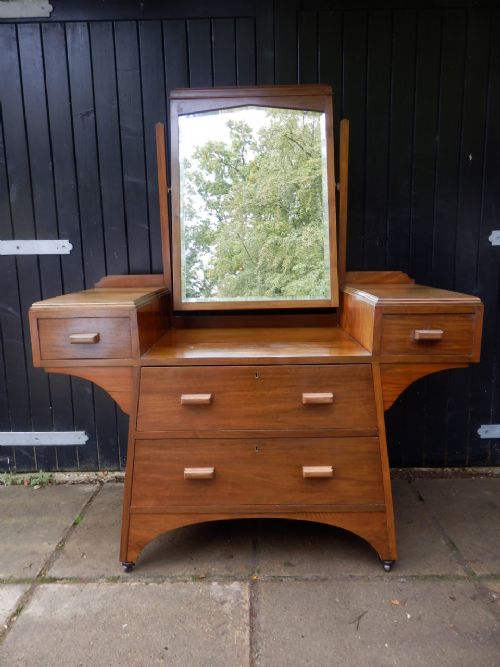
The form embraces asymmetrical vanity tables and twin pedestal configurations alongside simpler freestanding dressing tables. Such furniture centres on the bedroom or dressing room space.
Most examples hail from the Art Deco period, utilising distinctive forms that prioritize clean lines and geometric silhouettes. Buyers frequently encounter pieces centred around a central mirror or vanity glass.
How they were made
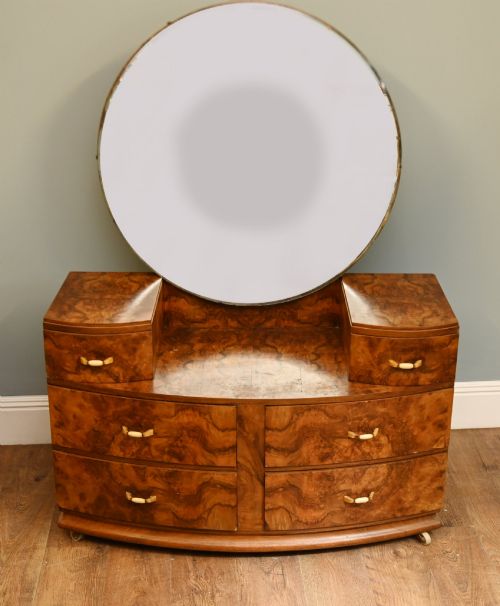
Craftsmen utilised figured timbers such as burr walnut, birds eye maple, sycamore, and oak to construct the main bodies of these dressing tables. These rich veneers were carefully laid to create striking grain patterns across flat surfaces and drawers.
Mirrored glass and standard glass were incorporated extensively for vanity mirrors, easel mirrors, and protective top surfaces. Metal and early plastics like Bakelite appeared on handles, trims, and small fittings.
Construction techniques from the period balanced traditional cabinet making with bold modernist aesthetics. Cabinet makers employed specialised veneering methods to highlight the natural figuring of walnut and maple.
Deco Makeup Table Retail Price Guide 2026
Typical asking prices for deco makeup table among the pieces listed under this phrase on Sellingantiques today, from the lower quarter to the upper quarter. They describe what is for sale here now, not the wider market.
One sweet detail is the flowery top cover found on a sycamore dressing table stool.
What varies in quality
The choice of timber veneer dictates much of the visual distinction, with highly figured burr walnut and birds eye maple standing apart from plainer grain surfaces. Matching the grain across drawer fronts requires superior craftsmanship.
Structural complexity creates another tier of distinction, separating straightforward dressing tables from asymmetrical designs, pieces with original easel mirrors, or complete dressing room suites.
The preservation of original materials, including specialised mirror glass, handles, and accompanying stools, influences the integrity of each piece.
Harry and Lou Epstein·Betty Joel·Rowley Gallery
The Deco Makeup Table Glossary
- Art Deco
- A design style spanning the 1920s and 1930s characterised by streamlined geometric forms, stylized motifs, and modern materials. It replaced the more ornate flourishes of Edwardian and Victorian design.
- Burr Walnut
- A prized timber veneer harvested from walnut tree growths, showing intricate, swirling grain patterns. Cabinet makers used it on prominent surfaces to create decorative impact.
- Birds Eye Maple
- A figured timber featuring small, swirling knots that resemble tiny eyes across the pale wood. It provides a striking contrast to darker woods in Art Deco furniture.
- Bakelite
- An early form of synthetic plastic utilised for handles, knobs, and small decorative elements during the period. Its durability and smooth finish suited modernist design.
- Easel Mirror
- A standalone or attached mirror supported by a hinged back prop, allowing adjustment of the glass angle. These mirrors often form the central focus of a vanity table.
Deco Makeup Table: Frequently Asked Questions
What is a deco makeup table?
A deco makeup table is a period dressing or vanity table created during the 1920s or 1930s. These pieces incorporate mirrors and storage specifically designed for grooming.
They often feature geometric lines and veneered surfaces characteristic of the Art Deco style.
How do I date a dressing table?
Dating relies on construction methods, timber choices, and stylistic cues typical of the 1920s and 1930s. Art Deco examples typically display streamlined geometry and modern veneers.
Makers' marks or stamps inside drawers can also help confirm the manufacturing period.
Where should I place a vanity table?
These pieces suit bedrooms or dedicated dressing rooms where natural or artificial light complements the mirror. Positioning them away from direct sunlight protects vulnerable wood veneers.
Matching them with an appropriate stool maintains the intended aesthetic balance.
Are mirrors usually original?
Many dressing tables retain their original mirror glass, though some period pieces have undergone glass replacement over time. Foxing or slight darkening on older mirrors is common.
Easel mirrors and fixed vanity glass should be checked for secure mounting.