




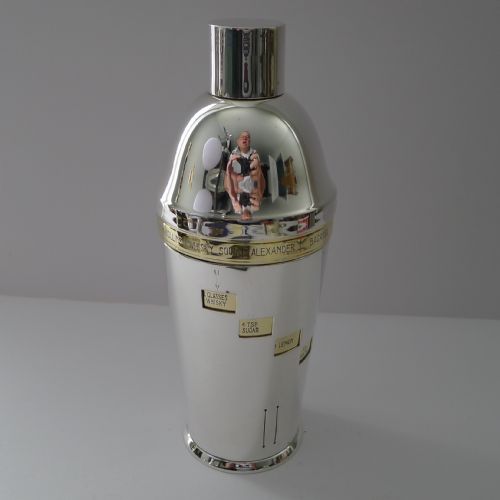
Deco Cocktail Shaker
A deco cocktail shaker brings geometric symmetry and polished metal to the home bar, offering tangible connections to the interwar cocktail boom.
Deco Cocktail Shaker
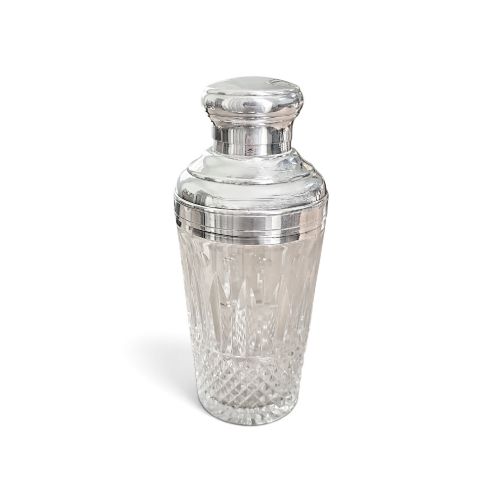
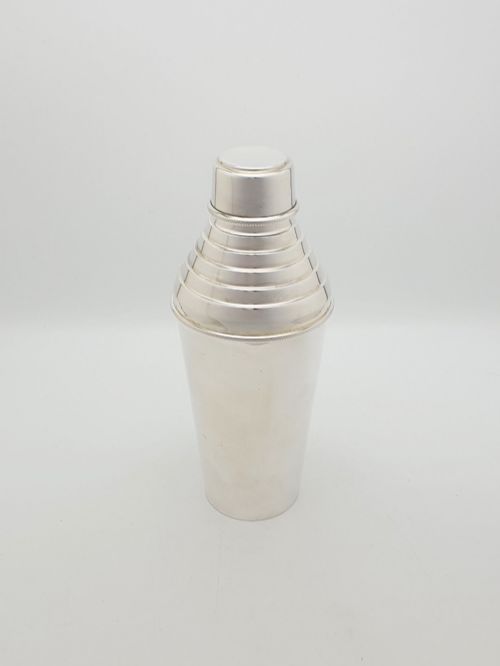
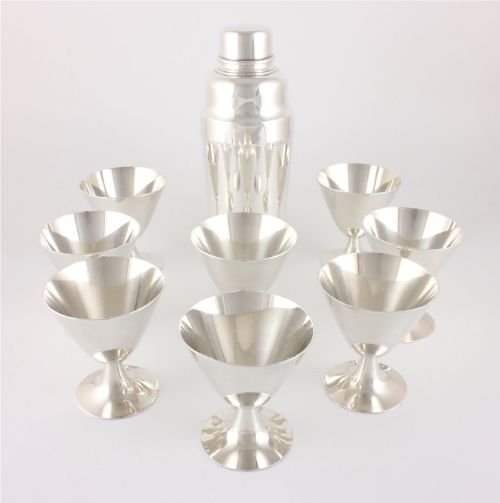
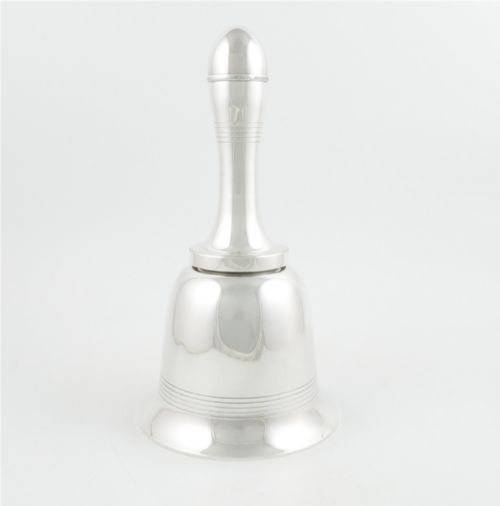
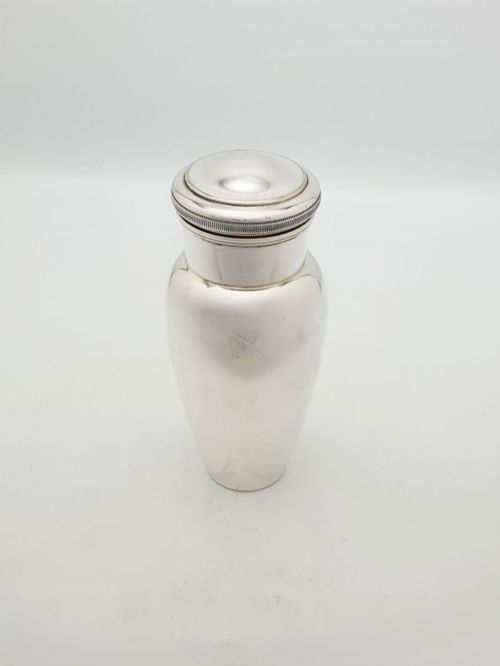
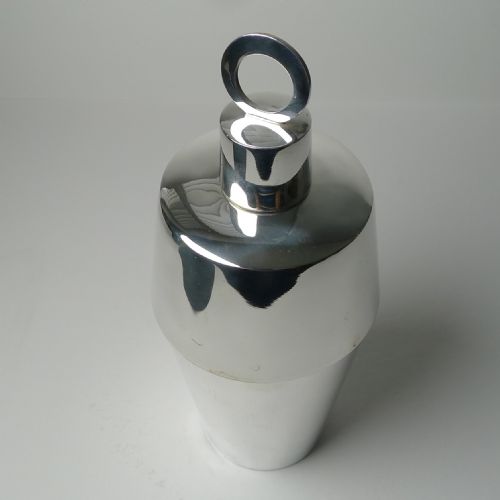
A deco cocktail shaker serves as a primary barware accessory from the early twentieth century, designed for mixing spirits with ice through vigorous agitation. When you search for a deco cocktail shaker, you encounter vessels shaped as milk churns, bullets, or cylindrical cylinders intended to sit proudly on a sideboard or drinks trolley.
The pieces appearing on this page originate predominantly from the nineteen-twenties, thirties, and forties, reflecting the height of modernist design across England, France, Italy, and Switzerland. Many examples incorporate clever functional mechanics such as built-in lemon squeezes, ice breakers, or rotating recipe bands.
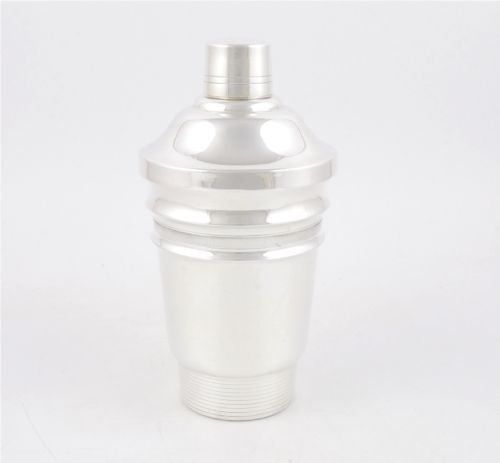
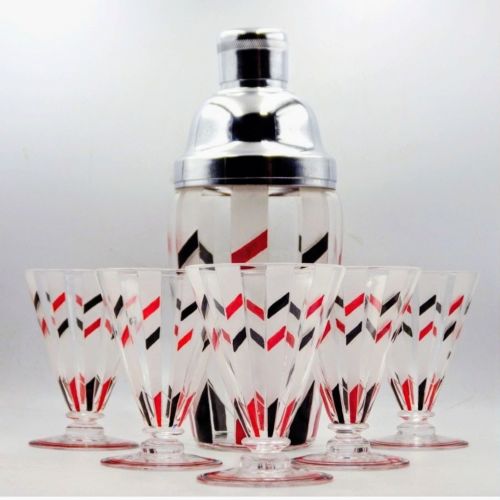
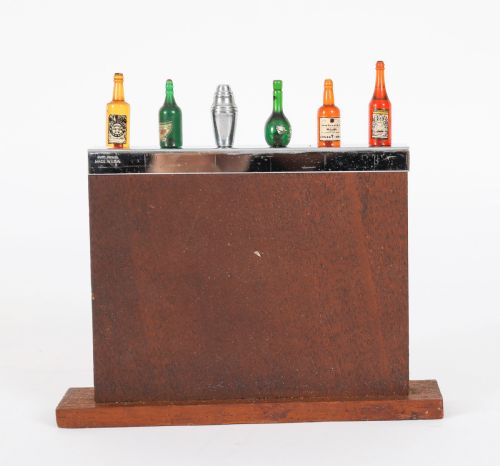
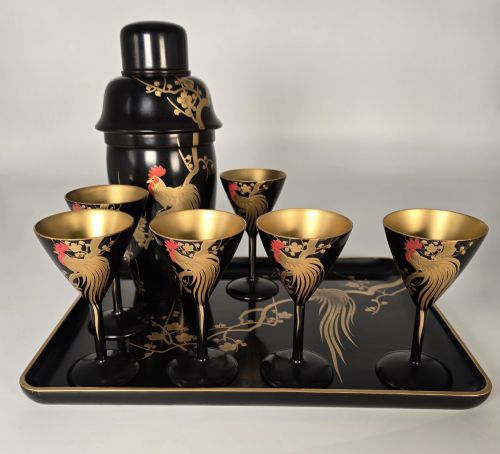
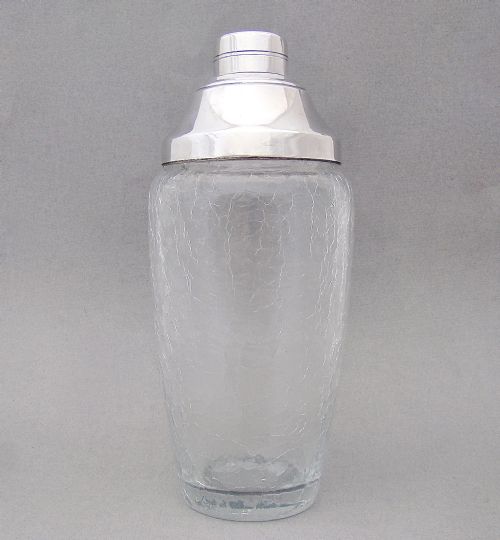
Beyond standard metal cylinders, listings include glass bodies paired with metal mounts, alongside novelty forms like cockerels and miniature cocktail stick sets. The most common format is the silver-plated metal vessel displaying clean lines, stepped collars, or engine-turned patterns.
Materials and construction
Makers utilised silver plate, electroplated nickel silver (EPNS), and sterling silver over base metals, shaping the body through spinning or pressing techniques to achieve smooth, gleaming surfaces. Glass bodies appear frequently, often decorated with enamel, hand-painted lacquer, or crackle effects, secured with metal rims and cork stoppers.
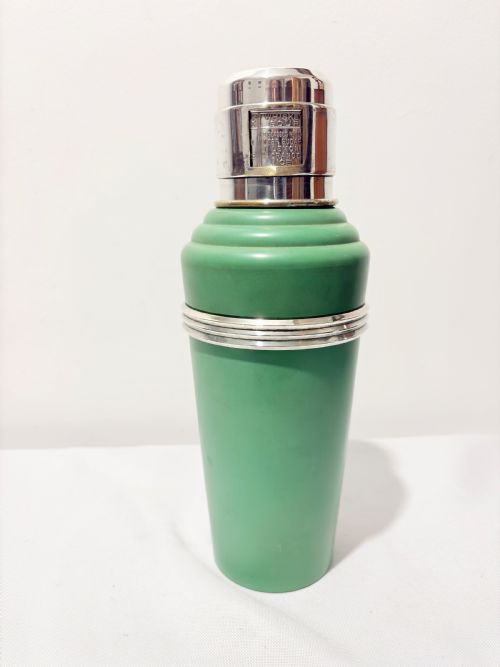
Engine turning, chased detailing, and geometric engraving define the exterior decoration of metal shakers, while internal components rely on snug-fitting lids and built-in strainers. Bakelite accents and wood elements provide contrasting textures for handles and finials on select modernist iterations.
Deco Cocktail Shaker Retail Price Guide 2026
Typical asking prices for deco cocktail shaker among the pieces listed under this phrase on Sellingantiques today, from the lower quarter to the upper quarter. They describe what is for sale here now, not the wider market.
Listings feature periods spanning from the nineteen-twenties through to the nineteen-sixties, with the nineteen-thirties representing the highest concentration of designs.
Evaluating construction and design pedigree
Quality rests upon the weight of the metal, the precision of the spinning, and the crispness of the engraved or engine-turned patterns. Shakers produced by documented makers exhibit tighter tolerances in the fit of the cap and strainer, ensuring smooth operation during use.
The integrity of the silver plating and the clarity of applied enamel or glass decoration distinguish utilitarian pieces from high-design examples. Superior execution shows in balanced proportions and the harmonious integration of functional elements like internal lemon squeezes or recipe bands.
Asprey & Co·Hukin & Heath·James Dixon & Sons·William Suckling·Adie Brothers·Maison Barra
The Deco Cocktail Shaker Glossary
- Silver Plate
- A thin layer of silver fused to a base metal such as copper or nickel brass. This technique provided the appearance of solid silver at a lower production cost.
- Electroplated Nickel Silver
- Commonly abbreviated as EPNS, this designates a base metal alloy of copper, nickel, and zinc coated with a layer of silver through an electrolytic process. It forms the foundation of many mid-century barware pieces.
- Engine Turned
- A decorative technique involving precise geometric patterns cut into metal by a mechanical lathe. It creates shimmering texture across cylindrical shaker bodies.
- Bakelite
- An early form of synthetic plastic used for insulating handles and decorative finials. Its heat resistance and rich colour added practical contrast to metal barware.
- Milk Churn
- A cylindrical vessel shape with tapering shoulders, adopted by modernist designers for cocktail shakers due to its clean industrial silhouette.
Deco Cocktail Shaker: Frequently Asked Questions
How do I clean a vintage metal shaker?
Wash the interior with warm soapy water and a soft cloth, avoiding harsh scouring pads that can damage the metal lining or plate. Dry thoroughly immediately afterwards to prevent moisture spotting.
For the exterior, use a dedicated silver polishing cloth rather than aggressive liquid dips, preserving any engraved patterns or engine-turned detailing.
Are these vintage shakers still usable today?
Most metal and glass shakers remain fully functional for mixing drinks, provided the internal seals, corks, and strainers are intact. Check that the cap removes easily and fits securely before shaking liquids.
Hand washing is essential for preserving historical plated surfaces and delicate glass decorations, as modern dishwashers will ruin the finish.
How do I distinguish silver plate from sterling?
Sterling silver pieces carry hallmarks indicating the metal purity, such as a lion passant for British manufacture, alongside maker marks and date letters. Silver-plated and EPNS items generally display marks indicating the plating process rather than solid metal purity standards.
Weight can also offer a clue, though many plated shakers feel substantial due to thick base metal foundations.