

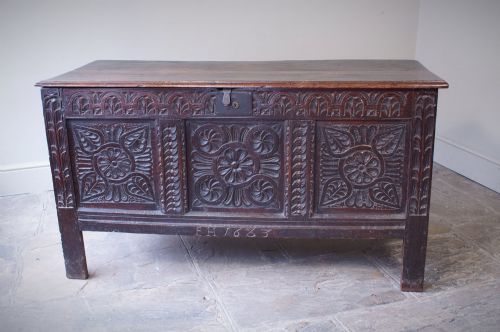


Dated Oak Panel
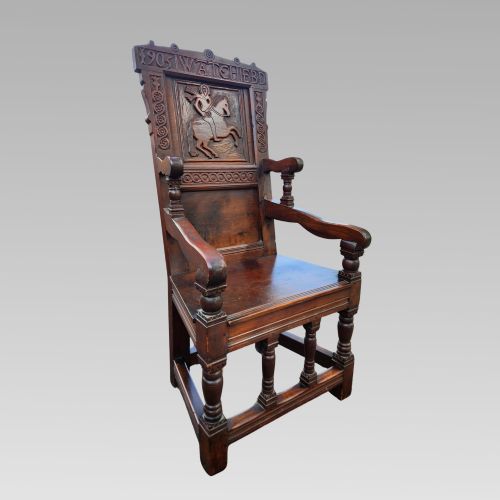
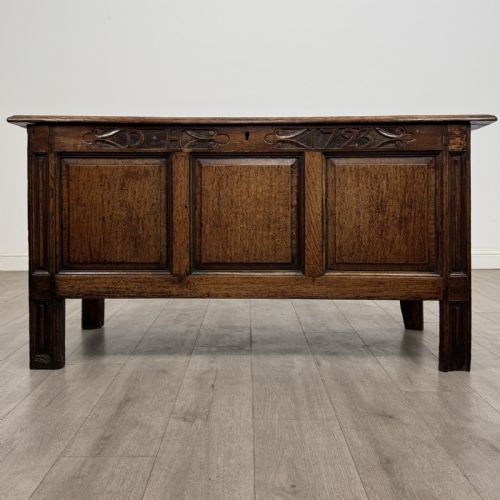
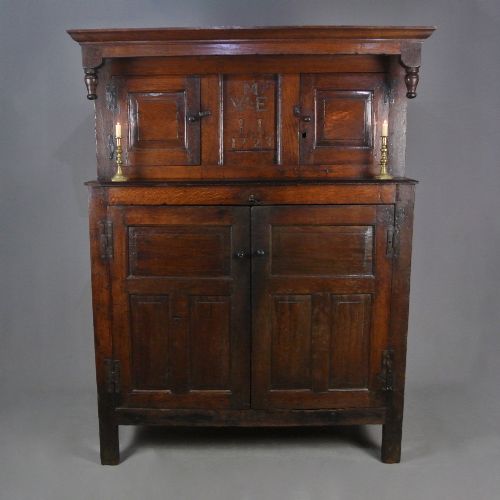
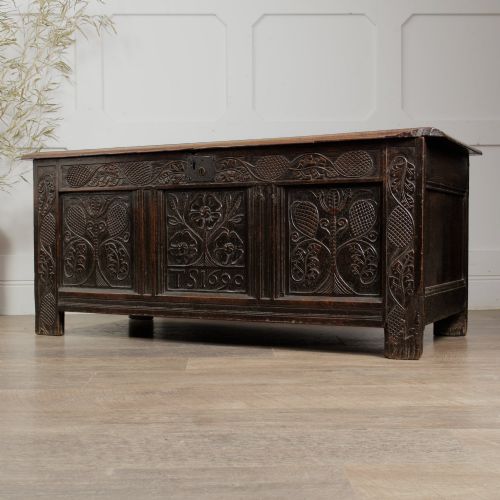
A dated oak panel brings centuries of domestic history into a room through carved initials and precise years carved directly into the timber.
Dated Oak Panel
When you search for a dated oak panel, you encounter robust early woodwork and storage furniture that bears contemporary inscriptions recording a specific year or maker's initials. These pieces frequently manifest as the front boards of joined coffers, lids of mangle boards, or structural panels within court cupboards and chests originating from the sixteenth, seventeenth, and eighteenth centuries.
The versions most likely to meet you on this page span the seventeenth and eighteenth centuries, often presenting as vernacular English or Welsh coffers and cupboards bearing carved dates from the sixteen-sixties onward. Alongside traditional chests, occasional later revivals and domestic items like chip-carved mangle boards provide alternative formats carrying carved chronological markers.
Materials and construction
Makers utilised native timber, predominantly oak supplemented by occasional elm, shaping boards with hand tools such as adzes and pit saws before assembling panels using traditional mortise and tenon joints secured by wooden pegs.
Carving and incised lettering defined the surface decoration, employing gouges, chisels, and scratch stocks to cut dates, initials, and geometric motifs directly into the dense grain of the wood.
Dated Oak Panel Retail Price Guide 2026
Typical asking prices for dated oak panel among the pieces listed under this phrase on Sellingantiques today, from the lower quarter to the upper quarter. They describe what is for sale here now, not the wider market.
Listings span periods from the sixteenth century through the nineteen-twenties, encompassing oak, elm, brass, and iron materials.
Assessing quality
The distinction between ordinary and superior examples rests upon the crispness and originality of the carved inscriptions and the structural integrity of the timber panels. Crisp, deeply incised figures carved during the original period of manufacture hold greater visual authority than worn or later-enhanced lettering.
Proportion and surface patination also determine distinction, with well-balanced joined construction and untouched waxed surfaces demonstrating superior craftsmanship compared to heavily altered or stripped pieces.
The Dated Oak Panel Glossary
- Panel
- A flat piece of timber framed within stiles and rails to allow for natural shrinkage and expansion. This construction method prevents the wood from splitting as environmental humidity changes.
- Cofer
- A large strongbox or chest used for storing valuables, textiles, or documents. They often feature joined oak construction and significant carved ornamentation.
- Mangle board
- A flat wooden board with a handle, used alongside a rolling pin to smooth linen fabrics. Elaborate examples often display deeply carved dates and folk art motifs.
- Court cupboard
- A heavy storage piece consisting of enclosed tiers, frequently used for displaying plate and storing household provisions. These large items often incorporate dated architectural panels.
- Joined construction
- A method of cabinet making using mortise and tenon joints locked with wooden pegs rather than metal nails. This technique provides exceptional rigidity to heavy oak furniture.
Dated Oak Panel: Frequently Asked Questions
What is a dated oak panel?
A dated oak panel is a piece of early woodwork featuring an inscription carved directly into the timber by the original maker. These panels typically record a specific year alongside initials or decorative motifs.
They appear as structural elements built into storage chests, cupboards, or household implements from past centuries. The carved date provides a direct historical anchor to the object's creation.
How were these panels used?
These panels functioned primarily as structural components of domestic storage furniture such as coffers, joined chests, and court cupboards. They formed the visible facades that displayed the status and identity of the household.
In some instances, such as mangle boards, the decorated panel itself served as the primary domestic tool for smoothing household linens. Their prominent placement ensured that family initials and significant years remained visible within the home.
How do I live with a dated panel?
Living with early oak requires placing pieces away from direct heat sources and sudden temperature shifts to prevent the timber from drying out or splitting. Maintaining stable indoor humidity preserves the historic wax finishes and the structural stability of the joints.
Their restrained tones and textured surfaces blend naturally into both traditional and contemporary interiors. Simple dusting with a soft cloth maintains the natural patination built up over centuries of handling.
How can I tell the period?
Dating relies heavily on the style of the carved lettering, the framing techniques, and the tool marks left by the maker. Seventeenth-century carving typically displays robust, deep incisions, while the timber itself exhibits the irregular grain patterns characteristic of early pit-sawn boards.
The presence of an explicit carved date offers a primary point of reference, though it must be evaluated alongside the construction methods and wear patterns of the surrounding wood.