



Dark Wooden Stick Armchair
A dark wooden stick armchair offers robust vernacular seating, built from native timbers to last through generations of heavy daily use.
Dark Wooden Stick Armchair
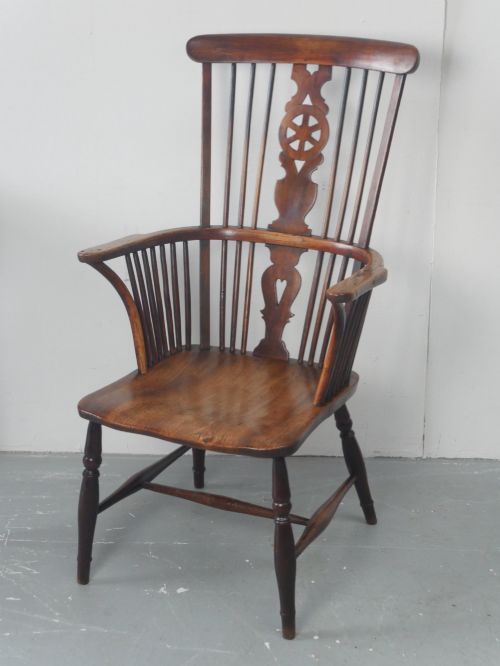
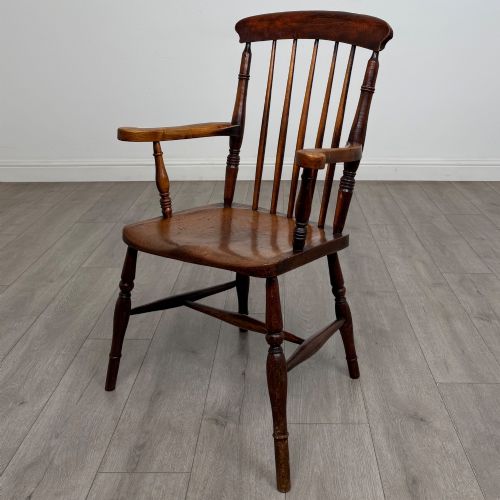
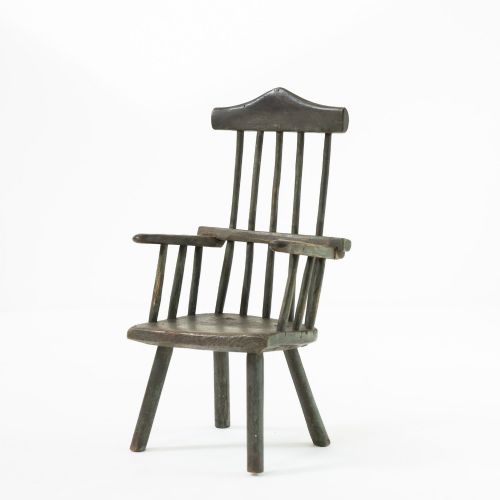
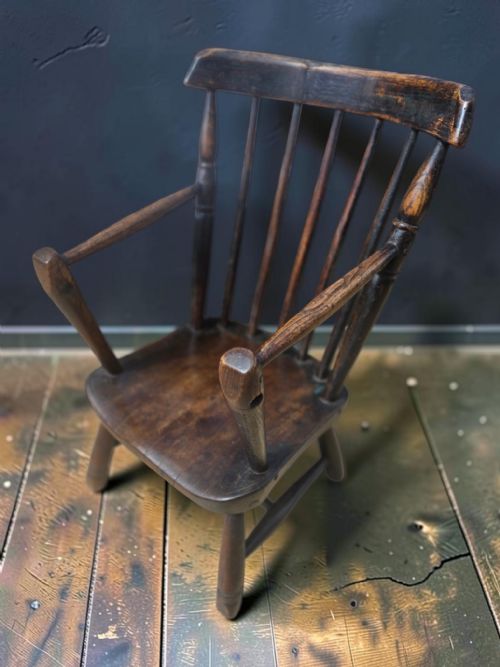
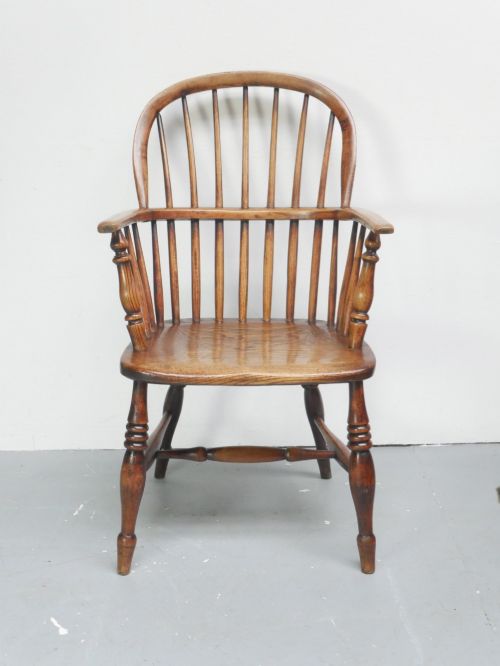
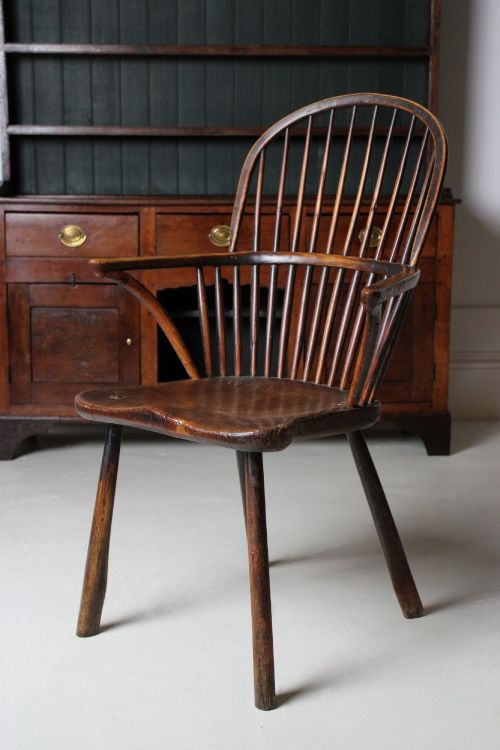
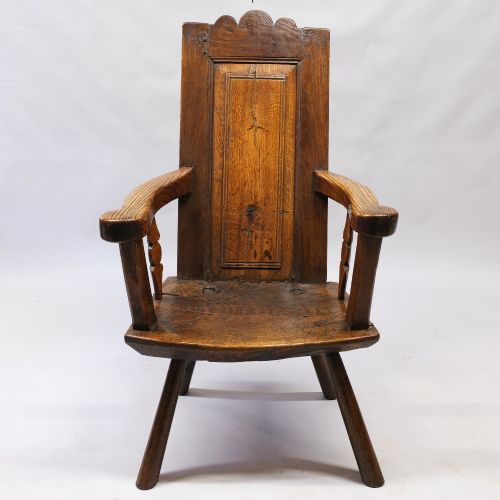
A dark wooden stick armchair represents traditional country seating built by regional craftsmen. These pieces range from simple eighteenth century vernacular forms to robust nineteenth century Windsor chairs.
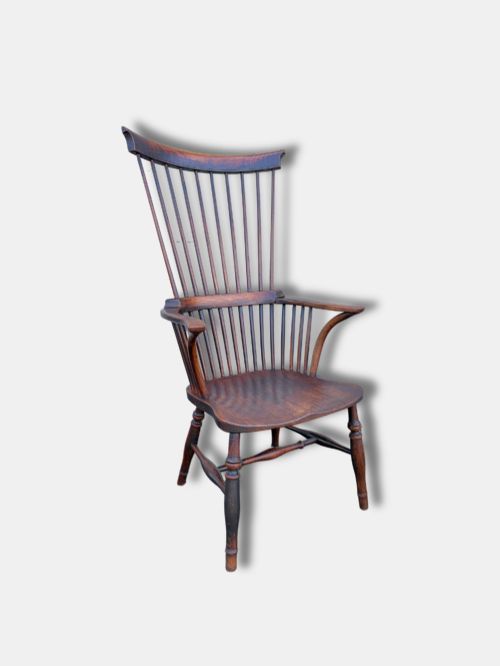
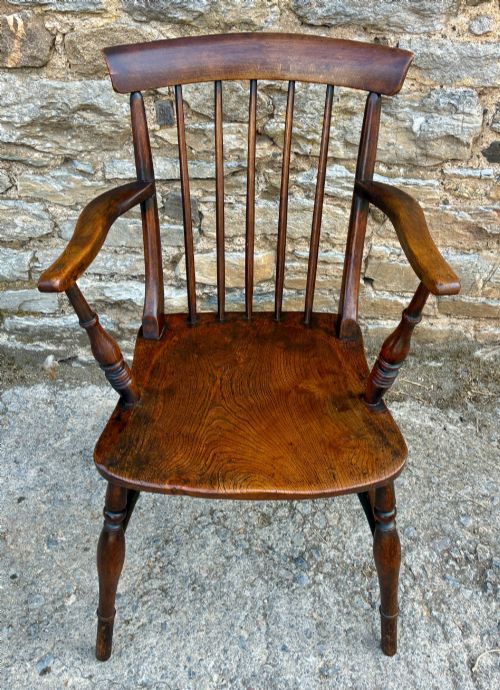
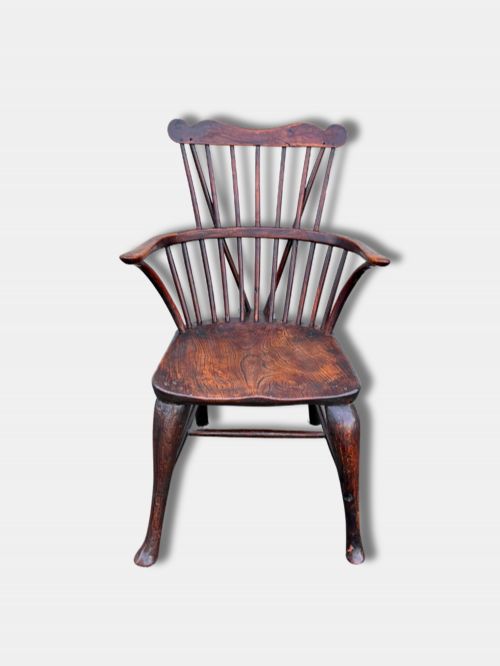
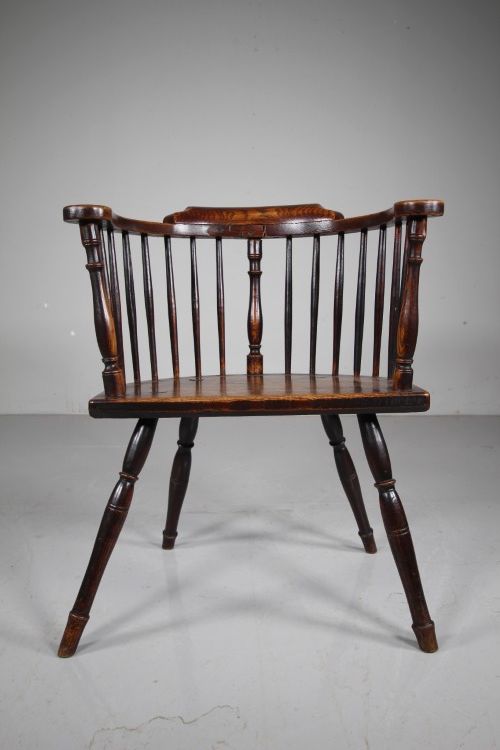
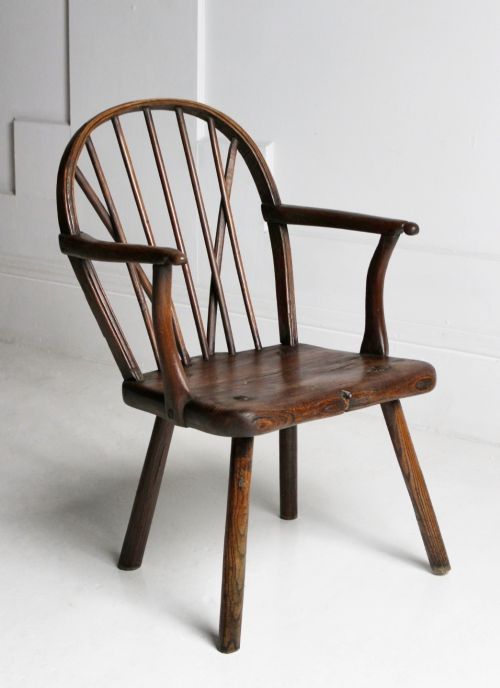
The version most commonly met on this page is the stick back or comb back Windsor armchair. These feature slender vertical spindles inserted directly into thick wooden seats, often constructed with distinctive high or low combs.
How they were made
Construction relies on a combination of native hardwoods shaped by hand and lathe. Elm traditionally forms the thick saddle seats, while ash, oak, yew, beech and fruitwood provide the resilient spindles, legs and bentwood arm bows.
Joinery depends on traditional methods such as wedged tenons passing entirely through the seat slab. Component parts are often steam-bent into flowing curves to create ergonomic backrests and supportive arms.
One exceptional chair bears the specific nickname 'Lobster Pot' due to the distinctive arrangement of its sweeping comb back sticks.
What varies in quality
Quality rests upon the harmony of proportions and the choice of native timber. Master makers selected highly figured woods like burr elm or rich yew, shaping the comb and arms with confident, flowing lines rather than rigid symmetry.
The integrity of the original construction and the depth of the surface patina dictate the standing of a piece. Untouched timber surfaces showing generations of wear elevate an armchair far above heavily restored examples.
John Brand of Sleaford
The Dark Wooden Stick Armchair Glossary
- Comb back
- A Windsor chair variation where the vertical sticks of the back extend upward into a horizontal headpiece resembling the teeth of a comb. This style offers notable upper back support.
- Vernacular
- An architectural and furniture-making term describing objects built by local artisans using regional traditions and available materials. These pieces prioritise functional utility over academic high-style design.
- Saddle seat
- A thick wooden seat base sculpted with deep hollows for comfort. It is typically carved from a single slab of dense elm.
- Windsor
- A chair style characterised by a solid wooden seat into which the legs and back spindles are directly tenoned. The design evolved through numerous regional British variations.
- Patina
- The deep, lustrous surface sheen developed on wood over decades of handling, polishing and exposure to light. It serves as a visual indicator of genuine age.
Dark Wooden Stick Armchair: Frequently Asked Questions
What is a stick back armchair?
A stick back armchair is a traditional seat where slender turned spindles form the backrest. These members connect a solid wooden seat to a top rail or arm bow.
Such chairs emerged from rural workshops across Britain. They rely on simple, sturdy joinery designed for everyday farmhouse use.
How do I date an old armchair?
Dating relies on examining the tool marks, timber selection and construction methods. Eighteenth century examples often show primitive hand-carved details and deeper patination.
Nineteenth century pieces tend to feature more standardised lathe turnings. Regional styles also help narrow down the period of production.
Are these chairs comfortable to use?
These armchairs offer surprising comfort due to their ergonomically sculpted wooden saddle seats. The raked backs and curved arm bows support upright sitting.
Adding a small loose cushion provides extra padding for modern lounging. Their sturdy builds suit daily placement around a dining or desk table.
What woods were used for making them?
Craftsmen utilised native British hardwoods grown locally to their workshops. Elm was the primary choice for seats because its interlocking grain resisted splitting.
Ash, oak, yew and beech provided strong, flexible material for the legs, spindles and bentwood parts. Occasionally, fruitwoods or painted finishes appear on regional variants.