




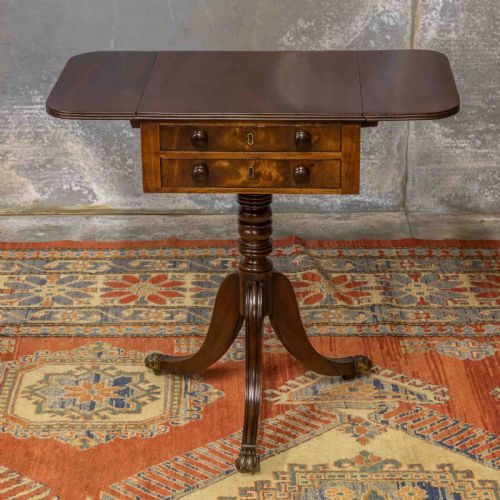


Dark Wood Worktable
These dark wood worktables are practical needlework and utility pieces built from rich timbers like rosewood and mahogany.
Dark Wood Worktable
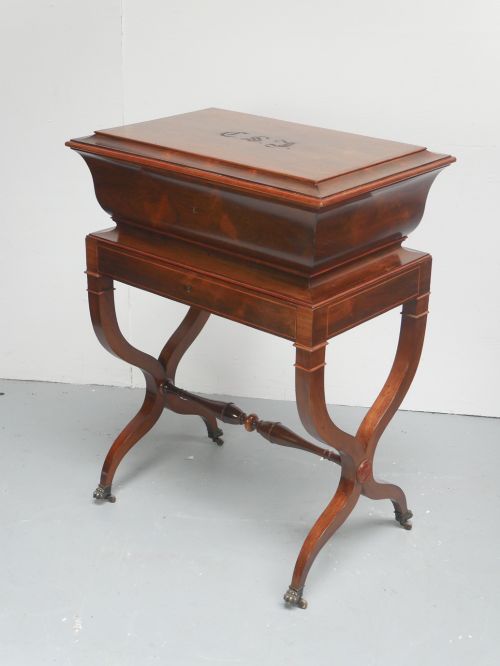
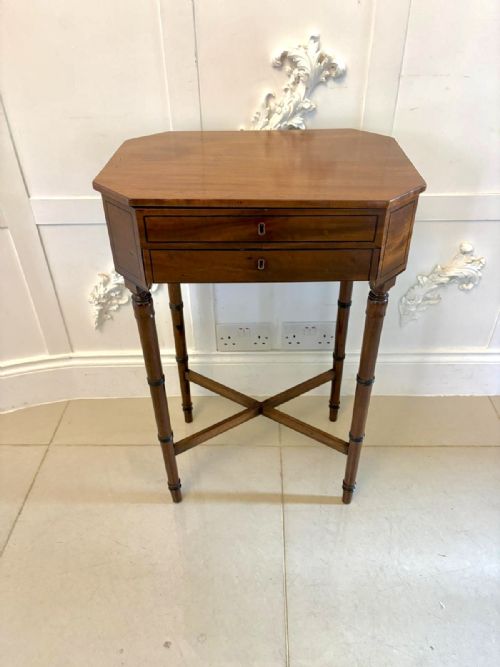
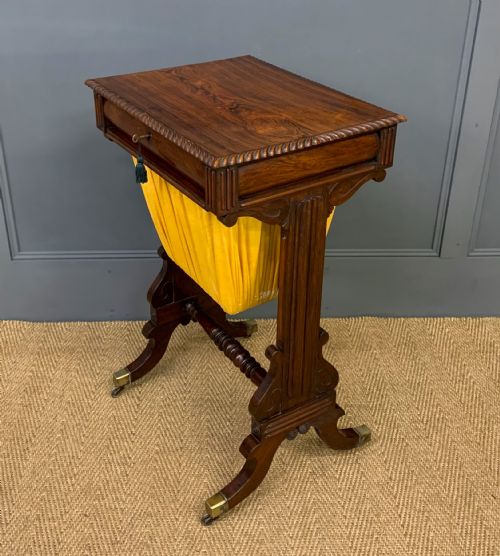
A dark wood worktable is a specialised small table designed for sewing, needlework, and domestic tasks, frequently outfitted with internal compartments, trays, or suspended fabric bags.
The pieces on this page span the Georgian, Regency, William IV, and Victorian eras, alongside rustic farmhouse examples and continental imports.
Rosewood and mahogany dominate the formal examples from the nineteenth century, while oak, chestnut, and satinwood appear in vernacular and specialised variants.
How they were made
Cabinetmakers utilised dense tropical hardwoods such as rosewood and mahogany for formal tables, often incorporating delicate satinwood stringing and brass mounts.
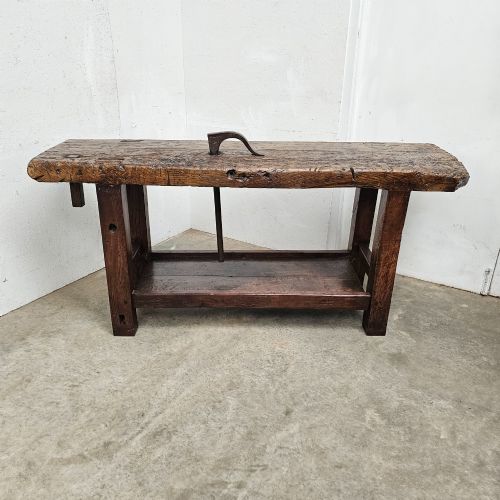
Working structures rely on solid oak and chestnut for robust frames, while specialised forms integrate forged iron components and fitted fabric bags for materials.
Surfaces feature polished timber grains, occasional lacquering, or plain scrubbed finishes suited to utilitarian workshop use.
Primary timber choices across the current selection include rosewood, mahogany, oak, chestnut, and satinwood.
What varies in quality
The distinction between standard utility items and exceptional pieces lies in the selection of figured timber veneers and the refinement of internal compartments.
Sophisticated mechanisms for folding leaves, metamorphic dressing mirrors, and integrated games boards indicate higher workshop ambition.
Proportion and stability separate finely turned pillar supports and elegant pedestal bases from heavier, purely functional frames.
Lesage
The Dark Wood Worktable Glossary
- Work table
- A small domestic table designed to hold sewing equipment, textiles, or writing materials. These pieces typically feature internal compartments and a fabric bag below.
- Poudreuse
- A combination dressing and work table fitted with a mirror and compartmentalised storage. This French form dates primarily to the nineteenth century.
- Workbox
- A portable box for needlework that sits upon a table stand or forms an integrated upper compartment. Examples in this category often utilise rosewood or mahogany.
- Metamorphic
- Describing furniture designed to transform between multiple uses, such as a sewing table that converts into a games or reading surface.
Dark Wood Worktable: Frequently Asked Questions
What was a dark wood worktable used for?
These tables served as mobile workstations for domestic needlework, embroidery, and small household administration tasks. Interiors kept spools, thimbles, and fabrics organised near living areas.
The suspended fabric bag beneath the main drawer held current sewing projects. Many double as games or reading tables through folding tops.
How do I date a work table?
Dating relies on timber selection, structural joinery, and prevailing design styles across the Georgian, Regency, and Victorian periods. Regency examples often display rosewood with brass inlay, while earlier pieces favour mahogany.
Victorian iterations introduce heavier pedestals and more complex metamorphic arrangements. Finer details like turned columns and wood grains provide further chronological clues.
Where should I place a work table at home?
Their compact proportions make these tables ideal as lamp tables beside seating or as accent pieces in hallways. The fitted tops and drawers offer practical concealed storage for small items.
Freestanding nineteenth-century examples look best positioned where all sides remain visible. Avoid placing delicate rosewood and polished mahogany surfaces in direct sunlight.
Are all work tables meant for sewing?
While the majority incorporate sewing wells or baskets, the category also embraces utilitarian workbenches, dressing tables, and small occasional boxes on stands. French and English variants span both domestic craft and personal grooming.
Lacquered and rustic farmhouse pieces demonstrate that the form served varied domestic workshops beyond parlour needlework.