


Dark Wood Wine Bucket
A dark wood wine bucket brings tactile warmth to a room, offering a solid vessel for bottles or greenery rooted in Georgian and Victorian tradition.
Dark Wood Wine Bucket
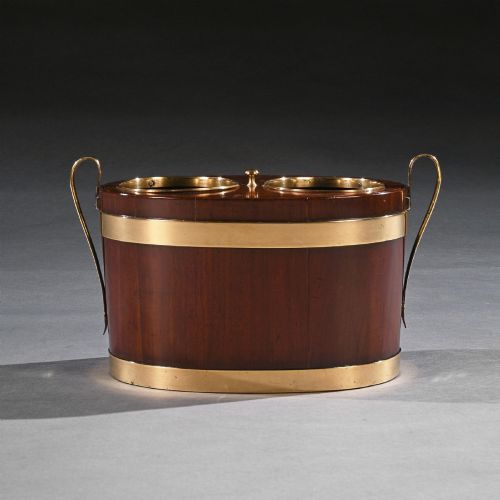
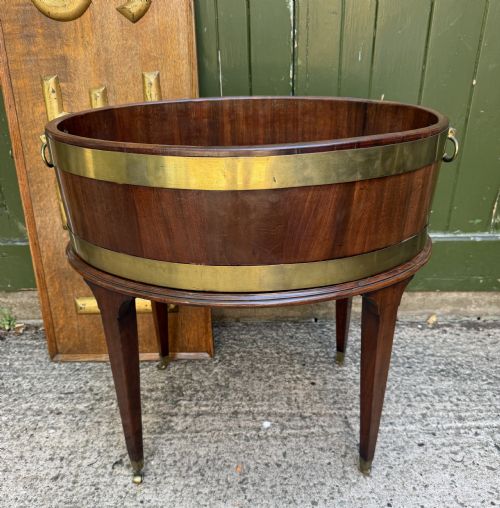
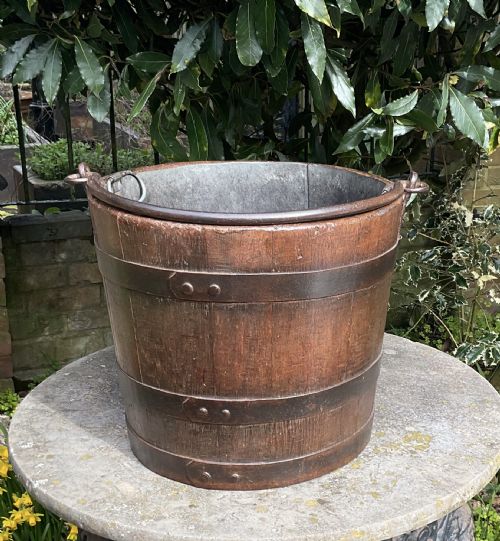
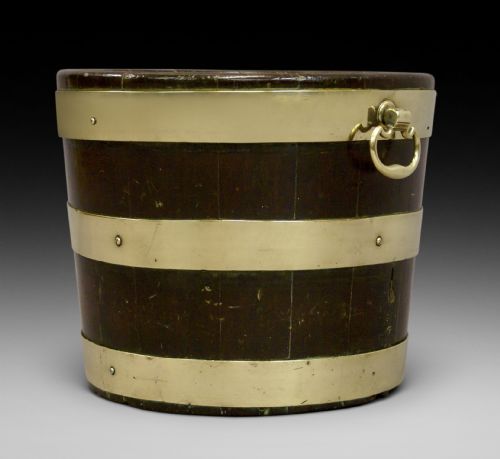
A dark wood wine bucket is a robust domestic container primarily fashioned for chilling bottles or holding fuel, surfacing here in forms ranging from George III oval Coolers on stands to coopered oak vessels and peat buckets. Most examples on this page date from the Georgian, 19th Century, and Edwardian periods, utilising rich timbers such as mahogany and oak.
Buyers frequently encounter oval and elliptical shapes secured with brass bands, alongside simpler treen containers and plate buckets. These pieces transition easily between functional barware and decorative planters or jardinieres, reflecting their enduring utility across different centuries of British interior design.
How they were made
Construction relies on traditional joinery methods, particularly cooperage where individual wooden staves are shaped and bound together with tight metal hoops. Mahogany and oak serve as the primary woods, chosen for their deep grain and durability.
Makers reinforced these vessels with brass bands, iron fixtures, and occasional metal or zinc liners to handle moisture. Spindle details and stands appear on select specimens, combining structural strength with refined cabinetmaking.
The listings feature mahogany and oak as the dominant woods, frequently reinforced with brass bands across Georgian and 19th Century forms.
What varies in quality
Quality rests in the integrity of the timber and the precision of the metalwork bindings. Superior pieces display finely fitted staves, rich patination on the mahogany or oak, and authentic period brassware that sits flush against the wood.
The presence of original stands, internal liners, and distinct coopered construction elevates a piece above simpler utilitarian containers. Finer examples maintain crisp proportions and structural honesty across the body and handles.
The Dark Wood Wine Bucket Glossary
- Coopered
- Constructed from curved wooden staves bound together with hoops, much like a traditional barrel. This technique ensured liquid tightness in wine coolers and buckets.
- Treen
- Small handmade wooden objects produced before the widespread use of plastic and cheap ceramics. These items gained a smooth tactile surface from decades of handling.
- Cellarette
- A lockable storage container for wine bottles kept near the dining table. Many examples took the form of oval or octagonal mahogany buckets.
- Jardiniere
- An ornamental pot or stand designed to hold growing plants or flowers. Several wooden wine buckets were adapted for this domestic purpose.
- Patina
- The deep sheen and surface character acquired by wood through age, light, and use. It indicates decades of careful cleaning and handling.
Dark Wood Wine Bucket: Frequently Asked Questions
How do I use a dark wood bucket today?
These vessels adapt readily to contemporary rooms as bottle holders for dinner parties or as planters for indoor greenery. Their sturdy construction handles daily domestic use without losing period character.
Place a suitable waterproof liner inside if holding damp foliage or melting ice to protect the historic timber interior from direct moisture damage.
What is the difference between a wine cooler and a peat bucket?
Wine coolers generally feature watertight linings or coopered staves designed to hold ice and bottles around the dining table. Peat and plate buckets served different domestic tasks near the fireplace or sideboard.
Examining the internal fittings and overall depth usually reveals whether the vessel was built for bottles, fuel, or tableware storage.
Are these buckets watertight?
Many period pieces rely on historic wooden staves and metal liners that may no longer hold water dependably. Testing the vessel before direct filling prevents unexpected leaks onto furniture.
Modern plastic or metal inserts allow you to use antique buckets safely for plants or ice without risking the original wooden base.
How do I date a mahogany bucket?
Dating relies on timber selection, construction methods, and the style of the brass bands and handles. Georgian examples often display lighter framing and refined oval shapes, while Victorian and Edwardian pieces can be heavier.
Matching the joinery details and hardware type to documented furniture styles helps narrow down the decade of manufacture.